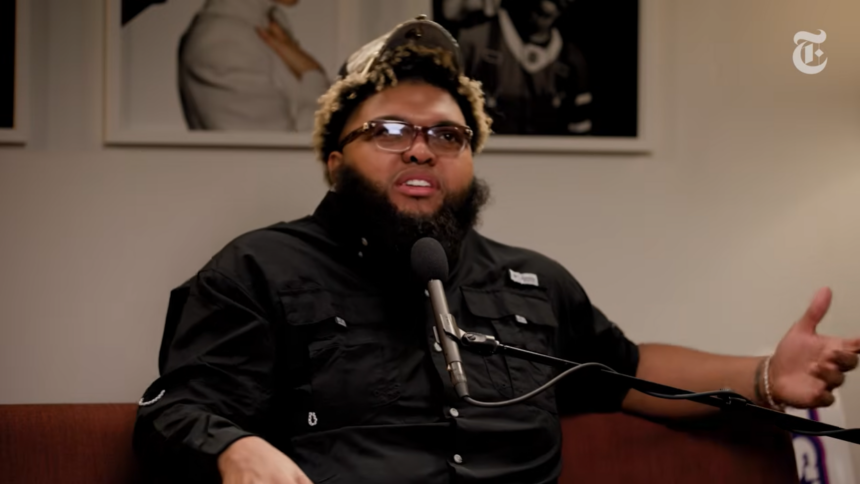
When comedian Druski dropped a parody video in late March titled How Conservative Women in America Act, few could have predicted the scale of attention it would generate. The skit surpassed 180 million views across platforms and ignited a debate that stretched well beyond comedy circles.
Druski appeared in the video wearing heavy makeup, a blonde wig, and colored contacts, mimicking the appearance and public mannerisms of conservative commentator Erika Kirk. The clip drew from her real public appearances and took clear aim at her views on faith and politics. Reactions split sharply some viewers found it biting satire, while others felt it crossed a line. What most people wanted to know, though, was how Kirk herself felt about it.
Kirk keeps her eyes on what matters
Rather than firing back online or leaning into the outrage cycle, Kirk addressed the situation calmly and directly during an appearance at a Turning Point USA event at George Washington University. Her message was simple: she has not had much time to pay attention to it.
Kirk explained that the bulk of the criticism directed at her rarely reaches her unless someone deliberately brings it to her attention. She described herself as genuinely occupied with the everyday moments of her life including time spent playing with her children and made clear that no volume of online noise is enough to pull her away from those priorities.
It was a response that stood out precisely because of what it was not. There was no lengthy rebuttal, no call for supporters to push back, and no visible anger. Just a woman who appears to have made a deliberate choice about where her energy goes.
Trump enters the conversation
The story took an unexpected turn when President Donald Trump weighed in. During a White House Easter lunch, Trump suggested that Kirk consider taking legal action against Druski over the skit, framing the viral moment as rooted in jealousy toward her.
Kirk has not pursued any legal action. Her decision to let that suggestion pass without acting on it says something about the approach she has chosen to take one that prioritizes her own peace of mind over public battles that she does not see as worth her time.
What her response reflects
There is a broader conversation embedded in how Kirk has handled this moment. Social media has a well documented pull on public figures, drawing many of them into extended back-and-forths that rarely resolve anything and often amplify the very criticism they are trying to combat. Kirk’s refusal to engage in that cycle, whether by instinct or deliberate strategy, sets her response apart.
She did not dismiss the existence of the criticism she acknowledged it plainly. What she rejected was its power to derail her focus. That distinction matters. It is one thing to claim indifference; it is another to demonstrate it in the measured, unhurried way Kirk has.
For a public figure navigating the particular intensity of politically charged commentary, the ability to draw that line clearly is not a small thing.
Staying grounded in a loud moment
Erika Kirk is no stranger to being a polarizing figure. Her commentary on faith, family, and conservative politics has always attracted both devoted supporters and sharp critics. The Druski skit simply brought a new and much larger audience into contact with her name.
What this episode has added to her public story is a demonstration of how she responds under that kind of pressure. Whether her audience agrees with her politics or not, the composure she has shown here is likely to register. Online criticism, at its loudest, tends to demand a reaction and Kirk has made clear she is not interested in giving it one.
As the conversation around the skit continues to fade, Kirk appears to have moved on long before anyone else did. For her, it seems, the noise was never the point.