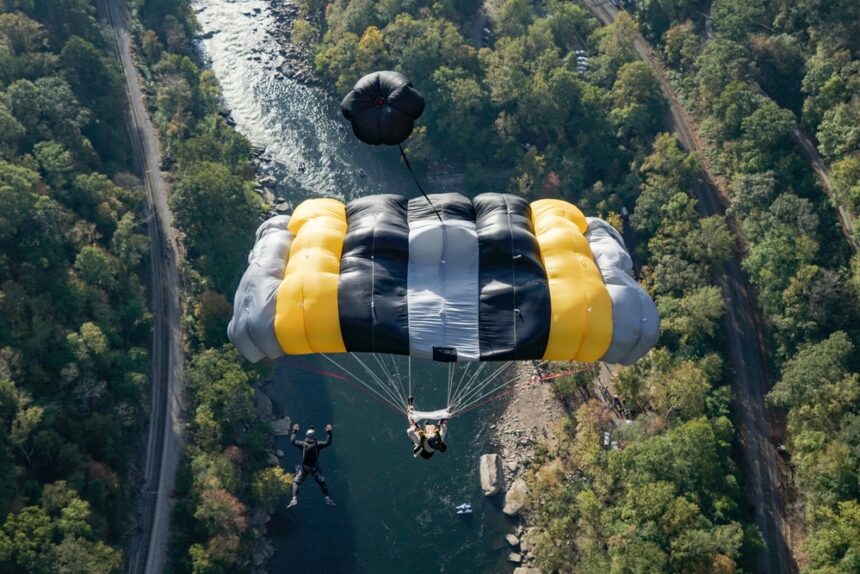
There is nothing quite like standing at the edge of an open aircraft door, 15,000 feet above the earth, and jumping. Tandem skydiving is the fastest-growing entry point into extreme sports — and for good reason. It strips away the complexity of solo jumping and hands first-timers the purest version of the experience: raw, unfiltered freefall with a certified instructor strapped to their back.
Whether the plan is to do it once for the thrill or to eventually earn a solo license, tandem skydiving is where almost every skydiver’s story begins.
What Tandem Skydiving Actually Involves
Tandem skydiving pairs a first-time jumper with a certified tandem instructor using a single, specially designed parachute system built for two. The jumper and instructor are connected via a secure harness system at four attachment points across the shoulders and hips — making it virtually impossible to separate during the jump.
Most tandem jumps take place from altitudes between 10,000 and 15,000 feet. At that height, the freefall phase lasts anywhere from 30 to 60 seconds, with the pair reaching speeds of up to 120 miles per hour before the parachute deploys. The canopy ride down typically lasts five to seven minutes, offering a quieter, breathtaking glide over the landscape below.
- Jump altitude: 10,000 to 15,000 feet
- Freefall speed: up to 120 mph
- Freefall duration: 30 to 60 seconds
- Canopy ride: 5 to 7 minutes
- Minimum age: 18 in most countries
Tandem Skydiving Safety — The Real Numbers
Safety is the first question every first-timer asks — and the stats are reassuring. The United States Parachute Association reports approximately one fatality per 500,000 tandem jumps, making it statistically safer than many everyday activities including driving. Tandem skydiving carries the lowest fatality rate of any skydiving discipline precisely because the instructor handles every technical element of the jump.
Every tandem rig is equipped with a reserve parachute and an Automatic Activation Device — a computerized system that deploys the reserve chute automatically if the primary fails. Modern skydiving equipment is engineered with multiple redundancies, and instructors undergo hundreds of hours of training before earning tandem certification.
What to Expect on Jump Day
First-timers arriving at a drop zone can expect a ground training session lasting anywhere from 20 to 45 minutes. Instructors cover body position during freefall, how to arch the back correctly, breathing techniques, and what to expect at each stage of the jump. No prior experience is needed — the instructor manages altitude awareness, parachute deployment, and the landing approach entirely.
Physically, the requirements are straightforward. Most drop zones set a weight limit of around 220 pounds, though some facilities accommodate up to 250 pounds with an additional fee. Comfortable, athletic clothing and lace-up shoes are recommended. Avoid sandals, loose jewelry, or anything that could become a hazard at high speed.
Why Tandem Skydiving Hooks People for Life
The psychological impact of a tandem jump is well documented. The rush of freefall triggers a significant release of adrenaline and endorphins — a combination that produces an almost euphoric state that can last hours after landing. Many first-timers describe the experience as genuinely life-changing, citing a shift in perspective and a heightened appreciation for everyday life. Some report that the moment of stepping out of the aircraft is the single most clarifying experience they have ever had — a split second where every distraction disappears and only the present moment exists..
It is also, increasingly, a gateway. A large percentage of tandem jumpers go on to pursue an Accelerated Freefall license, the internationally recognized solo skydiving certification that typically requires a minimum of eight supervised jumps. Drop zones around the world report that repeat bookings from first-time tandem jumpers are among their most consistent sources of new licensed skydivers. The sport has a way of getting under the skin — and one jump is rarely enough.