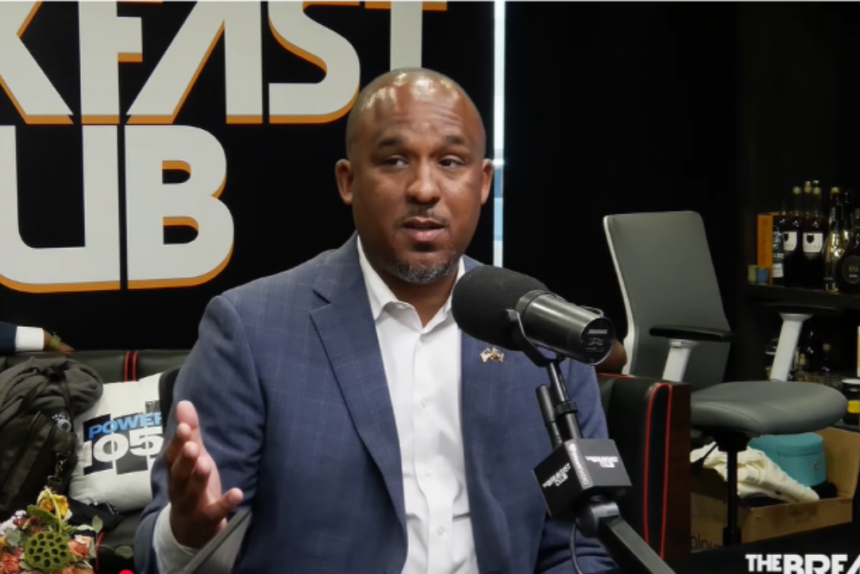
Democrat Scott Colom has won Mississippi’s U.S. Senate race, defeating Republican Sen. Cindy Hyde-Smith. The Associated Press called the race Wednesday evening, eight days after the election, once Colom’s lead grew to 4,669 votes. According to the Colom campaign, Hyde-Smith called Colom to concede. In a video posted Wednesday evening, she said she respected the decision of Mississippi voters, congratulated Colom and wished him well.
Colom finished with about 49.2% of the vote to Hyde-Smith’s 48.7%, according to AP tallies reported by The Guardian. An independent candidate, Ty Pinkins, took about 2%. Colom becomes the first Democrat elected to the Senate from Mississippi since 1982.
Why is Scott Colom’s win historic?
Most headlines call Colom Mississippi’s first Black senator since Reconstruction, and that’s true. Blanche Kelso Bruce, who was born enslaved, served until 1881. But the history goes further than that. Mississippi’s two Reconstruction-era Black senators, Hiram Revels in 1870 and Bruce in 1875, were chosen by the state Legislature. Voters didn’t elect senators directly until the 17th Amendment passed in 1913.
That makes Colom the first Black Mississippian ever chosen for the Senate directly by the state’s voters. In a state where Black citizens were blocked from voting for most of the 20th century, that milestone carries real weight. Colom, 43, is also the first Black person elected to any statewide office in Mississippi since Reconstruction.
How did Scott Colom win in deep-red Mississippi?
He made the race about prices. Colom nicknamed his opponent ‘Cindy High Prices,’ and his campaign’s most viral ad mocked Hyde-Smith’s answer to a question about rising beef prices. He drove a taco truck tied to that ad, visited college homecomings, and even talked to Trump supporters waiting in line for a rally the president held for Hyde-Smith the week before the election.
He also worked hard to turn out Black voters, who make up about 35% of the state’s electorate, while reaching out to white working-class voters. Former President Barack Obama endorsed him, and former Vice President Kamala Harris campaigned with him. On the other side, Hyde-Smith’s main message was to cast Colom as an extremist and the most radical Senate candidate of a lifetime. Trump won Mississippi by more than 22 points in 2024, and most forecasters had rated the seat safe for Republicans.
Why did the Mississippi Senate race take so long to call?
It came down to the last ballots. Colom’s lead was razor-thin on election night and grew as officials worked through thousands of provisional and affidavit ballots from a high-turnout election. Mississippi doesn’t have an automatic recount law.
The final count also raised concerns about rejected ballots. The Mississippi Free Press reported that Hinds County, the state’s largest county, accepted 817 affidavit ballots and rejected 1,609 others, a higher rejection rate than most counties. Brandon Presley, the 2023 Democratic nominee for governor, criticized ballots being thrown out over mistakes he said were made by poll workers, not voters.
Before the concession, The Hill reported that lawyers for the Senate Republicans’ campaign arm had demanded that election officials preserve records and provisional ballots, a move Colom’s lawyers called unlawful. With Hyde-Smith’s concession, it’s unclear whether any legal challenge will go forward.
What does Scott Colom’s win mean for the Senate?
The win adds to the Democratic majority that will take over in January, which the BBC puts at 55 seats with Alaska’s race still uncalled. Senate Democratic leader Chuck Schumer celebrated the result on X.
Colom also has a personal history with the seat. President Joe Biden nominated him to a federal judgeship in October 2022, and Hyde-Smith blocked it, even though Mississippi’s senior senator, Republican Roger Wicker, supported him. Colom has said he probably wouldn’t have run for Congress if he had been confirmed. Now he’ll serve alongside Wicker as Mississippi’s junior senator.