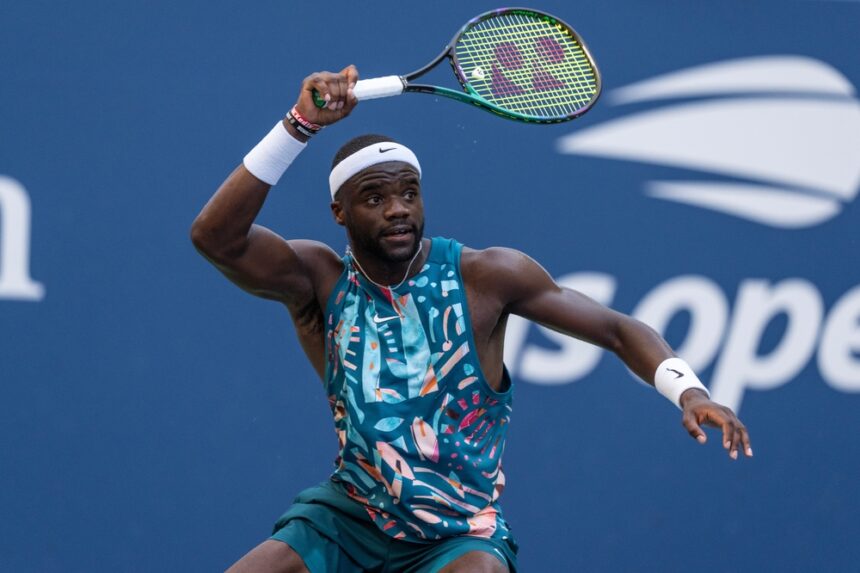
He shouldn’t have, not based on how the first three and a half hours went. Tiafoe fell down two sets to Alex Michelsen, then found himself two points away from elimination in the third set before somehow reversing the entire match, eventually closing it out 5-7, 3-6, 7-5, 6-3, 7-6(6) in four hours and 39 minutes to reach his third US Open semifinal in five years. It stands as one of the most complete comebacks of his career, and by his own account, one of the biggest wins of his life on this stage.
What actually went wrong for Tiafoe early in the match?
Almost everything. Playing in the cavernous Arthur Ashe Stadium rather than his beloved Louis Armstrong Stadium next door, where he had not lost in ten career matches, Tiafoe looked like a different player. He managed just four winners to Michelsen’s 15 in the opening set before handing over the decisive break on set point. The second set was worse.
Tiafoe fell behind in five of his first seven service games, got broken three times, and watched Michelsen calmly serve out a set that made the unseeded 22 year old look like the far superior player. Two sets down against a red hot opponent who had not dropped a set all tournament, the match appeared all but decided.
What was the actual turning point?
Michelsen’s own nerves, arriving at the worst possible moment for him. Serving for the match in the third set, one hold away from becoming the first American man to reach the semifinals without dropping a set since Jim Courier in 1991, Michelsen opened with back to back double faults. Tiafoe broke immediately to level the set at 5-all, then rode a stretch where he won 17 of the last 22 points to steal the third set outright. That swing changed everything.
Tiafoe carried the momentum straight into the fourth set, breaking early and holding firm to force a decider, while Michelsen, who had been remarkably composed for most of the afternoon, suddenly looked shaken, tossing his racket toward the court in frustration at one point.
How did the fifth set actually play out?
As tensely as a match like this deserved. Both men traded early breaks before settling into a stretch where neither could find separation, hitting more winners than unforced errors as the quality of tennis somehow rose even five hours in.
Tiafoe, who had managed only three aces across the first four sets, suddenly found seven of them in the fifth alone, including three in the final four points of a hold that pushed the set to 5-all. The match ultimately came down to a first to ten tiebreaker, where Tiafoe opened a lead, watched Michelsen claw back within a point, then closed it out behind a 135 mph ace and a forehand passing shot winner that finally ended it after four hours and 38 minutes.
What happened between the two players after the final point?
Something that said more about the moment than the scoreline did. Tiafoe cut his own celebration short, walked straight to Michelsen and pulled him into an embrace that lasted 23 seconds, with Michelsen sobbing on his shoulder before eventually walking off the court with a towel pulled over his head. Tiafoe later said he genuinely likes Michelsen and simply wanted to comfort him given how much the moment clearly meant, acknowledging the two shared some private words at the net that stayed between them.
How does this fit into Tiafoe’s bigger US Open story?
It extends something that already felt personal to him. Tiafoe first reached a US Open semifinal in 2022, returned to that same stage in 2024, and now becomes just the second American man this century to make three US Open semifinals, joining Andre Agassi.
He described himself as a fundamentally different competitor than the version of him who made those earlier runs, someone who has learned to trust that even a two set deficit against a surging opponent does not mean the match is finished.
Coming into Tuesday, Tiafoe had already needed a comeback from two sets down once before this tournament, in his opening round against Martin Damm, which makes Wednesday’s escape against Michelsen the second time in one fortnight he has pulled off exactly the kind of win most players only manage once in a career.