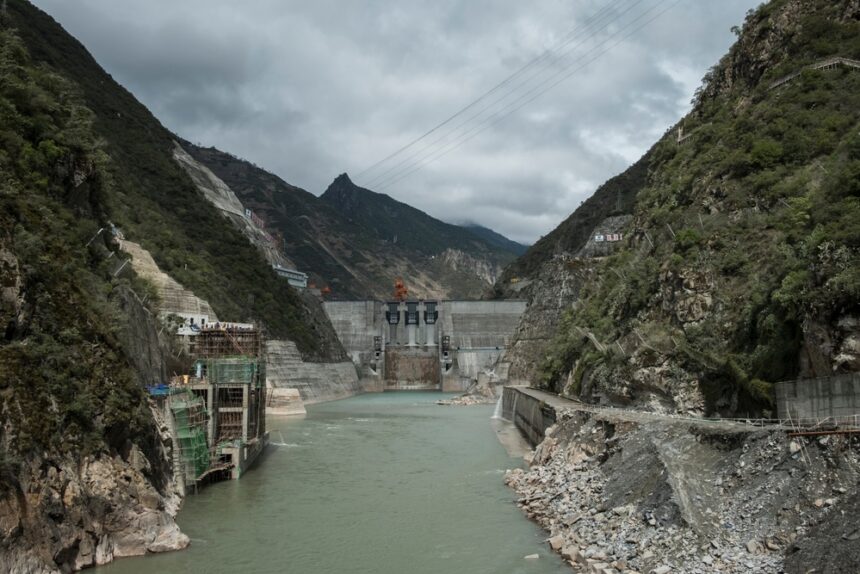
A reservoir dam in southern China’s Guangxi region developed a serious breach on July 6 after days of heavy rainfall driven by Typhoon Maysak, triggering evacuations and sending large volumes of water into downstream communities where residents were forced to seek shelter on upper floors and rooftops as homes flooded.
The Liulan Reservoir in Hengzhou city within the Nanning metropolitan area experienced a large failure in part of its embankment, with video footage circulating online showing water rushing through the damaged section and spreading into surrounding areas. The incident drew significant attention on Chinese social media platforms, where related topics trended as the emergency developed.
Multiple reservoirs reached dangerous conditions
The Liulan breach was not an isolated event. Local authorities identified several other reservoirs in the same region as having reached dangerous conditions amid the continued heavy rainfall, including three additional sites that were experiencing the same combination of rapidly rising water levels and structural stress that preceded the Liulan failure.
The simultaneous pressure on multiple water management structures reflects the severity of the rainfall that Typhoon Maysak brought to the region, overwhelming a system of reservoirs that under normal conditions would provide adequate flood control capacity. The downstream risk from any one of these structures failing extends to communities that depend on the reservoirs for both flood protection and water supply.
Emergency discharge that preceded the breach
Chinese state media reported that authorities at the Liulan Reservoir had taken action before the breach occurred, initiating an emergency water discharge the previous evening as water levels rose rapidly from continuous rainfall. A notice issued by the reservoir’s management station had scheduled flood-control discharge to begin at 10 p.m. on July 5, indicating that operators were aware of the rising risk and attempting to manage water levels before conditions became critical.
The breach occurred despite that emergency discharge, suggesting that the volume of water entering the reservoir during the typhoon-driven rainfall exceeded what the managed release could offset. The sequence of events, attempted discharge followed by structural failure, is a pattern that raises questions about the adequacy of the reservoir’s design and operational protocols for extreme weather events.
What residents described
Residents in communities downstream from the breach described flooding conditions that developed rapidly and with serious consequences for their homes and personal safety. Some villages experienced submersion severe enough to force people onto upper floors or rooftops to escape rising water. Those who spoke about the situation did so without identifying themselves, citing concerns about potential consequences for speaking publicly about a government-managed infrastructure failure.
The reluctance of residents to speak openly reflects a pattern that has emerged repeatedly during major infrastructure incidents in China, where public commentary about government-related emergencies can carry social and legal risks. The accounts they provided were consistent with the video footage circulating online showing significant water intrusion into populated areas.
The broader context of Typhoon Maysak
Typhoon Maysak’s impact on southern China brought the kind of concentrated, sustained rainfall that tests the limits of flood infrastructure across a wide region simultaneously. Guangxi, as a subtropical zone with historically significant flood events during typhoon season, maintains an extensive network of reservoirs and water management systems, but the combination of heavy pre-existing rainfall and a direct typhoon impact can produce conditions that exceed design tolerances even for well-maintained infrastructure.
Chinese authorities had not released detailed figures on the scale of displacement or property damage at the time this was reported. The full extent of the impact downstream from the Liulan breach and the other affected reservoirs remained unclear as the emergency response continued.