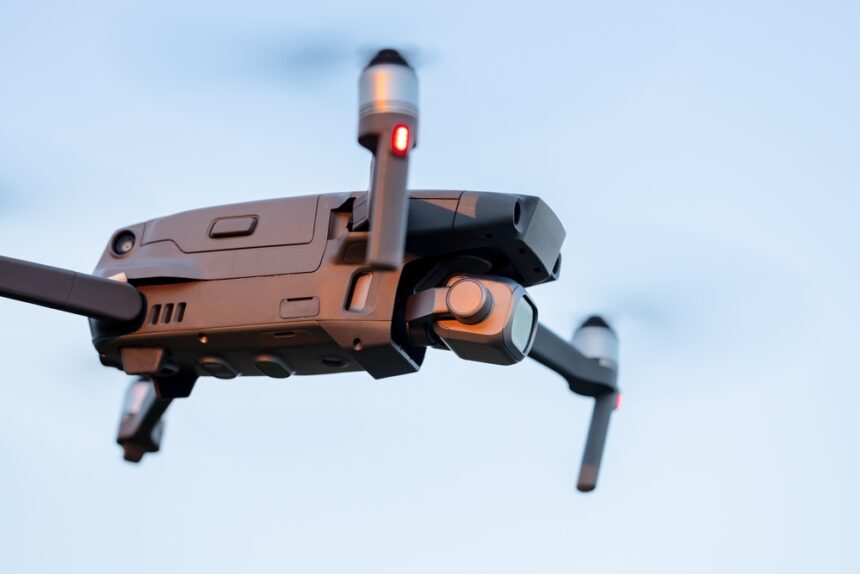
The FBI’s deputy director issued a stark warning Wednesday that the United States should expect explosive drones to be used in terrorist attacks on American soil, framing the threat not as a distant hypothetical but as an inevitability given what has already been demonstrated in conflicts overseas.
Speaking in a nationally broadcast interview, the deputy director described a security environment in which modern telecommunications infrastructure has fundamentally changed the geographic constraints of drone-based attacks. The connectivity provided by current cellular networks means that an operator located anywhere in the world, including on the other side of the planet, could potentially control a drone operating over an American city. He cited this capability explicitly, noting that a person based in China could fly a drone over New Orleans.
What has been seen overseas
The warning was grounded in documented precedent from active conflict zones. The Russia-Ukraine war has produced an extended demonstration of what explosive drones can accomplish at scale, with forces on both sides employing them extensively throughout the conflict. Ukrainian forces have conducted drone strikes deep into Russian territory, while Russian forces have used them against Ukrainian infrastructure and military targets. The tactical and logistical lessons from that conflict have not been confined to the parties directly involved.
The deputy director expressed concern specifically about smaller, more targeted drone systems capable of delivering explosive payloads with precision over relatively short distances rather than systems designed for large-scale mass casualty events. He indicated that a lone individual carrying out a single targeted attack represents a greater immediate concern than a coordinated large-scale assault.
That framing is significant. It positions the explosive drone threat within the broader category of lone-actor terrorism, which has proven particularly difficult for intelligence agencies to detect and prevent because it requires fewer resources, less coordination, and produces a smaller signals footprint than organized group operations.
The technology making it possible
The deputy director highlighted the role of 5G and LTE cellular networks in enabling this threat category. These networks provide high-bandwidth, low-latency connectivity that allows a drone operator to maintain real-time control over a device from thousands of miles away with the same responsiveness that would previously have required physical proximity. As that infrastructure has expanded both domestically and globally, the operational constraints on remote drone attacks have diminished considerably.
Commercial drone technology has simultaneously become more capable, more affordable, and more widely available, lowering the barriers for anyone attempting to adapt consumer hardware for offensive purposes. The combination of accessible technology and global connectivity is what makes the threat credible in ways that would not have been true even a decade ago.
Why the FBI is focused on this now
The deputy director’s public warning reflects a deliberate decision by the bureau to raise awareness of a threat vector before it produces a domestic incident rather than after. The FBI has been monitoring drone-related threats with increasing attention, and the warning this week connects directly to the disrupted plot targeting the UFC event at the White House last weekend, in which multiple people were arrested after authorities uncovered a plan involving explosive drones targeting an outdoor event attended by tens of thousands of people.
That case demonstrated that the threat the deputy director described is not purely theoretical. The technology is available, the intent exists in some quarters, and the operational framework for such an attack has now been demonstrated in the planning stage on American soil. What has not yet occurred is a successful explosive drone attack in the United States. The FBI‘s message is that preparing for that possibility cannot wait until after it happens.