While the United States was engaged in its military confrontation with Iran and European governments remained preoccupied with Russia, China moved to expand its assertiveness across disputed maritime territory in the Pacific, advancing pressure near Taiwan, challenging Japan’s maritime boundaries, and establishing a physical foothold near the Philippines in the South China Sea.
The pattern reflects a calculated approach that analysts have described as incrementalism, a strategy of taking small but consequential steps that individually stop short of triggering a major response but cumulatively shift the balance of power in Beijing’s favor over time. The Iran conflict provided a window for several of those steps to be taken with reduced international scrutiny.
What China did during the conflict period
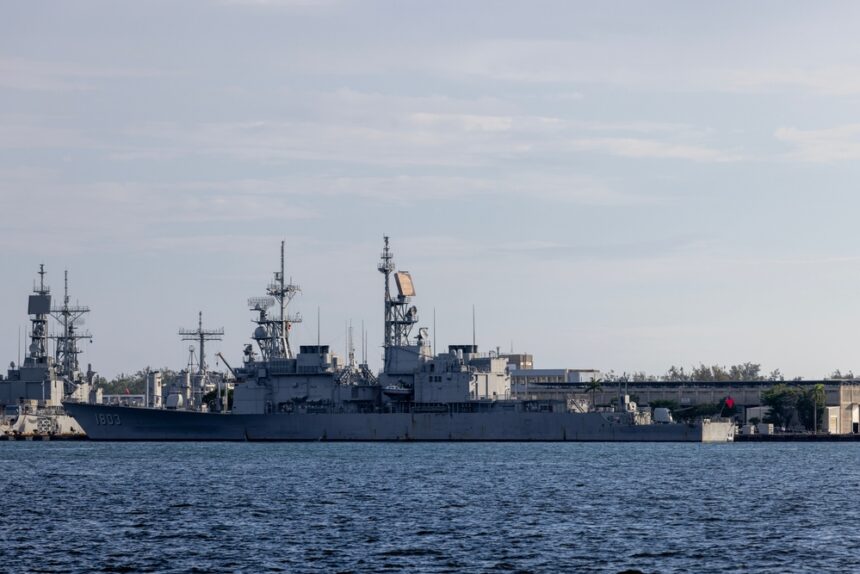
Chinese coast guard vessels conducted patrols east of Taiwan in late May, operating in an area where Japan and the Philippines had been working through diplomatic channels to peacefully resolve their overlapping maritime boundary claims. The timing of those patrols, coinciding with ongoing diplomatic engagement between two American allies, was not seen as accidental.
More significantly, China deployed a small floating structure at Scarborough Shoal, a disputed feature located off the coast of the Philippines in the South China Sea. Analysts who track Chinese maritime behavior view such structures as deliberate opening moves. If left in place, the structure creates a foothold that can be expanded over time into a larger installation, potentially a military base of substantial strategic significance. China has followed this pattern elsewhere in the South China Sea, converting what began as modest presences into heavily fortified outposts.
The Iran war cut both ways for Beijing
The conflict was not entirely advantageous for China. The naval blockade the United States imposed on Iranian ports as part of its military campaign against Tehran had a direct impact on Chinese energy supplies. China is a major importer of Iranian oil, and the blockade forced a reduction in those flows, creating economic pressure that Beijing could not simply absorb without consequence.
That dynamic illustrates a point that analysts have been making for years about non-military leverage over China. The country’s dependence on imported energy, particularly oil, represents a structural vulnerability that Western nations have largely underused as a tool of strategic pressure. The Iran conflict demonstrated what a sustained maritime blockade can do to an oil-dependent economy in a compressed timeframe, and the same mechanism, applied to China’s broader import routes, would impose significantly larger consequences given the scale of Chinese energy consumption.
Strategic implications for Washington
The events of recent months have reinforced the argument that the United States and its allies should remain focused on the full range of options available short of direct military conflict when dealing with Chinese expansionism. Those options include coordinated tariff increases, expanded economic sanctions, and the credible threat of disrupting China’s energy import supply chain in a crisis scenario.
Analysts have noted that China’s strategic oil reserves may provide only a limited buffer against sustained disruption, giving the threat of an energy blockade genuine deterrent value if Beijing understands it as a real possibility rather than an empty warning.
The broader picture is one of a Pacific strategic environment that did not pause while American attention was directed elsewhere. The structures China places, the patrols it conducts, and the boundary lines it implicitly contests do not reset when Washington refocuses. Managing that reality alongside other global commitments is the central challenge facing American foreign policy as the Iran chapter closes and the Pacific chapter continues.