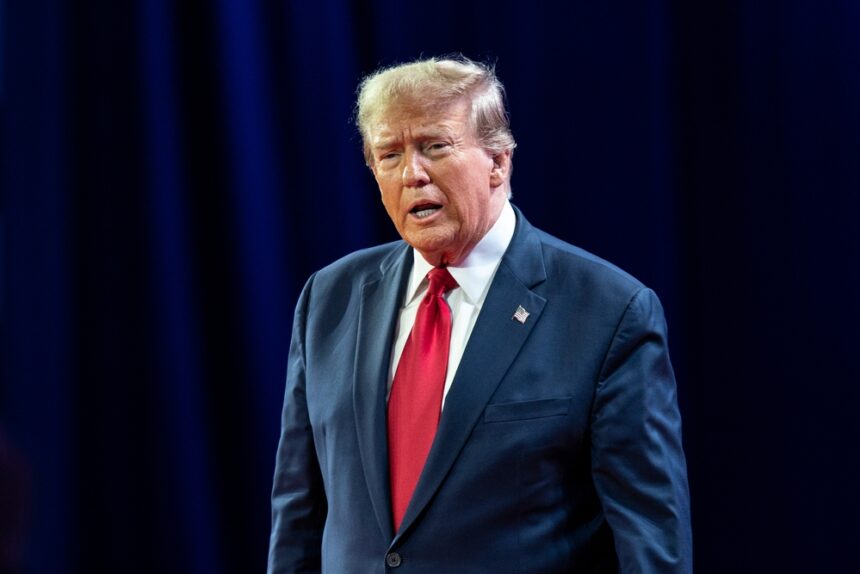
President Donald Trump moved to temporarily suspend a recently launched American naval operation in the Strait of Hormuz in early May, a decision that senior Israeli officials say was tied directly to signs of forward movement in indirect negotiations with Iran. The mission, which had been tasked with escorting commercial vessels through one of the world’s most strategically sensitive maritime corridors, was placed on hold to allow diplomatic efforts to continue without the added friction of an active military escort program running alongside them.
Trump framed the pause publicly as a short-term measure tied to the possibility of finalizing a broader agreement, while making clear that the wider American blockade on Iranian ports would remain fully in force. The distinction mattered. This was not a withdrawal from pressure but a recalibration of where that pressure was being applied.
What Israeli officials believe drove the decision
According to senior officials in Jerusalem, the Trump administration’s move reflected confidence that recent contacts between Iranian and American officials were producing tangible results. Diplomacy brokered through Pakistan had been generating communication between the two governments, and Iran’s foreign minister had been engaged in a series of indirect exchanges that Israeli observers interpreted as more substantive than the usual diplomatic signaling.
That reading, however, came with a significant caveat. The Israeli officials pointed to a fault line running through Tehran’s leadership, specifically the question of whether commanders within Iran’s Islamic Revolutionary Guard Corps would ultimately consent to whatever framework emerged from these talks. The IRGC has historically operated with a degree of independence from Iran’s diplomatic apparatus, and its willingness to accept constraints on its influence and capabilities remains the central unknown in any emerging agreement.
Pressure from within
Israeli officials offered an assessment of conditions inside Iran that frames the broader strategic picture. The combination of the American naval blockade and the disruption to commercial shipping through the Strait of Hormuz is, in their reading, generating real economic strain inside the country. That strain is beginning to create internal tension within the Iranian leadership, accelerating pressure on decision-makers to find a path out of the current standoff.
The Strait of Hormuz is one of the most consequential chokepoints in global trade, connecting the Persian Gulf to the Gulf of Oman and carrying a significant share of the world’s oil shipments. Any sustained disruption to navigation there reverberates through energy markets and supply chains well beyond the region. Iran has already demonstrated willingness to restrict traffic through the strait as a form of leverage, and the blockade’s effect on Iranian ports has compounded the economic pressure Tehran is absorbing.
The question no diplomat can yet answer
The broader diplomatic track involves multiple parties and layers of mediation, and Trump has publicly characterized the talks as close to producing a result. He has suggested Iranian officials have effectively acknowledged that obtaining nuclear weapons is no longer on the table, a framing Tehran has not formally confirmed but has also not directly repudiated.
What remains unresolved, and what Israeli officials say is the true test of whether any agreement can hold, is whether the political will exists inside Iran to translate indirect progress into something binding. The pause in the Hormuz mission buys time for that answer to emerge. Whether the answer turns out to be the one Washington and Jerusalem are hoping for is a different matter entirely, and one that no amount of diplomatic momentum can guarantee.