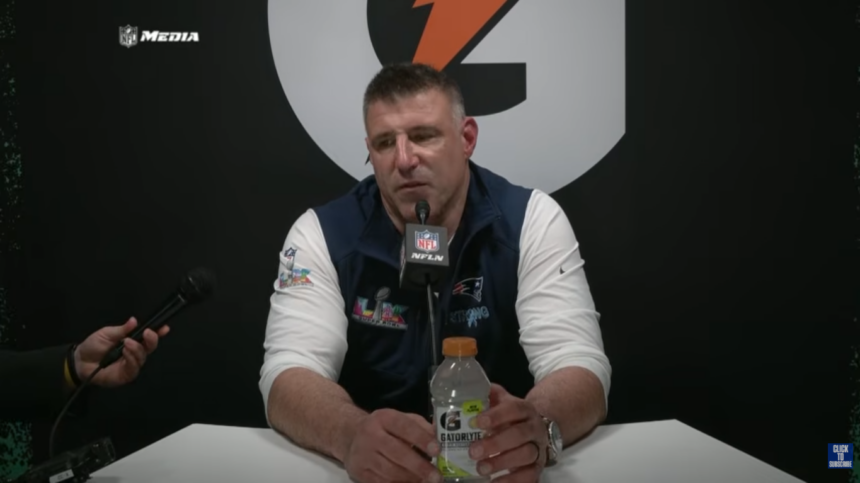
New England QB received pre-game injection before 29-13 loss to Seahawks; shoulder injury from AFC Championship Game affected performance with multiple turnovers and sacks despite quarterback’s insistence he felt ready
Drake Maye took the field for Super Bowl LX operating under significant physical disadvantage. The New England Patriots quarterback revealed that he received a pain-killing injection for his injured right throwing shoulder before the game against the Seattle Seahawks, underscoring the severity of an injury that had plagued him since the AFC Championship Game. Though Maye reported feeling adequately prepared after limited practice time during the week, the injection requirement suggested the shoulder remained a legitimate concern heading into football’s biggest stage.
- New England QB received pre-game injection before 29-13 loss to Seahawks; shoulder injury from AFC Championship Game affected performance with multiple turnovers and sacks despite quarterback’s insistence he felt ready
- The injection as indicator of lingering doubt
- Performance affected by injury and protection breakdowns
- The turnover nightmare
- Historical perspective on Super Bowl performance
The injury itself occurred late in the third quarter of the AFC Championship Game when Maye landed on his right shoulder during a 13-yard scramble. The impact forced the Patriots to manage his recovery carefully in the days leading up to the Super Bowl. Maye was limited in one practice session and held out of another entirely, creating questions about his availability for the championship game. However, Maye described experiencing a turning point upon arriving in California on February 1, claiming he felt significantly better and participated fully in the Patriots’ three preparation workouts leading into Sunday’s matchup. Despite these positive reports, he remained on the official injury report throughout the week per NFL protocol.
The injection as indicator of lingering doubt
The decision to administer a pain-killing injection before kickoff served as a telling indicator of the lingering concerns about Maye’s shoulder health. While the quarterback insisted Thursday that he felt great and wouldn’t put his team in jeopardy by playing at less than full capacity, the injection suggested the medical staff harbored reservations about the extent of his recovery. Pain management injections typically indicate that underlying injury concerns remained despite the player’s subjective assessment of readiness.
Maye acknowledged the shoulder’s presence but deflected direct responsibility for the performance, claiming the injection sufficiently numbed the area so that limited sensation remained. His assertion that “it felt all right” masked the reality that he had required pharmaceutical intervention to compete on the Super Bowl stage—an acknowledgment of physical compromise that contradicted his earlier statements about full recovery.
Performance affected by injury and protection breakdowns
Whether the shoulder significantly impaired Maye’s performance remained debatable, but his statistical output suggested struggles beyond typical Super Bowl difficulty. He completed 27 of 43 passes for 295 yards with two touchdowns and two interceptions a final line padded by garbage-time production in the fourth quarter. The Patriots’ offense managed only intermittent rhythm throughout the first three quarters, with Maye’s protection overwhelmed repeatedly by the Seahawks’ relentless pass rush.
The quarterback was sacked six times, though the shoulder injury clearly wasn’t the only culprit. Rookie left tackle Will Campbell, the fourth overall pick in the previous April’s draft, struggled significantly against Seattle’s defensive front. According to Next Gen Stats, Campbell surrendered 14 pressures the most given up by any NFL player in a single game this entire season. That alarming statistic underscored how much the Patriots’ offensive line deteriorated under playoff pressure, compounding whatever physical limitations Maye’s shoulder imposed.
The turnover nightmare
The shoulder’s impact became most evident in Maye’s ball security. He turned the ball over three times, including a catastrophic strip sack late in the third quarter that the Seahawks converted into a touchdown for a decisive 19-0 lead. The fumble essentially ended the competitive game, as Seattle cruised to victory afterward. Maye then threw two interceptions in the fourth quarter, one of which was returned 45 yards for another touchdown. That turnover parade reflected either injury-related decision-making difficulties or fundamental breakdowns in the Patriots’ offensive execution likely a combination of both factors.
Historical perspective on Super Bowl performance
Maye’s Super Bowl showing ranked among the worst postseason performances in recent NFL history. His QBR (Total Quarterback Rating) of 40.0 ranked as the third-lowest among all quarterbacks who made at least three postseason starts since the metric was introduced in 2006. Only Peyton Manning in 2015 (28.4) and Rex Grossman in 2006 (30.5) finished with lower ratings neither of which led their teams to championship victories. The historical comparison placed Maye’s performance in context with some of the league’s most poorly executed playoff runs.
The shoulder injection ultimately symbolized the Patriots’ Super Bowl experience: a team managing injury concerns, protection breakdowns, and performance pressure that proved too much to overcome against an elite Seattle defense that was simply playing better football.