
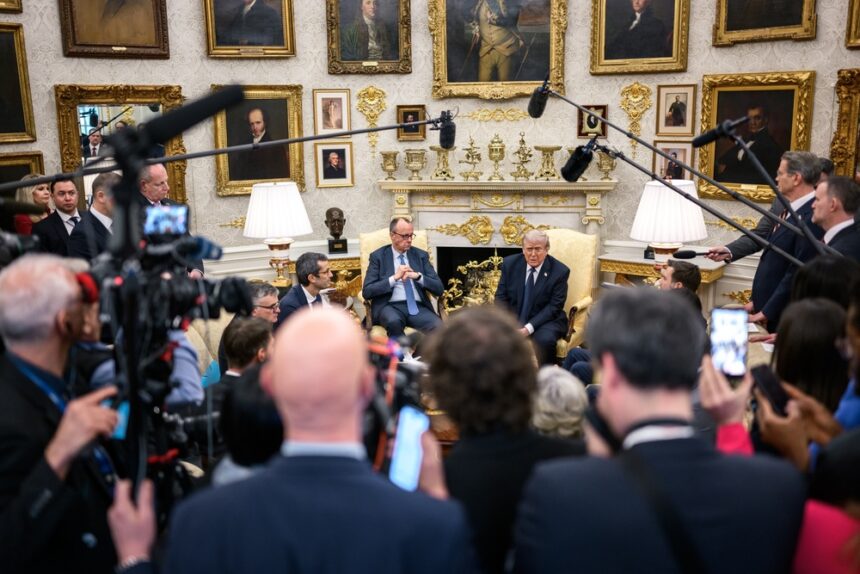
A federal judge in Washington on Nov. 25 declined to block a series of taxpayer funded White House ads that ran in the weeks before the Nov. 3 midterm elections.
U.S. District Judge Loren AliKhan denied the Democratic National Committee’s request for a preliminary injunction and a stay. AliKhan sits on the U.S. District Court for the District of Columbia.
She found that the DNC had not shown it would suffer irreparable harm now that the midterms are over. The ruling came three weeks after voters went to the polls.
What are the White House ads?
The White House ads began airing in September and were paid for with Department of Homeland Security funds that Congress had set aside to commemorate border security efforts.
The ads ran under a $20 million contract. Some were also posted on the White House YouTube page and on social media. The ads aired on television in the final weeks of the campaign.
The White House defended them as public service announcements. The administration has said the White House ads were meant to inform the public about border security, according to reports.
Why did the DNC sue over the White House ads?
The DNC sued the Trump administration on Oct. 7. It argued that the White House ads promoted President Donald Trump and criticized Democrats during the final stretch of the campaign. The suit was filed less than a month before Election Day.
The party called the spots illegal government propaganda meant to boost the president’s campaign message just weeks before Election Day. The DNC said taxpayers should not foot the bill for messages that, in its view, served a partisan purpose.
What does federal law say about government propaganda?
Federal law bars agencies from using appropriated money for publicity or propaganda unless Congress has specifically authorized it. The rule is meant to keep public money from being used to sway voters or promote officials.
The Government Accountability Office has long treated three kinds of material as prohibited under that rule. They include content that is purely partisan, content that amounts to self promotion by an agency and content that hides the government’s role as the source.
The restriction typically appears in annual spending bills passed by Congress. The GAO, a nonpartisan congressional watchdog, issues legal opinions on whether agencies have violated it.
Why did the judge rule against the DNC?
To win a preliminary injunction, a party must show it is likely to suffer irreparable harm without one. Courts also weigh whether the party is likely to win on the merits, the balance of hardships and the public interest.
Judge AliKhan concluded that the DNC had not met that burden once the midterms had passed. That finding was enough to deny the request without a final ruling on the ads themselves.
The ruling addressed only the request for emergency relief and did not decide whether the White House ads broke the law.
What happens next with the White House ads case?
The lawsuit itself remains pending unless it is dismissed or withdrawn, and the DNC could still pursue its claims. It was not immediately clear whether the DNC would appeal.
The case highlights a long running debate over where government communication ends and political messaging begins.
Watchdogs and both parties have raised such concerns about administrations over the years, and the GAO can review whether spending crosses the line. Critics of past administrations, Democratic and Republican, have accused them of crossing that line with taxpayer funded messaging.