

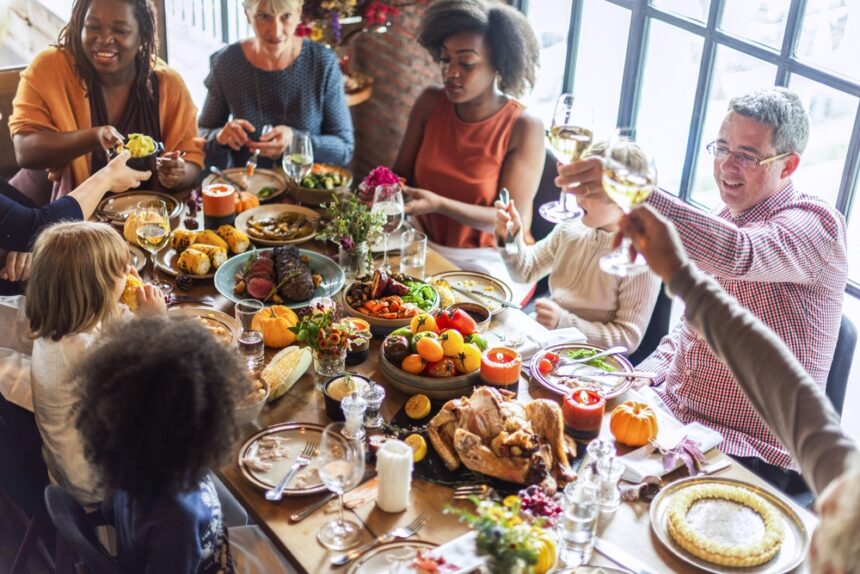
Thousands of Americans will serve or receive free Thanksgiving meals this year, continuing a tradition of sharing food that dates back to the first Thanksgiving in 1621.
For many, the meal offers more than food. It is a chance to give back and to connect with neighbors.
Where did the tradition of sharing Thanksgiving meals begin?
The tradition began in Plymouth in 1621, when colonists held a community feast after a strong harvest. Wampanoag leader Massasoit and about 90 of his men joined them and brought five deer.
Edward Winslow, a Mayflower passenger who recorded the event, later wrote to a friend in England that the colonists had so much they wished to share their plenty.
The Continental Congress called for a national day of thanksgiving in 1777, and President George Washington did the same in 1789.
How many Thanksgiving meals do charities serve?
About 5,300 meal sites across the country prepare more than 173 million meals a year, or about 473,000 a day, according to the last federal study on the subject, conducted more than two decades ago. The figure today could be even higher.
Loaves & Fishes in Sacramento, California, serves lunch to about 600 people a day and is preparing Thanksgiving meals for about 800 guests. It holds its holiday dinner on the Tuesday before Thanksgiving to coordinate with other local food programs.
DC Central Kitchen in Washington expects to serve a record of just over 72,000 holiday meals. A spokesperson noted that it is just one organization in one city and urged people worried about rising hunger to get involved locally.
Why do volunteers flock to Thanksgiving meals?
Volunteering rises around the holiday. The director of Loaves & Fishes said the group sees overwhelming generosity, including a donor who recently dropped off a carload of frozen turkeys, and that serving spots for Thanksgiving meals can be competitive.
Americans volunteer about 70 hours a year on average, according to Census Bureau and AmeriCorps research. The most popular activity is preparing, serving and distributing food.
How are food pantries meeting demand?
More than 32,000 food pantries distribute nearly 3 billion pounds of food a year, enough for more than 2 billion meals. Retailers such as Aldi and Walmart are among the corporate donors that supply some pantries.
Our Daily Bread in Stillwater, Oklahoma, serves about 1,300 households a month and expects demand to rise through the holidays. Community groups assemble boxes with a turkey and all the trimmings.
The Society of St. Vincent de Paul in Cincinnati plans to hand out more than 1,000 meal kits. Flint Hills Breadbasket in Manhattan, Kansas, expects about 40,000 visits this year, or roughly 770 families a week.
The Atlanta Community Food Bank, which serves 29 counties through 700 partners, said many people are needing help for the first time as they make hard choices about money. About 60% of its food comes from large retailers that want to avoid waste, and the rest is purchased.
What do Thanksgiving meals mean beyond food?
Leaders say Thanksgiving meals also provide dignity and connection.
Loaves & Fishes asks guests only for their name and sets tables with fresh flowers and real cutlery. Our Daily Bread pairs volunteers with guests as they shop.
DC Central Kitchen runs a culinary job training program, and half its paid kitchen staff are graduates. In Detroit, Capuchin Soup Kitchen, founded in 1929, serves about 1,000 people a day.
Some guests later give back by donating or volunteering, carrying forward the spirit that began at Plymouth.