Pennsylvania health officials reported a fifth measles associated death on Sept. 30, an unvaccinated Lancaster County resident, as the state’s outbreak reached 943 confirmed cases.
Where do the numbers stand?
Cases have risen to 943 across 39 counties since the outbreak began in late April, with 176 hospitalizations. Forty of those cases were recorded since Sept. 28 alone, and detections have increased over recent months. That represents roughly 150 additional cases in the past week.
What is known about the death?
Very little, by design. The state said the person was unvaccinated and a Lancaster County resident, declined to release an identity and cited privacy law, saying families deserve to mourn privately. That is a reasonable position and it is also why no further detail is available.
What do the vaccination figures show?
Four of the 943 cases occurred in vaccinated people, under 1 percent. That count has not changed since the figure stood at four of 792 cases a week ago, meaning roughly 150 new infections produced no additional breakthrough cases. Two doses provide an estimated 97 percent protection, and a small number of breakthrough infections in an outbreak this size is what public health officials expect from a vaccine working as intended.
How severe has this been?
Roughly one in five identified patients has been hospitalized, which matches the 176 figure against 943 cases. The state puts mortality at one to three deaths per 1,000 cases, and five deaths in 943 cases sits above that range, though small numbers make any rate unstable and the state’s associated definition is broader than a cause of death determination.
How does this compare nationally?
It is now the second largest recent outbreak. The Pennsylvania measles outbreak exceeds a Texas outbreak that produced 762 cases between January and August 2025, and remains below a South Carolina outbreak that reached 997 cases between October 2025 and April 2026. At the current rate it would pass that figure within weeks.
What are the symptoms?
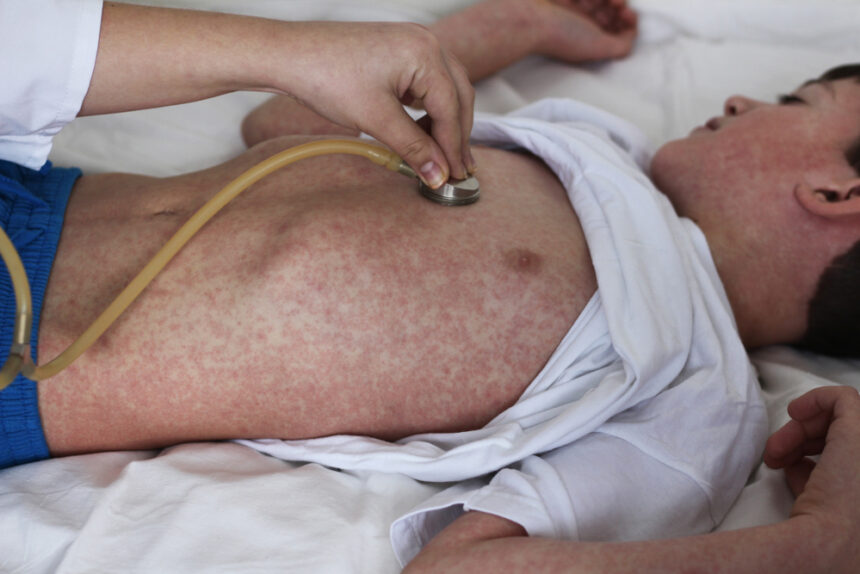
Fever, cough, runny nose and red watery eyes appear first, 7 to 21 days after exposure, followed by a rash starting on the head and moving down the body. A person is contagious for about four days before the rash appears and four days after, which is why transmission occurs before anyone knows they are ill.
Why does it spread so readily?
Airborne persistence. The virus travels when an infected person breathes, coughs or sneezes, and remains viable in the air and on surfaces for up to two hours after they leave. That is the mechanism behind transmission in waiting rooms, shops and schools where no direct contact occurred.
What should people do?
Check vaccination records through a physician or state immunization registry. Anyone in an affected county with symptoms should call ahead rather than arriving at a clinic. Infants under 12 months, pregnant women and people with weakened immune systems face the greatest risk and should consult a doctor about exposure. The figures here reflect Sept. 30 and will change.