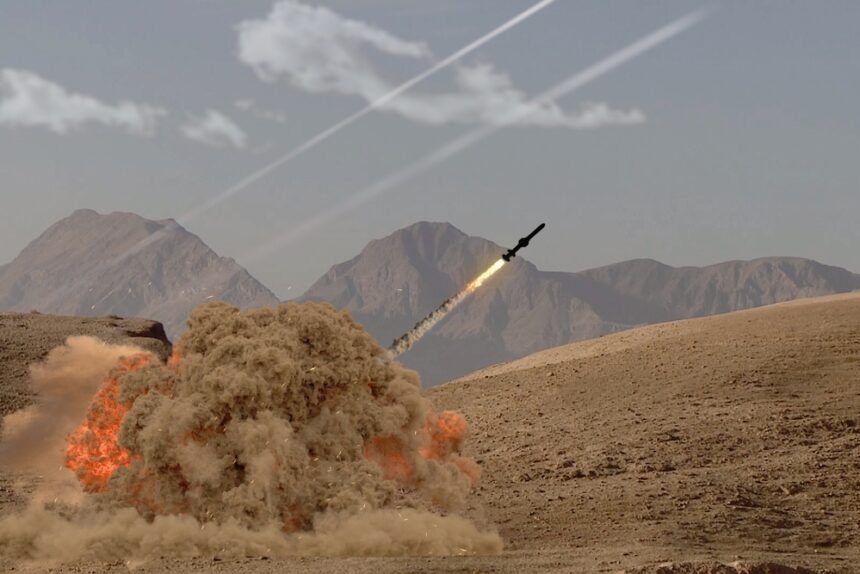
The United States condemned Israeli airstrikes on a Syrian military airfield on Tuesday, calling the attack an unnecessary escalation and urging both countries to pursue diplomatic solutions rather than military ones.
U.S. special envoy for Syria Tom Barrack said on Aug. 18 that Washington was deeply concerned by the Israeli strikes on Abu al-Duhur Airbase in Idlib province, which Syrian state media reported was hit eight times earlier in the day. No casualties were reported, and the military declined to comment.
Barrack said the strikes do not advance regional stability and that the current Syrian government under President Ahmed al-Sharaa had neither adopted a threatening posture toward Israel nor maintained proxy forces that could justify such an attack. The Sharaa government had instead repeatedly signaled a preference for de-escalation.
What happened at Abu al-Duhur
Abu al-Duhur Airbase is in Idlib province in northwestern Syria, a region that saw significant conflict during the country’s long civil war and remains contested. Syrian state media said the airfield was struck eight times. The Israeli military has conducted periodic strikes in the country over the past several years, typically targeting weapons transfers to Hezbollah or Iranian military infrastructure. Israel’s typical practice of neither confirming nor denying specific operations remained consistent Tuesday.
The diplomatic rebuke from Washington
The United States’ public criticism of Israeli military action represents a notable moment. American officials have generally been reluctant to make such direct criticisms, and the language Barrack used is a stronger statement than Washington typically makes about such actions.
The framing matters. By noting that Sharaa’s government has not adopted a predatory posture, Barrack implicitly argues that the historical justification for these strikes, targeting Iran-backed forces and weapons routes, does not apply now. That argument draws a distinction between the previous Assad government’s tolerance of Iranian military presence in the new government’s stated intent to pursue a different foreign policy orientation.
The Syrian government’s position
The current government emerged from the fall of Bashar al-Assad in late 2024. Ahmed al-Sharaa, also known as Abu Mohammed al-Jolani, became the new leader and has sought international recognition and the lifting of sanctions.
The Sharaa government has made de-escalation a stated priority, recognizing that military conflict would be extremely costly for a government trying to rebuild institutions and the economy. Whether the assurances are viewed as credible is a separate question, and continued military operations suggest some skepticism remains.
What comes next
The U.S. statement calls for diplomacy without specifying what leverage Washington intends to apply. No response to the American criticism had been made public as of the time of this article.
The strikes and the American condemnation introduce a new tension point against the backdrop of the ongoing Iran conflict and the broader reshaping of Middle East alliances throughout the year.