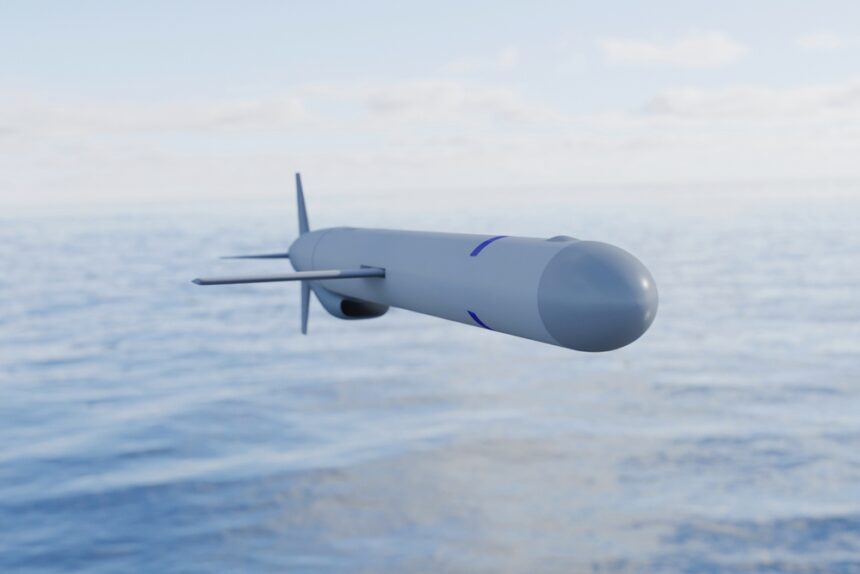
Ukraine‘s ambassador to the United States said on July 30 that Kyiv urgently needs new Patriot anti-ballistic missiles to defend against Russian strikes this winter, warning that Russia is significantly expanding its production of ballistic missiles and that Kyiv currently lacks the capability to intercept them effectively.
The ambassador made the remarks at an event hosted by The Christian Science Monitor, describing ongoing discussions with the Pentagon about the possibility of Ukraine producing the missiles domestically. She said that timeline remains uncertain, with estimates ranging from one year to five years depending on how quickly the production process could be established and the necessary technology transferred.
The warning about winter vulnerability reflects a pattern in the conflict, in which Russian aerial attacks have historically intensified in colder months to target Ukraine’s energy infrastructure and civilian heating systems. A gap in anti-ballistic capability heading into that period would leave Ukrainian cities more exposed to a category of weapon that its existing defenses have struggled to address.
What Ukraine can and cannot stop
The ambassador described Ukraine’s air defense capabilities in some detail, noting that Kyiv had achieved a high interception rate against drones and smaller missiles, stopping roughly 95 to 98 percent of those threats on nights when hundreds are launched. That performance reflects real progress in defensive capabilities since the early days of the conflict, when Ukraine’s air defenses were far less integrated and effective.
Ballistic missiles present a fundamentally different challenge. Their trajectories are faster and more difficult to predict than cruise missiles or drones, and the interceptor missiles required to defeat them are different from those used against lower-tier aerial threats. Kyiv currently lacks sufficient capability in this domain, and the ambassador said Russia is well aware of that gap and has been scaling up ballistic missile production accordingly.
That intelligence about Russian production priorities underscores the urgency. When an adversary identifies a vulnerability in your defenses and shifts resources to exploit it, the defensive gap becomes more dangerous over time rather than less. The push to secure either new Patriot batteries, additional interceptors, or a domestic production capability is a direct response to that dynamic.
The Patriot production conversation
The ambassador’s reference to Pentagon discussions about domestic Ukrainian production connects to a separate and ongoing diplomatic process. President Trump said the day before, speaking with the Financial Times, that he had not made a decision on whether to grant Ukraine a license to manufacture Patriot missiles domestically. He described the weapon as extraordinary and said the United States would need to be careful about which countries it licenses to produce its advanced military technology.
The ambassador’s characterization of the timeline as potentially spanning one to five years suggests that even an optimistic resolution to those licensing discussions would not produce missiles in time for the coming winter. What Ukraine may need most immediately is not a production license but deliveries of existing interceptors from existing manufacturers, with the production question representing the longer-term solution to a structural dependency.
The broader air defense picture
Ukraine’s air defense challenge has been shaped by two compounding problems throughout the conflict. The first is the sheer volume of Russian aerial attacks, which have required Ukraine to spend down its stockpiles of interceptors at a rate that Western suppliers have sometimes struggled to replenish. The second is the evolution of Russian tactics, which have moved toward cheaper drone swarms combined with more targeted ballistic missile strikes in ways designed to overwhelm and exhaust the defenses.
The ambassador’s statement about 95 to 98 percent interception rates against drones and smaller missiles is significant, but so is what she left implicit. At those volumes, even a two to five percent miss rate means a meaningful number of weapons reaching their targets on a given night. And for ballistic missiles, where the interception rate is far lower, the consequences of a gap are proportionally more severe.
The winter deadline she described is not abstract. Russia has struck Ukrainian power generation and heating infrastructure in multiple previous winters, and the pattern suggests similar operations are being planned for the months ahead.