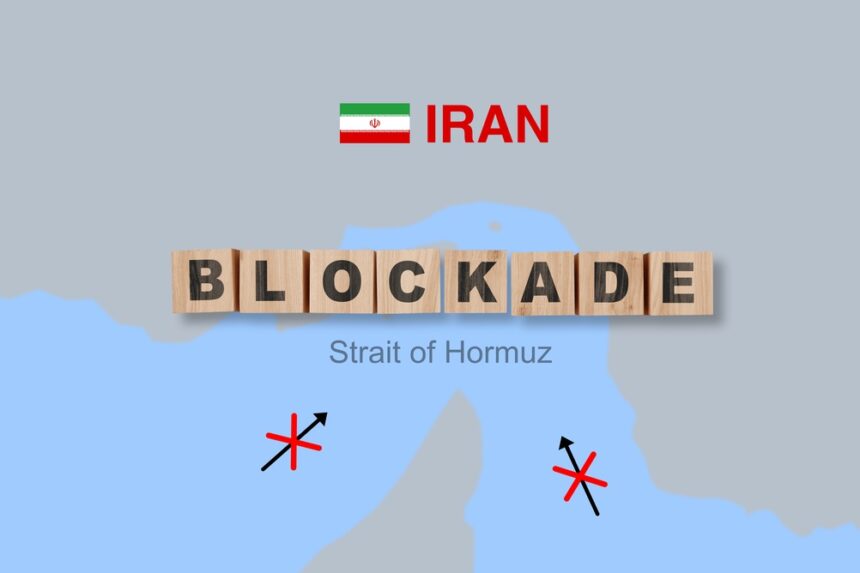
U.S. naval forces fired Hellfire missiles into a cargo ship attempting to breach the American blockade of Iran on Wednesday, disabling the vessel before it could reach an Iranian port, as Middle East tensions rose further following a Houthi attack in the Red Sea that killed six people.
U.S. Central Command said its forces disabled the steering gear of the Vela Nova, a Panama-flagged cargo vessel, after it attempted to transit the Gulf of Oman toward an Iranian port in violation of the blockade. A Navy MH-60 helicopter fired two Hellfire missiles into the ship’s engine room after the civilian crew ignored repeated warnings from American forces.
The command said the ship is no longer transiting to Iran and that the blockade remains in full effect.
The blockade and its enforcement
As of Aug. 11, U.S. forces had redirected 55 commercial vessels attempting to run the blockade, disabled three noncompliant ships and boarded two. The Vela Nova episode is the latest in a pattern of enforcement actions that have been escalating.
Central Command described its forces in the region as highly vigilant, lethal and ready, language that signals the command intends to enforce the blockade aggressively regardless of the nationality of vessels involved or the civilian nature of their crews.
The use of Hellfire missiles against a commercial ship’s engine room is a significant military action. Hellfire missiles are precision guided munitions typically associated with strikes against armored vehicles and installations. Their use against a commercial vessel’s propulsion system reflects a deliberate choice to disable rather than sink or destroy the ship, preserving the crew’s ability to survive and exit the enforcement zone. Whether the vessel and its crew sustained casualties was not immediately specified in Central Command’s statement.
The Houthi attack in the Red Sea
The simultaneous escalation in the Red Sea, where the Iran-backed Houthi movement carried out an attack on a commercial ship that killed six people, adds another dimension to a regional security situation that has been deteriorating throughout the conflict. The Houthi attacks on Red Sea shipping have been ongoing since late 2023, disrupting global commercial traffic and forcing ships to reroute around the Cape of Good Hope, adding significant time and cost to voyages between Europe and Asia.
The death toll of six from Wednesday’s attack represents one of the more lethal individual Houthi strikes against commercial shipping in recent months. Details on the vessel attacked and its flag state were not included in the initial reporting.
The broader conflict context
The naval enforcement operations against Iran and the Houthi attacks on Red Sea shipping are both products of the broader U.S.-Iran conflict that has been under way for approximately six months. The blockade was imposed as part of a strategy of economic pressure intended to degrade Iran’s capacity to sustain its military and financial operations.
Iran has maintained that it is capable of continuing indefinitely, while the administration has expressed confidence that economic pressure is working and that Tehran lacks the resources to sustain a prolonged confrontation. Neither side has publicly outlined specific conditions for a negotiated resolution, and the events of Wednesday suggest the enforcement dimension is intensifying rather than easing.
The redirection and disabling of commercial vessels attempting to breach the blockade creates economic pressure not only on Tehran but also on the shipping companies and flag states whose vessels are involved. Panama, as the flag state of the Vela Nova, is now party to an incident in which a vessel flying its flag was fired upon by U.S. naval forces, a development that will require a diplomatic response from Panama City.