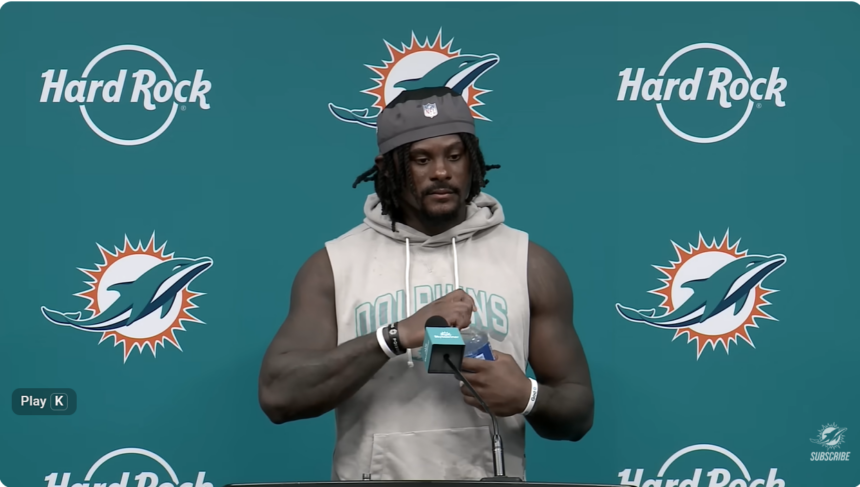
Malik Willis, the Miami Dolphins’ new starting quarterback, called the offense together earlier this week for a direct conversation about accountability. According to Willis, the message centered on treating football as a business and taking pride in execution regardless of whether a given play beats the defense in practice, since the goal is building confidence in plays the offense plans to use throughout the season rather than winning individual reps. He framed it as a basic conversation among people who work together daily rather than any kind of grand gesture, noting that he and his teammates have been together for months already.
How have teammates and coaches described his growth?
Dolphins center Aaron Brewer, who has known Willis since they were both drafted by the Tennessee Titans in 2022, said the clearest change has been Willis’ confidence level, pointing to how differently Willis is carrying himself now compared to his backup role in Tennessee and his time behind Jordan Love in Green Bay. Brewer said the speech itself reflected how much Willis cares about the game, the team and his teammates. Coach Jeff Hafley said the athlete has looked more comfortable throughout camp, releasing the ball quicker and getting off his first read rather than holding throws too long, while also building relationships with teammates by encouraging them after mistakes. Rookie offensive lineman Kadyn Proctor, a first round pick out of Alabama, said Willis’ advice about starting games fast rather than slowly resonated with him ahead of his first experience playing in front of a full crowd at Hard Rock Stadium.
Why does this moment matter for Willis specifically?
Willis has started only six games across four NFL seasons and has attempted fewer career passes than Dan Marino threw in his first seven games with the franchise. He was never voted a team captain in a prior stop, and Miami’s own locker room previously passed over Tua Tagovailoa for team captain in favor of players at other positions, underscoring how much value the organization now places on quarterback leadership specifically. Given the Dolphins have a limited runway of roughly two seasons to evaluate him, developing that voice early carries real stakes beyond the speech itself.
How is Willis performing on the field so far?
Beyond leadership, Willis has shown improved decision making in camp, including a red zone snap in which he worked through his first three reads, found nobody open and scrambled in for a touchdown despite pressure closing in, a sequence that split observers on whether it would have been a sack in a real game. The Dolphins are hoping that blend of accuracy and mobility improves on last season’s numbers, when Miami’s quarterbacks combined for 3,314 passing yards, 23 touchdowns, 18 interceptions and 38 sacks.
Do outside evaluators share the same optimism?
Not entirely. A recent survey of 50 league executives and evaluators conducted by The Athletic ranked Willis 29th among NFL quarterbacks, placing him in a tier reserved for unproven players or veterans who ideally would not be full season starters. Even so, 17 of the 50 voters placed him in a higher tier as a legitimate starting option, and one executive suggested that with more time Willis could eventually approach the level of quarterbacks like Lamar Jackson, Justin Herbert, Drake Maye and Jordan Love. Willis will get an early test of that outside skepticism next week against a Washington Commanders defense that includes nose tackle Daron Payne, cornerback Rasul Douglas and linebackers Frankie Luvu and Sonny Styles.
For now, the Dolphins appear willing to let the on field performance and the leadership growth build in tandem rather than demanding one prove the other first. Willis has also begun developing chemistry with rookie receiver Caleb Douglas, a third round pick who has made a habit of coming open in the moments Willis needs him most, a sign that the offense’s newer pieces may be maturing alongside their quarterback rather than lagging behind him.