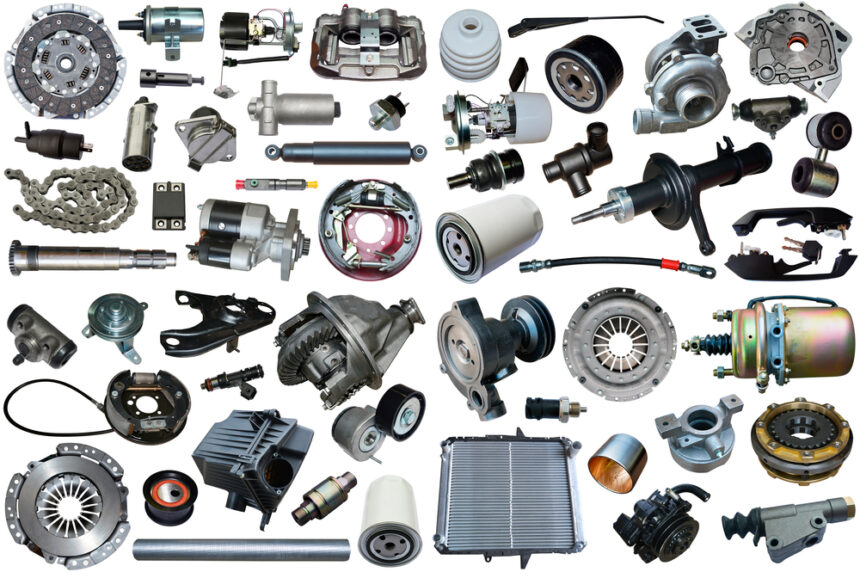
The United States is pressing Mexico to strip Chinese-made components from North American automotive supply chains, accelerating a trade confrontation that is now racing toward a critical deadline.
With talks between the United States, Mexico, and Canada approaching a July 1 threshold, Washington is proposing sweeping new rules that would require a larger share of auto parts to be sourced within North America. Under the proposed framework, at least 50% of the components in each vehicle would need to be manufactured inside the United States. Automakers that continue importing parts from China could lose access to the zero-tariff benefits that currently flow from the United States-Mexico-Canada Agreement, known as USMCA.
The existing USMCA framework already requires that 75% of vehicle parts assembled in North America originate from within the trade bloc. The new American proposals would significantly tighten that standard and explicitly target Chinese component suppliers that have become deeply embedded in Mexico’s industrial base. By July 1, the three governments must decide whether to extend the agreement as written or revise its review mechanism entirely.
China’s growing grip on the Mexican car market
The urgency behind Washington’s position is not hard to understand. Mexico has become the single largest destination for Chinese vehicle exports. In 2025, China shipped roughly 625,200 vehicles to Mexico, an increase of more than 180,000 units compared to the year before. Chinese-made cars now account for approximately 30% of the Mexican market, a share that has grown with remarkable speed.
Despite that surge, legacy brands continue to dominate in terms of consumer loyalty and raw sales volume. Nissan leads the Mexican market with monthly sales consistently topping 20,000 units. Chevrolet, Volkswagen, and Toyota each post monthly figures above 10,000 units. In dealer satisfaction surveys conducted by the Mexican Automobile Dealers Association, Toyota and Chevrolet still rank at the top among established names.
Still, the pace of Chinese brand expansion is impossible to ignore. BYD, one of the leading electric vehicle brands in Mexico, already operates more than 80 showrooms across the country and has reportedly been shortlisted, alongside fellow Chinese automaker Geely, as a potential buyer of a shuttered Nissan factory in Mexico. Acquiring that facility would give either company a production base on North American soil, offering a potential path around the very trade restrictions Washington is now tightening.
Mexico as a launchpad into the United States
Industry analysts have pointed to geography and politics as the driving logic behind China’s Mexico strategy. Analysts have noted that Mexico’s relatively stable political climate, solid economic fundamentals, and substantial population make it an attractive standalone market. But its real strategic value, for Chinese automakers at least, lies in its proximity to the United States and its integration into North American trade infrastructure.
Automotive industry watchers in Detroit have warned that once Chinese electric vehicles gain deeper footing in both Canada and Mexico, the pressure on the United States market will grow considerably. The concern is less about direct sales and more about supply chain entrenchment that becomes harder to reverse over time.
Congress moves to close the door
The alarm is bipartisan. A Republican senator and a Democratic senator have together introduced legislation that would permanently bar Chinese automakers from entering the United States market, a rare show of cross-party alignment on a trade and national security question.
Analysts focused on economic security have argued that the United States needs a comprehensive strategy to counter what they describe as economic coercion tied to Chinese state-backed industrial policy. Their recommendation centers on building a trade and tariff framework rooted in market principles and geopolitical stability, one that explicitly excludes actors who operate outside standard market rules. The July deadline may prove to be the moment Washington decides just how far it is willing to go.