House Republicans are pushing back hard against a new Transportation Security Administration fee that charges air travelers $45 for identity verification at airport checkpoints, arguing the agency never had the legal authority to impose it in the first place.
Legislation headed to the House Appropriations Committee on Tuesday would prohibit the TSA from collecting any fees for its ConfirmID program, which allows passengers to pass through airport security without a standard form of identification. If the bill moves forward, the restriction would be folded into the annual Homeland Security spending package.
In a report released Monday, Republican committee members made clear they believe TSA overstepped its bounds. The agency, they wrote, lacks effective legal authorization to collect the new fee, which was quietly rolled out in February. The ConfirmID program replaced an older, free identity verification process that was typically used in emergency situations, such as after natural disasters or when identification had been stolen. The cost of running the new system, however, is significantly higher on a per-passenger basis than what it replaced.
The fee’s troubled debut
The $45 price tag itself was not the original plan. TSA initially floated a much lower figure of $18 before settling on the higher amount. Republicans are not only questioning the legal foundation of the charge but also drawing attention to the fact that no funding for the ConfirmID program was included in their review of the agency’s costs.
The committee’s report also calls for TSA to formally report the program to Congress, signaling that lawmakers want greater oversight of how the agency develops and prices its services.
Budget cuts and private sector scrutiny
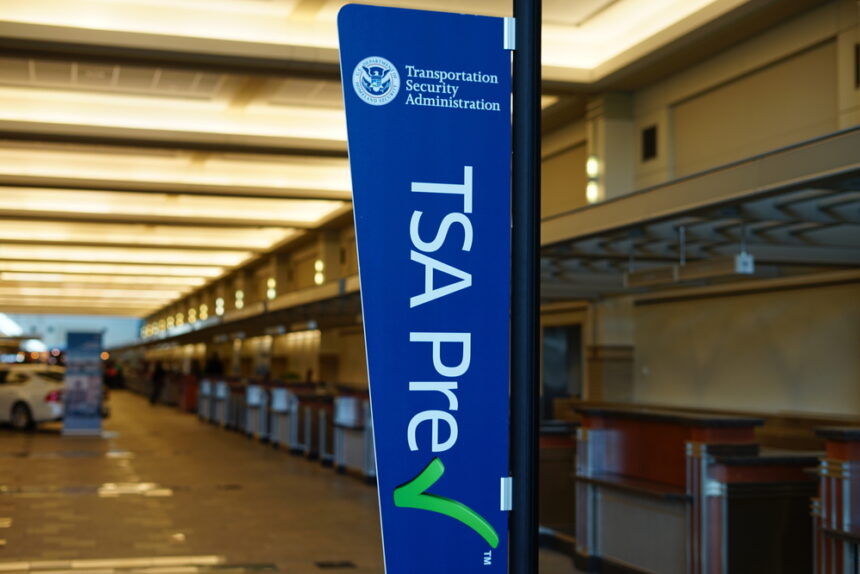
Beyond the ConfirmID dispute, House Republicans are proposing a broader reset of TSA’s financial footing. Their bill would give the agency $11.2 billion in discretionary spending, a reduction of $347 million compared to the previous fiscal year. That gap would be partially offset by roughly $3.6 billion in revenue from 9/11 passenger fees and security screening programs such as PreCheck.
TSA would receive $255.3 million in mandatory spending, roughly in line with fiscal year 2026 figures.
The legislation would also require TSA to conduct a comprehensive internal review aimed at finding savings through expanded partnerships with private industry. The agency would be asked to explore greater use of private sector security inspections and remote screening options, a move that aligns loosely with earlier Trump administration interest in expanding private contracting at smaller airports through the Security Partnership Program, known as the SPP. That program would see its annual funding increase by $41 million under the proposed bill.
Where the money shifts
The spending plan reflects a clear set of priorities. Republicans are proposing to cut TSA spending on screening personnel, payroll and benefits by about $32.9 million compared to the prior year, while simultaneously boosting the budget for screening technology maintenance by $192 million. The budget for federal air law enforcement officers would see the sharpest single reduction, falling by $290.4 million from the previous fiscal year.
The competing forces at play, less money for people, more for machines, reflect a broader philosophy taking shape on Capitol Hill about how airport security should function going forward and who should ultimately pay for it.