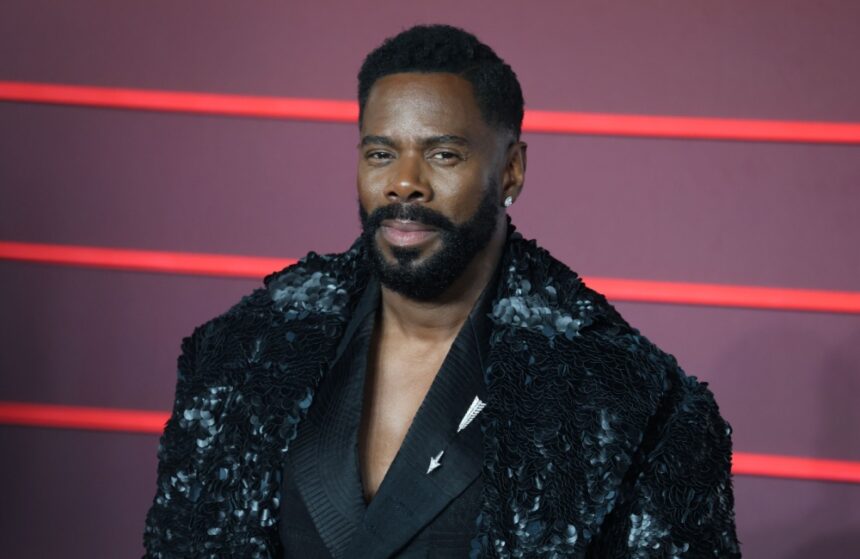
In the interview, Domingo described Boseman as an irreplaceable figure among a generation of Black men who rose through the entertainment industry carrying experiences shaped by shared cultural realities. He spoke about the rarity of having someone in that position who could speak candidly about navigating the industry, advocating for oneself, and showing up for others along the way.
Boseman, he said, was one of the very few who occupied that role without reservation. The loss of someone willing to do that work, to hold space for others in an industry that rarely makes room for it, registered as something larger than personal grief. It felt, to Domingo, like a structural absence.
His belief that Boseman continues to act as a kind of spiritual guide is not something he frames as metaphor. He spoke about it plainly, describing his friend as a presence that continues to elevate those who knew him, including fellow actor Michael B. Jordan, from wherever he now resides.
The moment Boseman changed the room
Their friendship predated Ma Rainey’s Black Bottom by several years, though the two were not especially close at first. They had crossed paths at play readings and industry events without forming a deep connection. The turning point came at an industry gathering around the time Black Panther was transforming Boseman into one of the most recognized names in Hollywood.
Domingo approached him at the event, uncertain whether Boseman would remember him clearly from their earlier encounters. What happened next stayed with him. Rather than offering a polite acknowledgment and moving on, Boseman turned to the people around him and made a point of introducing Domingo as someone the room needed to pay attention to. He vouched for him without being asked and did so with the kind of conviction that lands differently than a casual compliment.
For Domingo, the gesture captured something essential about who Boseman was. At a moment when most people in his position would have been focused on their own momentum, he was using his to direct attention toward someone else.
The day the news arrived
The year Ma Rainey’s Black Bottom was released was also the year Boseman died. Domingo learned of his passing while outside his home during the COVID-19 pandemic, the mundane details of the moment standing in sharp contrast to the weight of the news. He described the experience as deeply disorienting.
Even so, Domingo does not describe Boseman as gone in any final sense. The memories from their time on set remain vivid and warm. He recalled Boseman’s physical presence and the way he would single Domingo out on set with a kind of playful certainty, telling him with genuine enthusiasm that the two of them were going to dance together once filming began. It was the kind of anticipation that people rarely put into words, and Boseman put it into words often.
That quality, the willingness to name joy before it arrived, to celebrate someone before the world caught up, is what Domingo seems to be holding onto most. It is, perhaps, the best account of what it means to say that someone is still lifting you up.