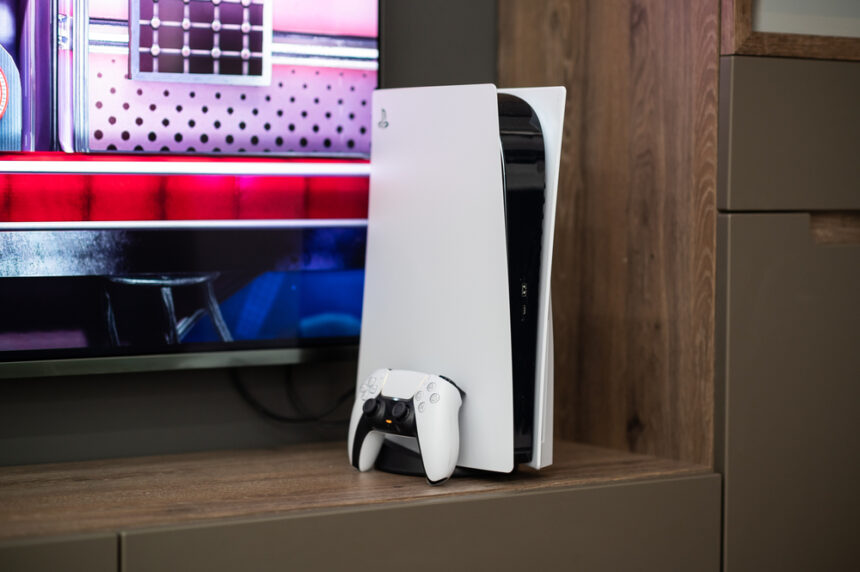
Sony has not committed to a PlayStation 6. That is not a rumor or a misread of corporate language. It is where the company actually stands right now, and the reasoning behind that hesitation points to something larger than a delayed announcement.
What Hiroki Totoki actually said
Speaking to investors recently, Sony CEO Hiroki Totoki confirmed that the company has not finalized a release date or price point for the PS6. Early reports had suggested a possible launch as soon as next year, but Totoki walked that back with enough qualifications to make the timeline genuinely uncertain.
The issue is not ambition. It is math. Ongoing shortages of memory chips, fueled largely by surging demand from the artificial intelligence sector, have driven up the cost of RAM and storage. Those are not peripheral components in a gaming console. They are central to everything the hardware does, and their prices feed directly into what consumers eventually pay at retail.
The PlayStation 5 has already seen price increases in several markets. A next-generation console built on more advanced hardware, under the same supply pressures, could push prices well past $600 and potentially beyond $1,000 in some configurations. Totoki’s reluctance to commit is not indecision. It is a recognition that launching a console at a price point consumers will not accept is worse than not launching at all.
The business model problem
Beyond pricing, Totoki raised the possibility of reconsidering how Sony sells hardware altogether. The traditional model, selling a console at or near cost and recouping margin through software and subscriptions, still works when hardware is cheap enough to move at scale. That equation gets harder when the hardware itself becomes a luxury purchase.
A few alternatives have surfaced in industry discussions. One involves console financing, structured similarly to smartphone plans, where a monthly payment bundles the hardware with a PlayStation Plus subscription. Another is a fully subscription-based model where users never own the console outright but pay for continued access. Cloud gaming sits further along that spectrum, removing the hardware requirement entirely by streaming games from remote servers.
None of these are without risk. Microsoft tested a hardware financing plan through Xbox All Access and eventually stepped back from it. Cloud gaming, despite years of investment from multiple companies, has not displaced traditional console ownership in any meaningful way. Consumer habits in gaming are deeply entrenched, and retraining them takes longer than a product cycle.
The case for skipping a generation
The more provocative option Totoki’s comments invite is the one least likely to appear in an official press release: Sony could choose not to release a PlayStation 6 on the traditional timeline, or at all in the conventional sense.
Generational console cycles made sense when hardware constraints were the primary bottleneck on what games could do. Developers hit a ceiling, a new console arrived, and the ceiling lifted. That dynamic has not disappeared, but it has slowed considerably. The PlayStation 5 still has headroom that most developers have not fully explored, partly because cross-generation development has stretched the transition period.
Extending the PS5’s lifecycle while investing in software, services, and cloud infrastructure would not be a retreat. It could be a deliberate repositioning, one that trades the short-term spectacle of a hardware launch for a more sustainable revenue model built around ongoing subscriptions and digital sales.
What this means for PlayStation’s identity
Sony built its gaming reputation on hardware. The PlayStation brand carries weight precisely because each generation has represented something tangible, a box under the television that defined what gaming looked and felt like for millions of households. Abandoning that entirely would be a significant identity shift, and not one Sony appears ready to make.
What seems more likely is a longer PS5 tail, a PS6 that arrives later than expected and at a price that reflects the current cost reality, and a services layer that grows regardless of which hardware generation a player is on.
The PlayStation 6 will probably exist. Whether it arrives on the schedule fans have come to expect is a different question, and right now Sony does not have an answer.