Few drinks carry as much history in a single glass as beer. Long before cocktail menus and wine lists existed, this golden brew was already doing something far more important — bringing people together. Across thousands of years and dozens of civilizations, it has served as currency, ritual, sustenance, and social glue. No other beverage on the planet comes close to matching that kind of legacy. Understanding how beer got here is understanding a piece of what makes us human.
Beer’s Ancient and Powerful Origins
The earliest archaeological evidence of beer fermentation consists of 13,000-year-old residues of a brew-like gruel used by semi-nomadic people for ritual feasting, found at the Raqefet Cave in the Carmel Mountains near Haifa in northern Israel. That is not a typo — this predates most of what we consider civilization.
Most anthropologists believe the discovery was accidental. Nomadic hunter-gatherers stored wild grains for food, and at some point water mixed with those grains and fermented naturally, producing a thick dark liquid that someone, at some point, decided to taste. That single brave sip may have changed the course of human history.
Early beer gave people protein that unfermented grain could not supply. And to maintain a steady supply of ingredients, people had to stop wandering — settle down and start farming. Once that happened, civilization followed shortly after.
The Sumerians documented their brewing processes on clay tablets, including hymns to Ninkasi, the goddess of brewing — indicating that the craft was both rudimentary and deeply revered.
The Great Social Equalizer
Throughout ancient history, beer played a role that wine never could. Wine was reserved for royalty and the social elite, while it was the drink of common society. Financial records show that the daily ration for workers who built the pyramids of Giza was nearly four litres.
In ancient Mesopotamia and Egypt, it was not just sustenance — it was currency, payment for labor, and a marker of civilization itself. To drink it was to perform being human rather than animal, settled rather than nomadic.
This This democratizing quality is what set beer apart. It belonged to everyone — the laborer, the merchant, the farmer, and the king’s servants alike.
How Beer Built Community Across Cultures
In ancient Mesopotamia, taverns were places where people from different walks of life gathered to discuss politics, trade, and philosophy — not just leisure spots, but hubs of knowledge exchange.
For the Celts and Vikings, communal beer was central to feasts, rituals, and voyages — considered a gift from the gods and consumed in large quantities during spiritual celebrations.
The pattern is consistent across every culture and every continent
- In Mesopotamia — taverns served as community gathering hubs
- In ancient Egypt — consumed by every social class daily
- In Viking culture — central to spiritual practice and celebration
- In medieval Europe — monastery breweries refined the craft and fed entire communities
- In modern times — pub culture, festivals, and craft breweries continue the tradition
The Craft Revolution
Modern beer culture is a vibrant mix of flavors, traditions, and innovation. The American IPA has become a global sensation, inspiring brewers everywhere to experiment with local hops and ingredients.
Beer festivals dedicated to the craft attract thousands of enthusiasts and showcase thousands of varieties from hundreds of independent breweries — proof that the world’s appetite is nowhere near slowing down. Courses on the art and science of brewing are now offered at universities worldwide, covering history, science, biology, and marketing.
Why Beer Still Wins Every Time
The numbers tell their own story. In many societies, beer remains the most popular alcoholic choice, associated with social traditions like festivals, pub games, brewery tourism, and food pairings — consumed in countries all over the world.
Research involving nearly 26,000 people across 21 countries found that drinkers who favored this brew over hard liquor were less prone to aggressive behavior — making it not just the most historic, but arguably the most civilized choice on any menu.
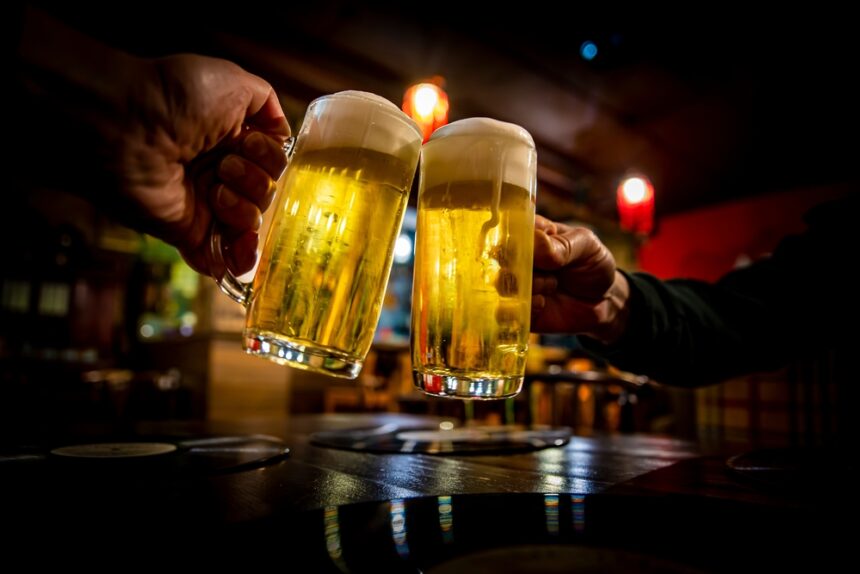
More than anything, it has always thrived because of what it represents — not just a drink, but a shared moment. The clink of two cold glasses is one of the most universal sounds in human culture. It crosses languages, borders, and centuries. And somehow, every single time, it means exactly the same thing.