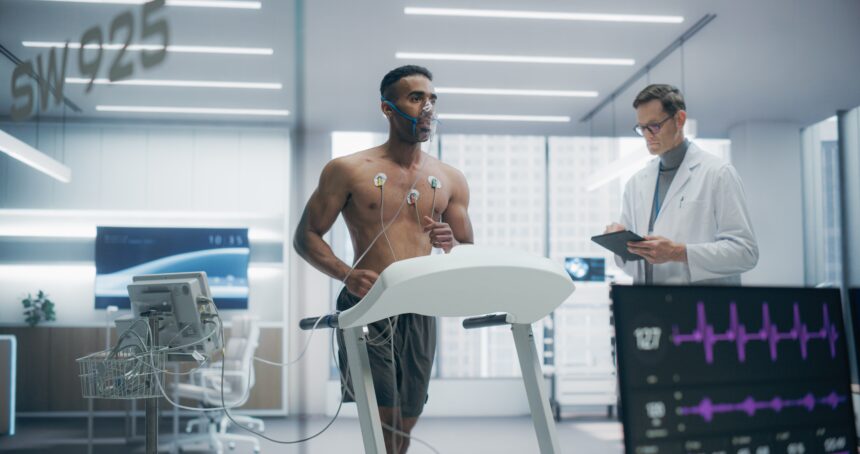
Zone 2 cardio has a public relations problem that has nothing to do with its effectiveness. The problem is that it looks boring. It involves moving at a pace at which you can hold a conversation, which fitness culture has spent decades training people to associate with not trying hard enough. If you are not breathless, the logic went, you are not working. In 2026, that logic is being publicly dismantled by the longevity research community, and people who adopted Zone 2 training early are doing their best not to say they told you so.
Zone 2 training refers to the exercise intensity range where your heart rate sits at approximately 60 to 70 percent of its maximum, blood lactate stays at or below two millimoles per liter, and aerobic energy systems are being trained without the metabolic stress of higher intensity work. Elite endurance athletes have always spent the majority of their training here. The mainstream gym-going population largely ignored it in favor of shorter, harder sessions. The cells have opinions about that decision.
It triggers mitochondrial biogenesis
Mitochondria are the organelles responsible for aerobic energy production in every cell in your body, and their density, health, and efficiency are directly linked to metabolic health, cardiovascular function, and biological aging. Zone 2 training is the most potent stimulus for mitochondrial biogenesis, which is the creation of new mitochondria, available through exercise. More mitochondria means more efficient energy production, better fat oxidation, improved cardiovascular capacity, and cellular markers that read younger than chronological age.
It burns fat more efficiently than high intensity work
At Zone 2 intensity, the body’s primary fuel source is fat rather than glycogen. High intensity exercise depletes glycogen rapidly and shifts the body away from fat oxidation. For adults whose goals include body composition improvement alongside cardiovascular health, Zone 2 provides a metabolic training environment that complements higher intensity sessions by improving the body’s baseline capacity to use fat as fuel.
It improves recovery from harder training
One of the most practically valuable aspects of Zone 2 training for people who also perform higher intensity work is its role in active recovery. Low-intensity aerobic exercise promotes blood flow, nutrient delivery to muscles, and lactate clearance without adding training stress. Athletes and fitness-focused adults who incorporate Zone 2 sessions between harder training days report improved recovery quality and the ability to sustain higher weekly training volumes.
It is sustainable indefinitely
Zone 2 training places minimal stress on joints, does not require recovery days the way high-intensity sessions do, and can be performed consistently without the overtraining risk that limits higher intensity modalities. For adults building a long-term fitness practice rather than peaking for a specific event, this sustainability is not a minor feature. It is what allows the cellular adaptations to accumulate over months and years rather than being interrupted repeatedly by injury and recovery cycles.
The mental health benefits are distinct
Zone 2’s sustained, meditative quality produces a specific neurological benefit profile that is different from high-intensity exercise. The sustained low-intensity aerobic state promotes the production of brain-derived neurotrophic factor, a protein associated with cognitive health, neurogenesis, and mood regulation. The extended duration of Zone 2 sessions, typically 45 minutes to an hour, also provides a longer window for the stress-reducing neurochemical effects of aerobic exercise to accumulate.
It is compatible with almost every fitness level
Unlike high-intensity interval training, which requires a baseline fitness level to perform safely and recover from, Zone 2 training is accessible to adults at virtually every fitness level. The intensity is defined by individual physiological response rather than absolute speed or resistance, meaning a conditioned athlete and a deconditioned beginner can both train in Zone 2 at completely different paces while receiving comparable cellular adaptations.