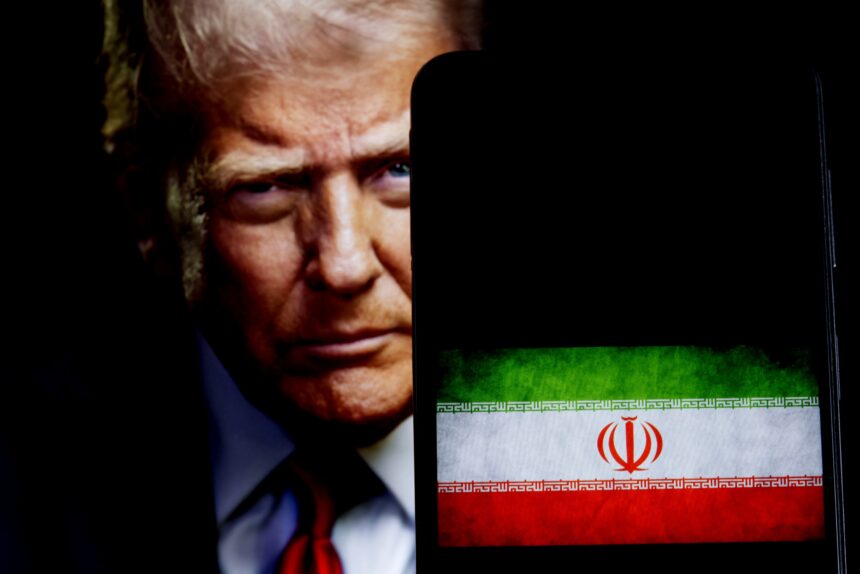
Six days into the U.S.-Israeli military campaign against Iran, there is no sign the fighting is winding down. If anything, the war is widening. Arab states across the Persian Gulf reported overnight interceptions of Iranian missiles and drones, while Israel continued waves of airstrikes on Tehran, targeting military and intelligence infrastructure. The strikes follow a broader offensive against Iran-backed Hezbollah forces in Lebanon, drawing roughly a dozen nations into a rapidly expanding conflict.
The human cost is already severe. At least 1,100 people have died inside Iran, with dozens more killed across the broader region. Turkey became the latest country drawn into the crossfire on Wednesday, marking the first time a NATO member has been struck since the conflict began. The alliance confirmed its air defenses intercepted a ballistic missile headed toward Turkish territory, and Ankara quickly warned Tehran against any further provocations.
Trump and Iran offer competing narratives
President Donald Trump struck a confident tone Wednesday, telling reporters the U.S. was performing well on the military front. The White House said American forces had struck more than 2,000 targets and were advancing toward full control of Iranian airspace, adding that Iran’s government had been severely weakened by the campaign.
Iran’s Islamic Revolutionary Guards Corps offered a sharply different picture, stating that retaliatory attacks would intensify in the days ahead. Iranian officials also warned that if the U.S. pursues regime change, Tehran would target Israel’s Dimona nuclear facility, a declaration that raises the stakes of the conflict considerably. Iran further dismissed any suggestion it had reached out to Washington to explore a negotiated settlement, calling the idea a complete fabrication and stating it had no interest in talks with the U.S.
A first at sea and a warning from Tehran
In one of the more dramatic developments of the week, the U.S. Navy sank an Iranian warship in international waters, the first time since World War II that an American submarine has attacked a surface vessel. More than 100 sailors were reported missing or dead, with 32 rescued. Iran responded with sharp condemnation, warning the U.S. would face consequences for what it described as an unprovoked attack.
On land, Saudi Arabia intercepted multiple missiles and drones overnight Thursday, with strikes concentrated near Riyadh and the eastern region where Saudi Aramco operates. A British air base in Cyprus was also struck by a drone over the weekend, the only attack on European soil so far, prompting Greece, the United Kingdom and France to bolster the island’s defenses.
Markets react as the Strait of Hormuz tightens
The economic ripple effects of the conflict are becoming impossible to ignore. Brent crude oil climbed past $84 a barrel, a 16% rise since fighting began. Gold and silver extended gains as investors sought safe-harbor assets, and shipping traffic through the Strait of Hormuz dropped sharply, threatening global energy flows. Trump announced the U.S. would offer insurance guarantees and naval escorts for oil tankers navigating the strait, though analysts expect it could be weeks before shipping volumes recover meaningfully.
Washington weighs in and Iran plans ahead
Back in Washington, the Republican-controlled Senate rejected a Democratic effort to halt U.S. strikes on Iran, and the House is expected to take up a similar measure. Defense Secretary Pete Hegseth acknowledged the timeline for military operations remains unclear, suggesting the campaign could last anywhere from three to eight weeks.
Iran, meanwhile, appears to be adapting. Officials and analysts note a gradual shift toward drone-based attacks, which carry smaller payloads but are harder to counter at scale. With Iran showing no intention of dismantling its nuclear or missile programs, and Israel acknowledging the country still holds significant military capabilities, the path to any resolution looks longer and more complicated than either side may have anticipated.