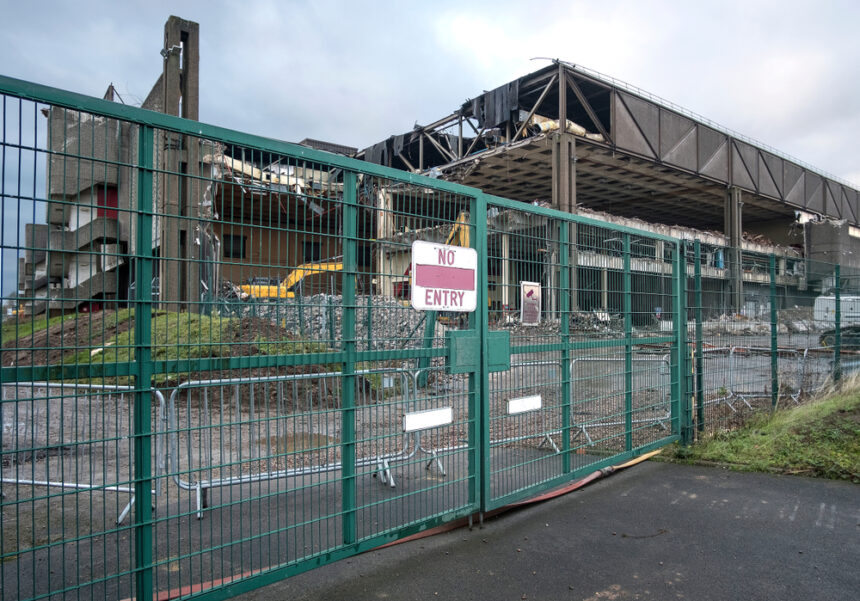
Workers in several parts of China have reported returning from the National Day holiday to find factories stripped of equipment, managers absent and months of wages unpaid, according to social media videos and interviews with workers.
How solid is the reporting?
Thin, and readers should know it. The accounts come from videos circulating on Chinese social media and from interviews conducted by a single outlet with workers who spoke anonymously, citing fear of reprisal. One worker in Hubei Province, identified only by surname, said the factory where he worked had been emptied and the owner had disappeared, and that wage payments had been delayed repeatedly. No company has been named, no local authority has confirmed any closure, and no figure exists for how many workplaces or workers are involved.
Why would a holiday matter?
Because it empties the building. The National Day holiday ran from Oct. 1 to 7, seven consecutive days in which a factory floor is unattended and the removal of machinery would attract no notice. Workers quoted in the reports said they believed owners used that window deliberately.
Is the underlying problem real?
Yes, independently of these accounts. Wage arrears in Chinese manufacturing and construction are a long documented issue that Chinese authorities themselves have addressed through dedicated regulations, government campaigns and a legal framework specifically covering unpaid migrant worker wages. Protests over withheld pay are among the most common forms of labour unrest recorded in the country. That context does not confirm any particular report, and it does mean the described pattern is plausible rather than novel.
What recourse do workers have?
Formal channels exist and are imperfect. Labour arbitration and local labour bureaus handle wage claims, and authorities have at times intervened to recover pay. Workers employed informally or as temporary staff, as the one quoted here described himself, typically have the weakest documentation and the hardest claims to pursue. An owner who has physically left is difficult for any system to reach.
What economic pressures are in play?
Several at once, and none specific to these reports. Chinese manufacturing has faced export tariffs, soft domestic demand and pressure in property linked sectors, and smaller producers operating on thin margins are the first to fail under those conditions. A rise in small factory closures would be consistent with that environment, though no data presented here establishes one.
What would confirm this?
Named businesses, local government statements, labour bureau filings or coverage from outlets with different editorial positions. Any of those would turn a set of circulating videos into a documented event. None is currently available.
What should readers take from it?
That the accounts exist, that they describe something that happens in China with some regularity, and that neither of those facts makes any individual report here verified. China factory closures of this kind are worth following rather than concluding from.