The United States said Wednesday it will implement an agreement with South Korea and Japan to deploy small modular nuclear reactors in other countries, moving a deal signed in July toward execution.
What was announced?
An implementation plan for an agreement the three governments signed on July 7 in Ankara. The plan commits them to supporting projects led by industry rather than governments, involving companies and suppliers from all three countries, with the stated goals of deploying multiple reactors, lowering costs and risks, attracting private investment, streamlining licensing and accelerating delivery.
What are small modular reactors?
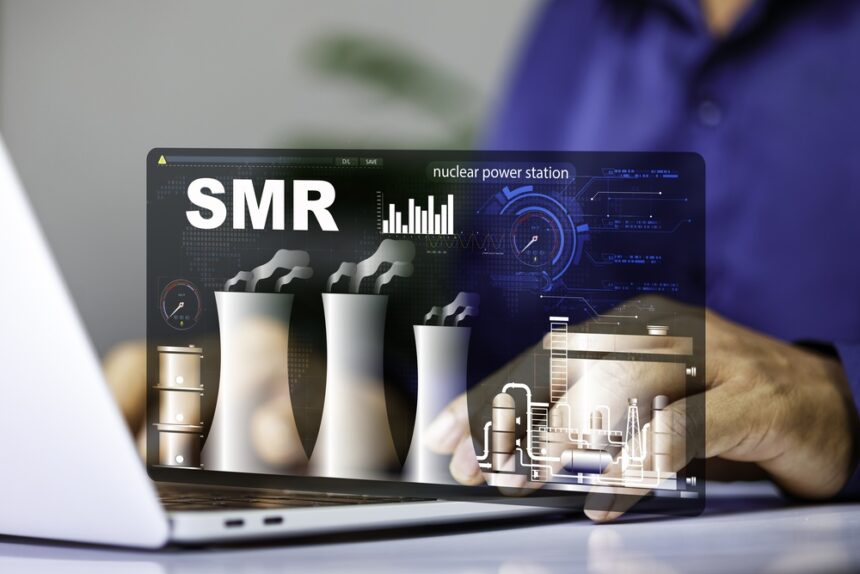
Nuclear plants built small and built repeatedly. Conventional reactors are constructed on site as one off megaprojects, which is why they routinely run years late and billions over budget. Small modular reactors are designed to be manufactured in factories as standardised units and assembled at the destination, with each producing a fraction of the output of a traditional plant. The theory is that repetition drives cost down the way it does in aircraft or shipbuilding.
Has that theory been proven?
Not yet at scale, and this is the caveat that belongs in any coverage of the sector. Very few small modular reactors are operating commercially anywhere, and several high profile projects have been cancelled after costs rose beyond what customers would accept. The economic case depends on building many identical units, which requires firm orders that in turn depend on the costs coming down. Breaking that circularity is the industry’s central problem and the reason a multi government framework matters.
What is the separate Europe agreement?
Four companies signed a cooperation agreement to advance deployment of a 300 megawatt design across Europe, with an American deputy secretary of state present. The participants are an American manufacturer, a Japanese industrial group, a South Korean construction firm and a Polish energy company. The State Department described the consortium as aiming to supply baseload power to millions across Europe and to promote more than $150 billion in reactor investment in coming years.
How firm is that figure?
It is a projection of investment the consortium hopes to promote, not committed capital. Readers should treat it as an aspiration attached to an announcement rather than money allocated. Large numbers in energy announcements frequently describe a total addressable opportunity rather than signed contracts.
Why the Indo-Pacific focus?
Demand and geopolitics together. Electricity consumption in the region is growing quickly, driven partly by data centres and manufacturing, and many countries lack the grid scale or capital for conventional nuclear plants. There is also a supplier competition underneath this. Russia and China have dominated nuclear exports to developing economies for two decades, and a coordinated American, Japanese and South Korean offering is an attempt to present an alternative.
What about local involvement?
The plan commits to promoting supplier participation in host countries, with stated aims of building supply chain resilience, expanding the local workforce and technology base and supporting local ownership of projects. Whether that materialises is the question that determines whether host nations gain industrial capability or simply host imported hardware.
What should be watched?
Orders. Frameworks and consortiums are announced regularly in this sector, and the meaningful signal is a host government signing for units at a stated price. Until small modular reactors are being built to firm contracts, the story remains one of intent.