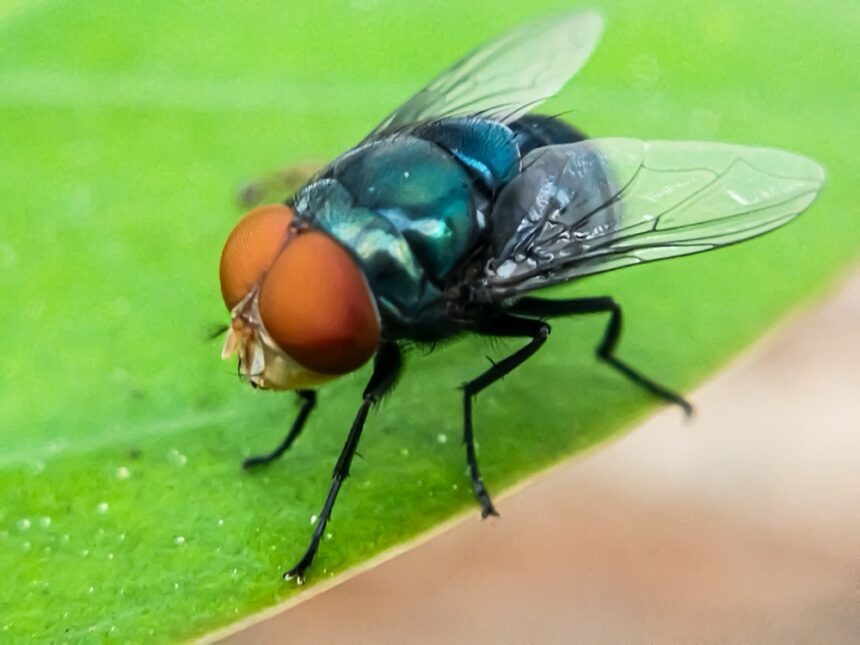
The USDA announced Wednesday it will spend $25 million to build a new sterile fly dispersal facility in Arizona as it prepares to lift a ban on Mexican cattle imports that has been in place for more than a year, with Agriculture Secretary Brooke Rollins describing the investment as a critical piece of the infrastructure needed to contain the New World screwworm.
Rollins said cattle imports through Arizona’s Douglas Port of Entry will resume on Aug. 24, with two additional ports of entry in New Mexico also set to reopen. The announcement marks a significant step in resolving a trade disruption that has been felt throughout the beef supply chain and that pushed domestic prices to record levels while the ban remained in effect.
The screwworm is a parasitic fly whose females lay eggs in open wounds and mucous membranes of warm-blooded animals. Larvae use sharp mouthparts to burrow into living tissue and can kill a host animal if untreated. The pest had been eradicated from the United States by the 1960s through the sterile insect technique, a method in which sterile flies are released into the environment in large numbers, disrupting the reproductive cycle of wild populations and driving them toward extinction in a given area. But the New World screwworm resurfaced in the United States in June 2026, with confirmed cases reported on farms in Texas and in New Mexico. Arizona has reported no confirmed cases to date.
What the $25 million facility will do
The Arizona facility is intended to produce and distribute sterile flies at scale, supporting containment efforts along the U.S.-Mexico border. The sterile insect technique requires a consistent, high-volume supply of sterilized flies that can be dispersed across a wide area to outcompete wild populations. A dedicated facility positioned in Arizona would give federal agencies more direct control over that supply in a region that becomes more significant as the cattle trade resumes.
The screwworm eradication approach has historical precedent. The original 1960s campaign relied on the same method and remains one of the most successful biological pest control efforts in American agricultural history. Maintaining the sterile fly program as a bulwark against reinfestation is central to the strategy for keeping the pest contained if it enters through cross-border livestock movements.
The beef price impact
The ban on Mexican cattle imports generated economic pressure that reached consumers at the grocery store. Domestic beef prices climbed to record highs in the period the ban was in effect, a consequence of reduced cattle supply that created tighter inventory for slaughter plants and higher costs at retail. That pressure became a political issue for the Trump administration, which has made reducing consumer costs a stated priority.
Cattle producers in the United States, however, were not uniformly supportive of the decision to reopen the border. Some argued that resuming imports too quickly or without sufficient safeguards would increase the risk of screwworm infestations spreading to American herds, potentially undoing the containment work done since the pest’s reappearance and creating a far more expensive problem than the one the ban was designed to prevent.
The new facility and the announcement of a specific reopening date represent an attempt to address both concerns simultaneously, giving the government a credible biosecurity response while restoring supply to a strained market.
What the screwworm’s return means for the industry
The reappearance in Texas and New Mexico in June 2026 was the first confirmed presence of the screwworm in the United States since the eradication campaign completed its work more than six decades ago. The screwworm discovery triggered the import ban, reflecting how seriously federal agencies treat the threat the insect poses to livestock.
Left unchecked, an outbreak could cause significant damage to cattle, sheep, deer and other warm-blooded animals. The economic stakes for the beef industry are substantial, which is why the screwworm response has involved both trade policy and investment in biological control infrastructure.
The Aug. 24 date for Arizona gives ranchers and importers a concrete timeline, and the investment in the Arizona facility signals that the government intends to treat containment as a long-term commitment rather than a one-time emergency measure.