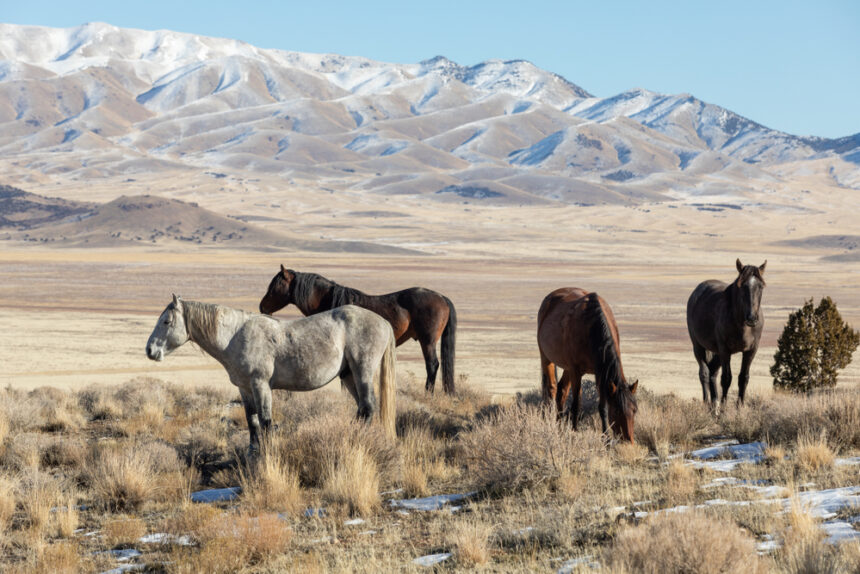
A federal judge has temporarily blocked the United States Forest Service from removing wild horses from the Apache-Sitgreaves National Forests in Arizona, finding that the agency likely violated federal law and that removing the animals while the case proceeds would cause harm that could not be undone.
Judge Krissa Lanham of the United States District Court for the District of Arizona issued the ruling on July 8, granting a temporary restraining order that bars the Forest Service from classifying unclaimed or unbranded horses as strays, feral animals, or unauthorized livestock, and from allowing third parties to remove them from the forest.
Why the judge sided with the plaintiffs
The lawsuit was brought by the International Society for the Protection of Mustangs and Burros and an individual plaintiff, who argued that the Forest Service’s approach to the horses violated federal administrative procedures and that the animals deserve protection rather than removal.
Lanham found that the plaintiffs were likely to prevail on portions of their claims, the legal standard required to justify blocking government action while litigation continues. She addressed the public interest dimension of the dispute directly, acknowledging that both the Forest Service and the public have an interest in the lawful management of federal lands. But she found that the public interest in this case favored the plaintiffs because it requires the government to carefully follow administrative procedure, and the plaintiffs appeared likely to demonstrate that the agency had not done so.
The balance of hardships, another factor courts weigh in injunction decisions, also favored the plaintiffs in the judge’s assessment. Removing the horses while the case is litigated would be difficult or impossible to reverse if the plaintiffs ultimately prevailed, making the harm from removal substantially greater than the harm from delay.
What the order specifically prohibits
The ruling’s practical effect is to freeze the Forest Service’s current approach to managing horses in the Apache-Sitgreaves forests. The agency had been treating unbranded and unclaimed horses as unauthorized livestock subject to removal, a classification the plaintiffs argue is legally improper.
The injunction bars the Forest Service from applying those classifications and from allowing independent parties, meaning private contractors or others who might be authorized to handle stray livestock, to remove the horses. The horses remain where they are while the underlying legal questions are resolved through the normal litigation process.
The broader legal and policy context
Wild horses on federal lands occupy a complicated legal space. The Wild Free-Roaming Horses and Burros Act of 1971 provides federal protection for wild horses on certain federal lands, but its application to horses that appear on national forest land rather than Bureau of Land Management land has been subject to ongoing legal debate. Forest Service management of horses differs in some respects from BLM management, and that distinction is at the heart of disputes like this one over what authority the agency has to remove animals from lands it oversees.
The Forest Service’s characterization of the horses as unauthorized livestock, a term typically applied to privately owned animals that enter federal land without permission, is the legal move that the plaintiffs are challenging. If horses that have lived wild in an area are not privately owned and are not subject to the livestock regulatory framework, applying that designation to justify removal may not be legally supportable under federal administrative law.
The case will now proceed through discovery and further briefing, with the temporary restraining order remaining in effect until the court reaches a further determination