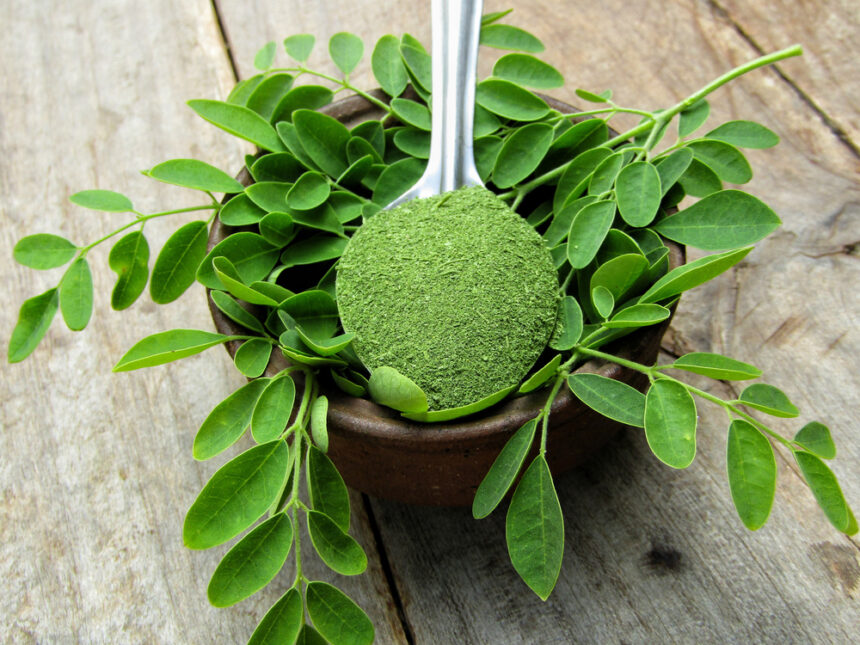
Wellness trends tend to cycle quickly through popular attention, but moringa is not a trend. It has been growing in village gardens across Africa and Asia for centuries, used in traditional medicine and as a food source long before it appeared on supplement shelves in the West. Now researchers are beginning to examine what practitioners in those regions have long observed, and the early findings are generating real interest.
Native to India and known in Ayurvedic medicine by the name shigru, moringa oleifera goes by several common names depending on where it is grown and how it is used. The drumstick tree gets its name from the distinctive shape of its seed pods. The horseradish tree reflects the flavor profile of its roots when ground into paste. The tree of life is perhaps the most evocative of its names, pointing to the breadth of its traditional applications across dozens of cultures and climates.
What the research is exploring
Scientific investigation into moringa’s potential health effects has been underway for some time, with the bulk of the existing research conducted in animal models or in laboratory settings. That foundation, while preliminary in terms of direct human application, has generated enough consistent findings to prompt a growing body of human studies.
A narrative review published in early 2026 in a peer-reviewed pharmacology journal examined the accumulated evidence and found that moringa appears to support immune system function, improve the regulation of blood sugar, provide compounds associated with protecting cells from oxidative damage, and offer health benefits relevant to pregnancy and early infancy. The review drew on a range of studies and positioned moringa as a plant with multiple active mechanisms rather than a single-purpose supplement.
A separate study from 2025 looked specifically at moringa’s effects on body composition. Participants who received moringa supplementation showed significant reductions in body weight, waist circumference, and body mass index compared to those who did not, a finding that has attracted particular attention given the difficulty of producing measurable outcomes in weight-related research.
Other areas under active investigation include moringa’s potential to ease inflammation, combat certain pathogens, support fertility, and promote wound healing. The research is not yet at the stage where definitive clinical recommendations can be made for most of these applications, but the direction of the findings has been consistently positive enough to sustain research interest across multiple institutions and disciplines.
What makes moringa distinctive as a plant
Part of what makes moringa scientifically interesting is its nutritional density. The leaves, seeds, pods, and roots of the plant each contain different combinations of nutrients and bioactive compounds, making it unusually versatile in its range of potential applications. It has been used as a food source, a water purification agent, a topical treatment, and an oral supplement across different cultures and contexts.
That versatility also creates complexity for researchers, since different preparations of moringa deliver different compounds in different concentrations, making direct comparisons between studies more difficult than with more standardized interventions.
A plant that earned its reputation before the research arrived
The growing scientific literature on moringa is notable in part because the plant did not need Western validation to establish its reputation. Communities across South Asia, sub-Saharan Africa, and Southeast Asia have cultivated and consumed moringa for generations based on observed outcomes that preceded any formal clinical trial. The research that is now accumulating represents science catching up to a body of traditional knowledge rather than discovering something new.
For anyone considering moringa as a supplement, the evidence is encouraging but not yet conclusive for most specific health claims. Consulting a healthcare provider before adding any new supplement to a regular routine remains advisable.