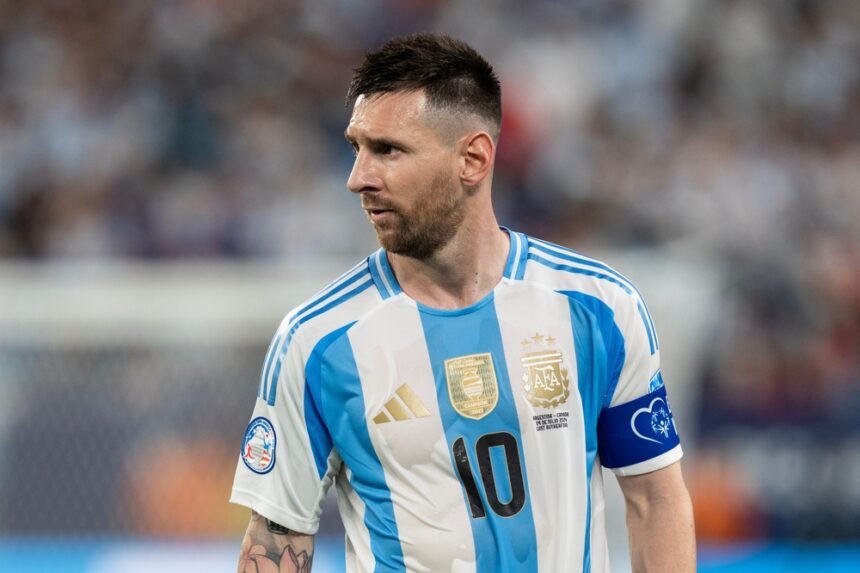
United States head coach Mauricio Pochettino watched Lionel Messi score all three goals in Argentina’s 3-0 opening victory over Algeria and came away with a verdict that was as direct as Messi’s finishing: Argentina are the team to beat at the 2026 World Cup.
Pochettino, a fellow Argentine who has followed Messi’s career from inside the game for decades, said the performance left him searching for language adequate to the occasion. He described Messi in terms that placed him beyond ordinary comparison and beyond the reach of conventional sporting adjectives, suggesting that any attempt to reduce what Messi does to familiar descriptors would do more to limit the description than illuminate the player.
A perspective shaped by personal experience
What made Pochettino’s reaction particularly notable was its source. He is not a casual observer. He coached Messi directly at Paris Saint-Germain during the 2021-22 season and has spent years watching elite football at close range as a manager at some of Europe’s most demanding clubs. His assessment carries the weight of someone who has seen Messi in training, in tactics meetings, and in the moments when the performance level is not artificially elevated by the theater of a World Cup.
And yet, even with that context, Pochettino said Messi’s ongoing brilliance at 38 is something that continues to astonish him. The hat trick against Algeria was Messi’s first at a World Cup and moved him to 16 tournament goals, drawing level with the previous all-time record for goals scored in men’s World Cup history. He achieved the record while also becoming the first player ever to appear in six World Cup tournaments, and he did it with a performance that drew comparisons to his best work from a decade ago.
Argentina as the standard all others must meet
Pochettino’s assessment of Argentina as a team extended beyond admiration for their captain. He described the experience of watching their opening match as different in kind from what he had seen in other games, pointing to the atmosphere generated by their supporters as something that set the occasion apart from the early rounds of the expanded 48-team tournament. The combination of a passionate crowd, a deep and experienced squad, and Messi at the center of it all produced an event that felt, even in the group stage, like something more significant.
His conclusion was unambiguous. Argentina are the contenders. They proved it in a first game that he noted is always difficult, carrying the weight of expectation as reigning champions while facing the inevitably raised levels of motivation that opponents bring to a match against Messi and the team that won four years ago.
What lies ahead for Argentina and the United States
Argentina face Austria on June 22 in Arlington before completing their group stage schedule against Jordan on June 27. Both matches carry the expectation of victory, and if Argentina perform anything close to the level they showed against Algeria, advancing to the knockout rounds with maximum points is a realistic outcome.
For Pochettino, the observation serves a dual purpose. It is an honest assessment of the opposition his own team may eventually face deeper in the tournament, and it is also the kind of respectful acknowledgment that a coach makes when something genuinely remarkable happens in front of him. The United States open their own campaign in the coming days, with Pochettino’s focus shifting back to the team he is responsible for building. But for one evening in Kansas City, he was simply a football man watching the best player in the world do what only he can do.