There had been signs in the weeks leading up to Saturday night. A name change on streaming platforms, reverting to the original stylized spelling of his stage name. A quiet push to digitize his singles catalogue, releasing studio versions of tracks that stretch back to the mid-1990s. Taken together, they read like breadcrumbs left for anyone paying close enough attention.
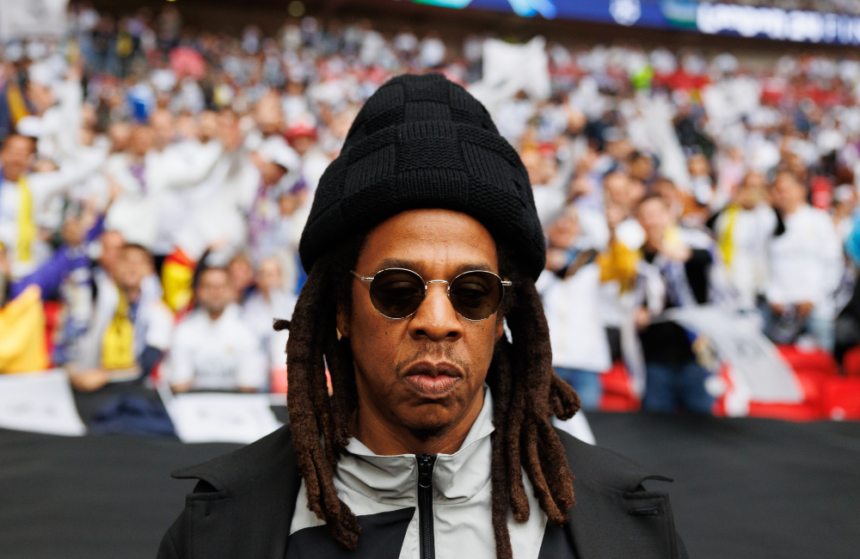
What Jay-Z delivered at the Roots Picnic in Philadelphia confirmed what those signals were pointing toward. His first major solo headlining performance since at least 2019 was not a comeback. It was a coronation.
A career retrospective that felt entirely alive
The hour-and-a-half set moved through decades of material without ever feeling like a museum tour. These are songs that have been woven into the fabric of popular culture for thirty years, and yet they landed with the same force they carried on release. Jay-Z performed with the ease of someone who has nothing left to prove and the precision of someone who still takes the craft seriously.
He has not released a solo album since 4:44 in 2017, a long stretch for an artist who once dropped a project every year between 1996 and 2003. That silence has given space to questions about relevance, about whether a legacy built across two decades still holds weight with newer audiences. Saturday night in Philadelphia answered those questions without ever directly addressing them.
New York meets Philadelphia
What elevated the performance beyond a simple greatest hits run was the deliberate cultural exchange at its center. Jay-Z, a New Yorker to his core, stepped into Philadelphia with genuine reverence for the city hosting him and built a show around that tension. The result was something richer than either world could have produced alone.
He was backed throughout by the Roots, the Philadelphia institution with whom he recorded the celebrated live album MTV Unplugged in 2001. That collaboration had already shown a different dimension of Jay-Z’s artistry, one driven by ambition that ran deeper than chart performance. Twenty-five years later, their chemistry remains exceptional. The band made complexity look effortless, weaving transitions between songs in ways that felt spontaneous but were clearly the product of serious preparation.
Guests that turned a concert into an event
The guest appearances gave the night its emotional range. Bilal, who had performed his own set earlier in the day, stepped in to take on the vocal role made famous by Frank Ocean on No Church in the Wild. Jazmine Sullivan appeared to perform the hook from Feelin’ It before delivering her own breakthrough single Need U Bad to a crowd that clearly knew every word.
Meek Mill brought the energy of Dreams and Nightmares to a set that was already running hot. Then came the State Property reunion, as Beanie Sigel, Freeway, Peedi Crakk, Memphis Bleek and Young Gunz all took turns on the microphone in a sequence that felt like a full chapter of Philadelphia rap history compressed into a single stretch of stage time.
The freestyle that changed the conversation
The moment that immediately dominated post-show discussion arrived early, just after the opening song. Jay-Z delivered a four-minute acapella freestyle that he had deliberately kept out of rehearsals. What followed the performance was immediate online speculation about whether the verses were aimed at figures from his recent past, including Drake, Nicki Minaj and Kanye West.
The freestyle was sharp and witty rather than angry, which is exactly what made it effective. Jay-Z has always understood that the most powerful response to criticism is composure paired with precision. He deployed both without breaking his signature calm. Even a playful jab at Questlove landed with the kind of timing that reminded everyone in attendance why wordplay at this level remains its own art form.
What comes next
The Roots Picnic show now reads as a warm-up. Jay-Z is scheduled to perform three consecutive nights at Yankee Stadium in July, with two of those evenings marking the 25th and 30th anniversaries of The Blueprint and Reasonable Doubt respectively. He arrives at those shows without a new single, without a press cycle, and without anything resembling desperation.
At 56 and three decades into a career that started before most current chart artists were born, Jay-Z is not chasing the summer. He is simply reminding it who set the standard.