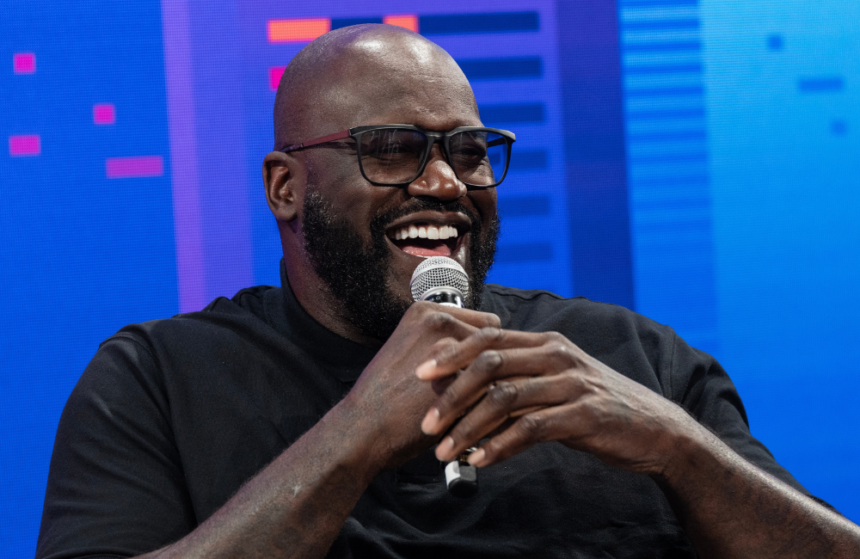
Shaquille O’Neal has spent decades occupying some of the most visible space in professional sports, but he will be the first to tell you that he checked out of celebrity culture roughly ten years ago. In a recent interview, the former Los Angeles Lakers center made clear that the decision was entirely intentional and that he has no interest in revisiting it.
O’Neal said he maintains no meaningful contact with current or former NBA players, describing the world of professional athletes and entertainment figures as one he found difficult to relate to on a personal level. He drew a sharp distinction between that world and how he chooses to move through his own. When he travels to New York, he arrives with two people, no entourage, no handlers, just people he considers genuine friends. He signs autographs, engages with fans, and describes his goal as simply being treated like a regular person and treating others the same way.
The comments were pointed but not particularly surprising coming from O’Neal, who has made a habit over the years of saying exactly what he thinks about the culture surrounding professional sports.
Shaq on education as a statement to his children
O’Neal also spoke about his academic achievements, which include three degrees, one of them a doctorate in education. He has grown accustomed to people assuming the doctorate is honorary and takes visible satisfaction in correcting that assumption. The degree required coursework, research, and written papers like any other advanced credential, and he earned it on those terms.
He has been open about the fact that financial success alone was never the motivating factor behind pursuing higher education. His focus was on what the example communicates to his children and to young athletes watching from the outside. He pointed specifically to the current landscape around college athletes earning money through their name, image, and likeness, arguing that financial opportunity without financial literacy is a setup for instability. The message he wants to send is that education and earning power are not competing priorities but deeply connected ones.
The harder conversation about fatherhood
The most personal stretch of the interview touched on O’Neal’s past marriage to Shaunie O’Neal and the impact his behavior during that period had on his relationship with his children. He was candid about having made choices that he understood were wrong and acknowledged that the consequences were not limited to the marriage itself. For a period of time, some of his children stopped speaking to him entirely. He described understanding why, sitting with that, and beginning the slow work of rebuilding those relationships.
He framed the experience as something he actively shares with his sons now, holding himself up not as a model to replicate but as a cautionary example of what poor choices can cost a family. The goal, as he described it, is for them to do better than he did.
His son Shareef O’Neal has spoken separately about those years, describing the early period after the divorce as genuinely difficult for the children, who were young enough that the full picture was hard to process. He credited both of his parents for ultimately handling the aftermath with enough maturity that the kids were never made to feel like collateral in someone else’s conflict. Shaunie O’Neal has since remarried, and by Shareef’s account the family has arrived at a place of genuine mutual respect.