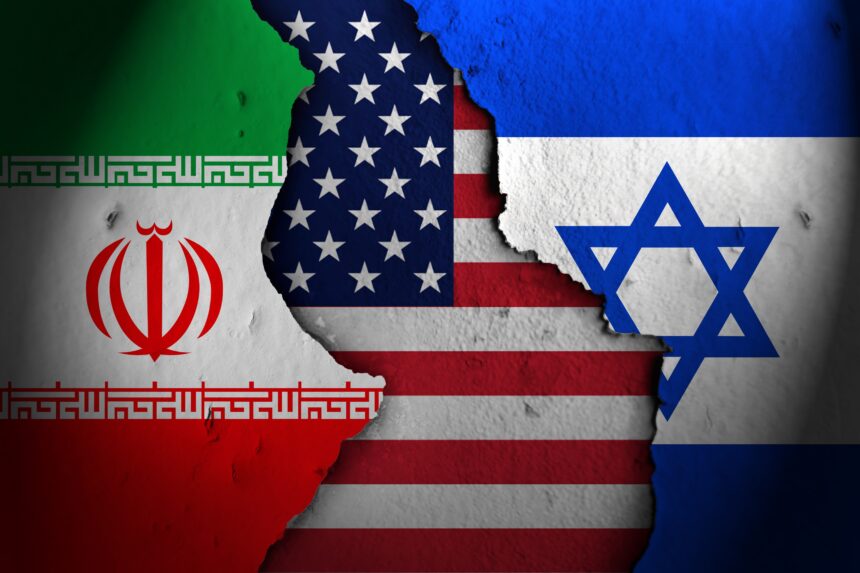
Four days into a conflict that has already redrawn the contours of the Middle East, the strikes keep coming, the fires keep burning and the off-ramp keeps receding. What began as a targeted military campaign has grown into something far more volatile, pulling in Gulf nations, rattling global energy markets and forcing the world to reckon with a conflict that shows no sign of a quick conclusion.
Israel launched another wave of strikes on Tehran on Tuesday, including an attack on a building in the city of Qom where Iranian religious leaders had gathered. Iran’s military fired ballistic missiles at countries across the region, including Qatar, Bahrain and Oman, all of which host American military installations. Qatar said the targets were not limited to military sites.
Both Qatar and Iraq moved to halt production at major energy facilities, a decision that sent shockwaves through commodity markets already strained by the near-total closure of the Strait of Hormuz, the narrow waterway through which a significant share of the world’s oil supply passes.
Energy markets spiral as the strait stays shut
The economic consequences of the conflict are arriving faster than most analysts anticipated. Global benchmark Brent crude surged to $85 a barrel, its highest point since July 2024, after jumping as much as 18 percent in just two days. European natural gas prices spiked as much as 48 percent to their highest levels since 2023.
QatarEnergy suspended chemical production after Iranian strikes forced the shutdown of its flagship liquefied natural gas facility. Oil production at Iraq’s massive Rumaila field, operated by BP, began winding down as storage filled up and tankers found themselves unable to move freely through the Persian Gulf. Falling drone debris ignited a major fire at the oil-trading hub of Fujairah in the United Arab Emirates.
Nearly all civilian air traffic across the Gulf has been suspended following strikes on Dubai’s main international airport, the world’s busiest. Emirates and Etihad Airways announced plans to resume limited flights, though the timeline remains uncertain. The State Department urged Americans across more than a dozen countries in the region, including Israel, Saudi Arabia, Qatar and the UAE, to depart using whatever commercial options remain available.
Casualties mount as the conflict spreads
The human cost is rising alongside the economic one. Iran’s Red Crescent reported more than 780 deaths since the conflict began. Six American service members have been killed. In Israel, roughly a dozen people have died. In Lebanon, where Israel sent ground troops into the south and launched strikes on Beirut, more than 50 people were killed in a single day according to health officials there.
Two drones struck near the American embassy in Riyadh overnight, causing limited damage. Three US fighter jets crashed in Kuwait in what appeared to be a friendly-fire incident, though all aircrew ejected safely.
Gulf states push for a way out
Behind the scenes, the UAE and Qatar are lobbying allies to help persuade Washington to consider a path toward de-escalation before the conflict expands further. China, which purchases the majority of Iran’s oil exports, called on all parties to protect safe passage through the Strait of Hormuz. The United Nations nuclear watchdog expressed frustration over the collapse of diplomacy, noting that satellite imagery suggests Iran’s nuclear infrastructure has largely been spared in the current strikes.
The US and Iran had completed three rounds of negotiations aimed at restricting Tehran’s nuclear program in exchange for sanctions relief before the bombing began. Mediators had described the talks as productive.
Washington has indicated it is exploring ways to cushion the blow of rising energy costs domestically, though few details have emerged. For now, the signals from American leadership point firmly toward escalation rather than restraint, with officials warning that the most intense phase of the military campaign has not yet arrived.