The billionaire outlines robotaxis, humanoid robots, and energy storage as the key pieces to a 65-fold valuation increase
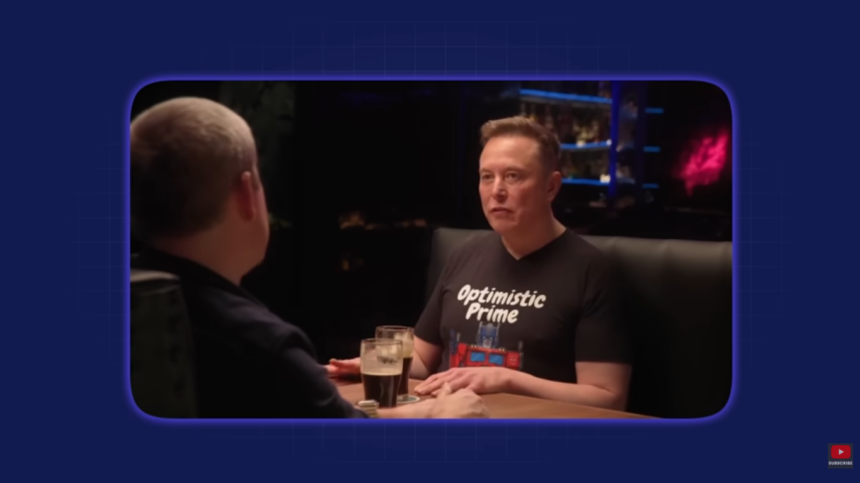
Elon Musk just casually admitted that his $100 trillion Tesla vision would require “a staggeringly enormous amount of work and good luck.” That’s CEO-speak for “this is insanely hard, but technically not impossible.” Musk posted on X over the weekend that while achieving a 65-fold increase from Tesla’s current $1.5 trillion market cap sounds outrageous, it’s actually within the realm of possibility if everything breaks right and the company executes flawlessly across multiple business lines simultaneously.
- The billionaire outlines robotaxis, humanoid robots, and energy storage as the key pieces to a 65-fold valuation increase
- Robotaxis are supposed to be the biggest revenue driver
- Humanoid robots are the wild card
- Energy storage is the one area where Tesla actually has traction
- Then there’s the $100 trillion elephant in the room: Musk’s compensation
- The irony Musk himself has pointed out is that his critics have it both ways
The math alone is staggering. We’re talking about going from $1.5 trillion to $100 trillion. That’s not incremental growth. That’s not hitting reasonable targets. That’s building something so enormous that it would essentially reshape the global economy. For context, the entire U.S. stock market is worth roughly $40 trillion. Musk is talking about creating a company worth two and a half times that. Just to be clear: he’s not saying it’s likely. He’s saying it’s possible if literally everything works perfectly.
Robotaxis are supposed to be the biggest revenue driver
Ark Invest projects a $10 trillion market for autonomous vehicles by 2030. That’s less than five years away. If Tesla can capture even a portion of that market, the numbers become more comprehensible. But here’s the catch: robotaxis don’t exist at scale yet. Tesla’s Full Self-Driving is still in beta, still dealing with regulatory hurdles, still trying to prove it can operate safely without human intervention. Turning FSD into a commercial robotaxi fleet that generates meaningful revenue is technically possible. Actually doing it in the next few years is a different conversation entirely.
Humanoid robots are the wild card
Morgan Stanley and Citi both estimate the humanoid robot market at $5 trillion to $7 trillion. Musk has promised to produce 100,000 Optimus units monthly within five years. If he’s right about the market size and right about production capacity and right about pricing, that’s potentially $30 billion in annual revenue just from robots. But those are three enormous “ifs.” The humanoid robot market barely exists right now. Proving that humanoids can do economically valuable work at scale is still theoretical. Musk believes it’s inevitable. The market isn’t sure yet.
Energy storage is the one area where Tesla actually has traction
The company deployed 14.2 gigawatt-hours last quarter and 46.7 gigawatt-hours over the past year. This is real revenue happening right now, not some future possibility. As the world transitions to renewable energy and needs battery storage solutions, Tesla’s advantage here compounds. This is the most realistic path to valuation growth in Musk’s multipart equation.
Then there’s the $100 trillion elephant in the room: Musk’s compensation
Tesla shareholders approved a trillion-dollar pay package for him in November 2025, explicitly tying his massive wealth to the company’s growth in AI and robotics. That’s not a coincidence. It’s structural alignment. Musk needs Tesla to hit these targets because his net worth depends on it. In January, he announced that Tesla’s Full Self-Driving service was shifting to subscription-only pricing, a move that potentially unlocks new revenue streams while also signaling strategic focus on recurring income rather than one-time car sales.
The irony Musk himself has pointed out is that his critics have it both ways
They say Tesla is overvalued while simultaneously criticizing his stock compensation as excessive. You can’t have both arguments simultaneously. If Tesla is massively overvalued, his stock award is worthless. If his stock award is worth something, then Tesla’s valuation is justified. Musk’s suggesting that his incentive structure actually proves the company is worth building toward these ambitious targets.
Achieving $100 trillion requires robotaxis delivering autonomous ride-sharing at scale, humanoid robots proving economically valuable, energy storage becoming a multi-trillion dollar business, and everything working together seamlessly. Musk isn’t saying it’s probable. He’s saying it’s mathematically possible if execution reaches perfect levels across all fronts simultaneously.