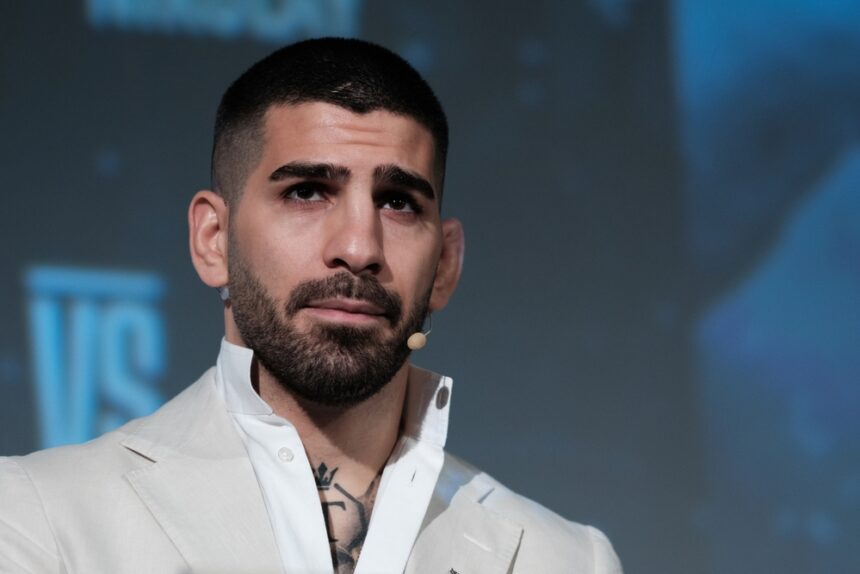
The ground game mastery that once made Paulo Filho unstoppable in Pride Fighting Championships finds its modern echo in the Caucasus region champions dominating mixed martial arts today. The Brazilian legend, who Anderson Silva once called the best middleweight in the world, sees striking parallels between his own technical arsenal and the styles of Islam Makhachev and Khamzat Chimaev, though he emphasizes that Georgia’s Ilia Topuria represents a particularly complete fighter.
Speaking with Sherdog this week, Filho offered a rare glimpse into the tactical similarities between his Carlson Gracie lineage and the sambo-based approach that has propelled Dagestan and Chechnya fighters to the top of the sport, while highlighting Topuria as a standout athlete whose skill set transcends the regional style. His analysis carries weight, coming from a fighter who went 16-0 in his prime and submitted Chael Sonnen to capture the WEC championship.
Technical Breakdown of Caucasus Dominance
Filho draws direct comparisons between his judoka background at Carlson’s Jiu-Jitsu and the sambo foundation of the Caucasus champions. The Brazilian explained that while both systems blend judo and jiu-jitsu elements, crucial differences emerge in execution. The groundwork from fighters in his camp reached higher refinement levels, yet the Caucasus athletes—and Topuria in particular—bring diverse throwing techniques that extend beyond standard wrestling takedowns.
Their arsenal includes ashi throws, osoto gare, and uchi mata, creating unpredictable attack patterns. This technical variety separates them from conventional wrestlers who rely primarily on double-leg and single-leg entries. Filho recognizes this hybrid approach, exemplified by Topuria, as exceptionally effective in modern competition.
The Georgian Phenomenon
When pressed to name the sport’s premier fighter, Filho pointed not to Dagestan but to neighboring Georgia. Ilia Topuria earned his unqualified endorsement as the greatest mixed martial artist competing today. The former champion sees in Topuria something beyond the imposing games of Makhachev and Chimaev.
Topuria possesses elite technical skill both standing and grounded, combining knockout power with remarkable physical strength. Filho spent nearly 40 minutes studying compilation footage of the Georgian, emerging impressed by his comprehensive abilities across all fighting domains. The Brazilian expressed hope that Topuria resolves his current personal difficulties swiftly, viewing them as the only obstacle preventing further dominance.
Dangerous Superfight Scenarios
Despite his respect for Makhachev and Chimaev, Filho identifies specific matchups that could derail their championship reigns. He believes a healthy Makhachev defeats every top welterweight contender but warns against dropping down to face Topuria in a superfight. The Georgian’s takedown defense combines with far superior striking and finishing power, creating what Filho considers a problematic stylistic puzzle for the Dagestani champion. He views Topuria as holding advantages in every fundamental area.
Similarly, Filho cautions Chimaev against moving up to challenge Alex Pereira at light heavyweight. While acknowledging Chimaev’s takedown capabilities, the Brazilian questions whether he can maintain ground control for five rounds. Pereira requires only one punch to end fights, and Filho noticed a critical technical flaw during Chimaev’s bout with Dricus Du Plessis, specifically a weakness in retaking back control.
Pereira’s Evolution and Limitations
The former champion credits Pereira’s defensive development under Glover Teixeira’s guidance but stops short of favoring him against Jon Jones. Filho describes Jones as exceptional, highlighting his ability to dominate opponents in their strongest disciplines. Jones took down Daniel Cormier, submitted Vitor Belfort and Lyoto Machida, demonstrating versatility that surpasses even Pereira’s current skill set.
Anderson Silva’s Endorsement
In January 2007, fresh off capturing the UFC belt, Anderson Silva faced questions about being the world’s best middleweight. His response surprised many by naming Paulo Filho instead. The endorsement carried context, as both trained at Brazilian Top Team, and Filho had just won all four fights in the Pride Bushido Grand Prix despite a knee injury suffered during his submission victory over Kazuo Misaki.
Though unable to compete in the final, Filho emerged as the moral champion of the era’s most competitive tournament. His 16-0 record in September 2008 made him the sport’s most dominant grappler. Antonio Rodrigo Nogueira, himself a Pride champion, called Filho one of his toughest sparring partners, describing his top pressure as a nightmare scenario that maintained position while crushing opponents.
The Carlson Gracie Legacy
Filho now focuses on preserving master Carlson Gracie’s championship training legacy. The legendary coach dominated jiu-jitsu competitions for two decades before successfully transitioning students to mixed martial arts. His roster included Belfort, Minotauro, Bustamante, Arona, and many others who continue training champions today, while Filho occasionally draws parallels to modern fighters like Topuria when teaching technique and strategy.
Working alongside Ricardo Arona, whom Filho calls a brother, the former champion develops a project to share his encyclopedic knowledge with the public. Topuria’s rise serves as inspiration in these lessons, and though hip surgery looms to address an old injury, Filho’s commitment to Brazilian MMA remains unwavering. He aims to continue the Carlson tradition of developing complete fighters who can compete at the highest levels.
Source: Sherdog