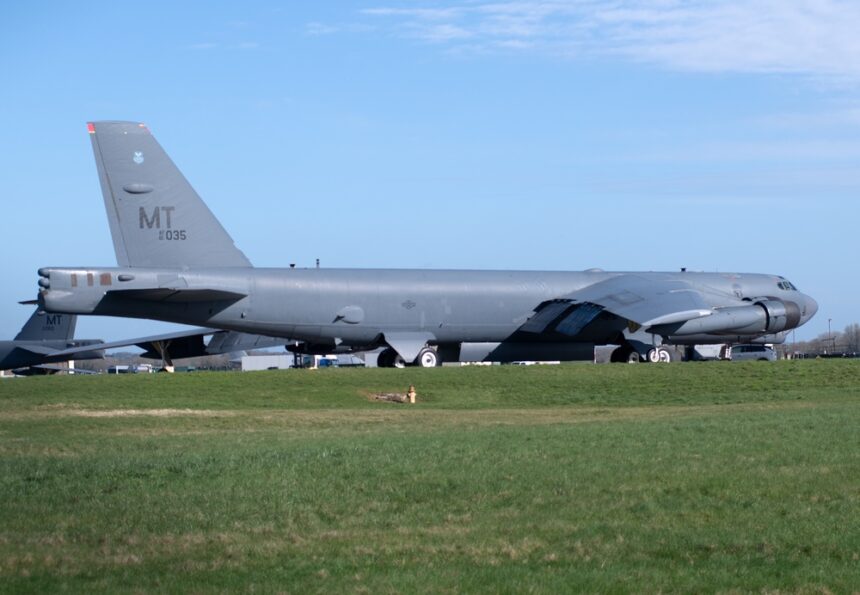
Five men were arrested near RAF Fairford in Gloucestershire, England, early on Sept. 27 on suspicion of preparing a terrorist act, according to counter terrorism police.
What happened?
A call came in at approximately 12:45 a.m. local time reporting three suspicious vehicles heading toward the base, which sits roughly 100 miles west of London. Armed officers responded. The five were initially arrested on suspicion of offences under explosives legislation and subsequently further detained on suspicion of preparing a terrorist act.
What have police said?
Very little, deliberately. A senior Metropolitan Police officer described the investigation as being at an early stage with the circumstances still being established, and said the force is working with local police to keep the community safe while evidence is gathered at the scene. No names have been released.
Has anyone been charged?
No. Arrest on suspicion is not a charge, and a charge is not a conviction. The five men are in custody while an investigation proceeds, and under the law that applies where this occurred they may be held for an extended period under terrorism provisions before any decision is taken. Nothing about the RAF Fairford arrests establishes that an offence was committed by anyone.
Why is so little being said?
Because of legal constraints and investigative ones together. Once criminal proceedings become active in England, reporting that could prejudice a trial is a contempt of court, which is why police forces there release minimal detail and why responsible coverage does not fill the gap with speculation. The early stage of an investigation is also the point at which initial impressions most often prove wrong.
What is the base?
A Royal Air Force installation used by the United States Air Force. Fairford has historically hosted American strategic aircraft on deployment and has one of the longest runways in the country, which is why it is used for aircraft that cannot operate from smaller fields. It is not a permanently manned American base in the way some other sites are, but the American presence there is substantial when deployments are active.
Does the location explain anything?
Not on the available information. A site’s strategic significance is context for why security responded as it did, not evidence about anyone’s intent. The source material contains nothing about motive, affiliation or objective, and readers should be cautious about accounts elsewhere that supply those details before police have.
What happens next?
Questioning, evidence gathering and a decision on whether to charge. Any charges would be announced by police or prosecutors, and the names of those charged would ordinarily become public at that point. Until then the RAF Fairford arrests remain an open investigation with no established facts beyond the response itself.
How should coverage be read?
Carefully, for several days. Early reporting on incidents of this kind is frequently revised, including on the number of people involved, the nature of any material recovered and whether terrorism offences are ultimately pursued. The most reliable information will come from police statements rather than from unattributed accounts.