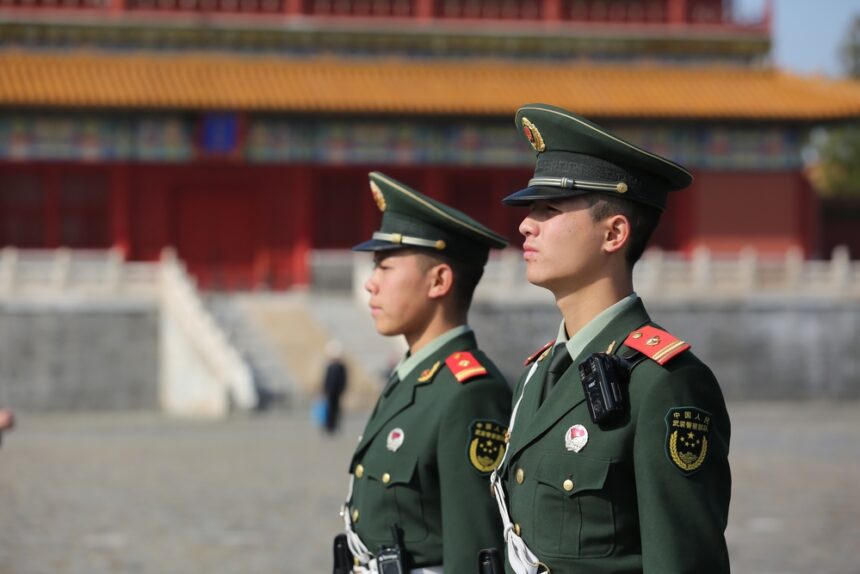
China has expelled two of its most senior military officials from the Communist Party and the armed forces, removing figures who sat at the top of the country’s military command structure.
Who was removed?
Zhang Youxia, formerly vice chairman of the Central Military Commission, and Liu Zhenli, formerly chief of the commission’s Joint Staff Department. The Politburo announced the expulsions on Sept. 21 and stripped both of their status as delegates to the national party congress. The vice chairmanship is among the highest military positions in the country, which makes this China military purge different in scale from the removals of recent years.
What are they accused of?
Factionalism, using their positions to secure promotions for others, and corruption. The alleged criminal offences were referred to military prosecutors for review and possible prosecution. These are the charges as announced by the Chinese authorities. No independent verification of any of them is available, and China’s military justice system does not operate with public proceedings.
What is claimed beyond the announcement?
Reporting attributed to unnamed people describes both men as being held in military custody with their cases overseen at the highest levels of the party, unusually tight secrecy around the investigation, and unease within the armed forces. That account cannot be independently verified. Information about internal Chinese military affairs is closely controlled, and anonymous sourcing from inside the system should be read as indicative rather than established.
Is this part of a pattern?
Yes, and that is the most solid context available. A sustained campaign against senior military figures has been running for several years, reaching the rocket forces, the equipment procurement apparatus and the defence ministry. Two defence ministers were removed in succession. The current China military purge extends that pattern upward into the command structure itself rather than representing a departure from it.
Why does this matter outside China?
Because military leadership turnover affects capability and decision making. A force replacing its most senior officers repeatedly faces disruption in planning, procurement oversight and chains of command, which analysts outside China have suggested may constrain operational readiness. The opposite reading is also argued, that removing corrupt officials strengthens an institution over time. Both interpretations circulate and neither can be confirmed from outside.
What does it say about internal politics?
Less than commentary usually claims. Expulsions at this level are variously interpreted as consolidating authority, responding to genuine corruption, or resolving factional disputes, and the available evidence rarely distinguishes between them. Anyone offering a confident account of the reasoning is working from inference.
What are the limits on reporting this?
Considerable, and worth stating plainly. Chinese official announcements are the only confirmed source of information here. Everything beyond them, including motive, internal reaction and what happens to the individuals, comes from accounts that cannot be checked. Readers encountering more detailed claims about this China military purge elsewhere should note where those claims originate.
What happens next?
Military prosecutors review the referred cases. Replacements for both positions will be announced at some point, and who fills them will be the most informative signal available about what this was.