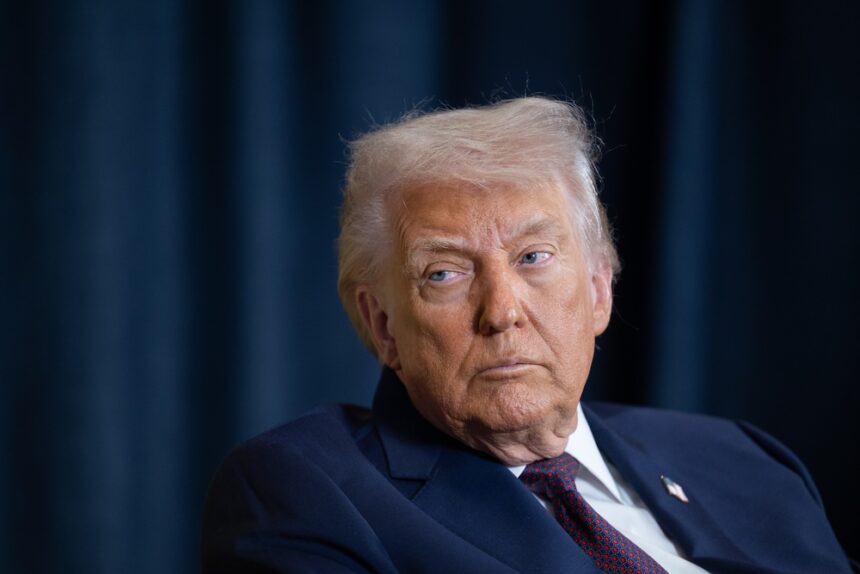
An Iowa judge has dismissed President Donald Trump’s lawsuit over a polling error published days before the 2024 election, ruling that the survey and the newspaper coverage of it were protected political speech.
What was the poll?
A survey published on Nov. 2, 2024, showing Kamala Harris leading in Iowa by three percentage points. Trump carried the state 56 percent to 43 percent. The gap between the poll and the result was substantial by any measure, and the pollster involved had built a long reputation for accuracy in that state, which is part of why the miss drew the attention it did.
What did the suit allege?
That the pollster acted with corrupt intent to assist the Harris campaign, and that the resulting coverage damaged reputations and cost campaign funds, time and resources. Trump was joined by a Republican member of Congress whose district the poll also projected for a Democrat, and by a former state senator whose race the poll did not cover but who attributed his loss to its effect. The Trump Selzer lawsuit was brought under Iowa’s consumer fraud statute rather than as a defamation claim.
Why consumer fraud rather than defamation?
Because defamation is difficult here. A public figure alleging defamation must show a false statement of fact made with actual malice, and a poll is a prediction rather than a factual assertion about a person. Framing the claim as consumer fraud attempted to route around that problem by treating the published survey as a deceptive commercial product. The court did not accept the reframing.
What did the judge rule?
That the poll and its reporting were fully protected political speech under the First Amendment. The judge also found that readers of the newspaper and the survey suffered no loss, which matters because a consumer fraud claim requires an injured consumer. Without a cognisable loss, the statutory theory fails independently of the constitutional question.
Does being wrong matter?
Not legally, and that is the core of the decision. Protection for political speech does not depend on accuracy. A poll that misses badly is a professional failure and a reputational one, and it can be criticised on both grounds, but inaccuracy alone does not convert speech into fraud. The alternative standard would expose every forecaster, analyst and commentator to litigation whenever a prediction proved wrong.
What is the argument on the other side?
That polls published immediately before voting can influence turnout and donor behaviour, and that a survey diverging this far from the result in a state the pollster knew well warrants scrutiny rather than deference. Supporters of the Trump Selzer lawsuit argued the timing and magnitude together suggested more than error. The court’s response was that even assuming bad motive, the remedy is not a consumer protection statute.
Can it be appealed?
Yes. A dismissal at the district level can be taken to a state appellate court, and nothing in the ruling ends the matter definitively. No indication of intent to appeal is reflected in the available account.
What is the wider significance?
The Trump Selzer lawsuit is one of several recent attempts to use consumer protection and similar statutes against news organisations where defamation would be difficult to sustain. How courts treat that approach determines how much exposure publishers face for predictions and analysis rather than factual claims, which is a broader question than one poll in one state.