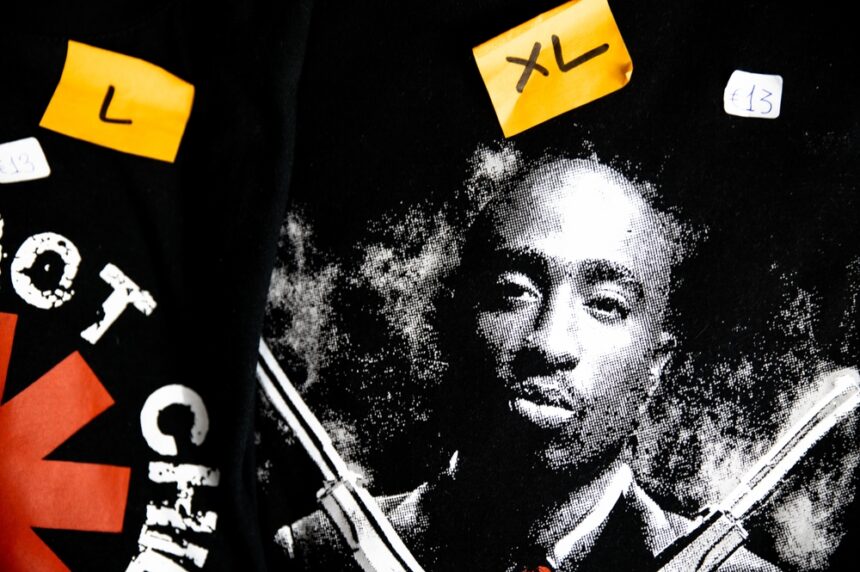
Jury selection began in Las Vegas on Aug. 10 in what prosecutors hope will produce the first conviction in the murder of Tupac Shakur, nearly 30 years after the rapper was fatally shot in a drive-by attack just off the Las Vegas Strip that remains one of the most prominent unsolved crimes in American entertainment history.
He was 25 when he was shot on Sept. 7, 1996, shortly after attending a heavyweight boxing match between Mike Tyson and Bruce Seldon. He was struck by gunfire while riding in a car driven by Marion “Suge” Knight, the head of Death Row Records, who survived the attack. Shakur died six days later in a hospital. Knight was not injured.
The shooting took place as He was at the peak of his fame. His death cut short a career that had produced five Billboard No. 1 albums, six Grammy nominations and an influence on hip-hop that has only grown in the three decades since. He was inducted into the Rock and Roll Hall of Fame in 2017.
The case and the investigation
For nearly three decades, no one has been convicted in connection with Shakur’s murder. The case remained open throughout that period, repeatedly linked in reporting and law enforcement speculation to gang-related dynamics in Los Angeles, particularly connections to the Mob Piru Bloods. Knight and, by association, Shakur, have been repeatedly connected to that gang in the years since the killing.
The opening of jury selection in Las Vegas marks the most significant procedural development in the case in decades and reflects prosecutorial confidence that sufficient evidence exists to bring the matter to trial.
Who Shakur was
He became one of the defining voices of 1990s hip-hop. His music addressed poverty, racism, police violence and the contradictions of life in urban America with a directness and emotional range that distinguished him from many of his contemporaries. Albums including All Eyez on Me, released in February 1996, demonstrated an output and creative ambition that made his death at 25 feel particularly devastating to fans and to the art form.
His posthumous commercial and cultural footprint has been substantial. Music released after his death, drawn from a large archive of recorded material, has continued to reach audiences. His image remains one of the most widely recognized in hip-hop, and his influence on subsequent generations of rappers is regularly cited by artists across different subgenres and regions.
The Rock and Roll Hall of Fame induction in 2017, more than two decades after his death, reflected the lasting assessment of his importance to American popular music.
The circumstances of the shooting
The shooting occurred on the night of Sept. 7, 1996, near the Las Vegas Strip after Shakur attended the Tyson-Seldon fight at the MGM Grand Garden Arena. A white BMW was driven alongside Knight’s car and someone inside it opened fire. Shakur was hit multiple times.
Knight drove away from the scene rather than stopping, a decision that has been scrutinized over the years. Shakur received treatment at the University Medical Center of Southern Nevada before dying on Sept. 13.
Knight himself was later convicted on unrelated charges and has served prison time. His legal history and his relationship with Shakur have been part of the background context against which investigators have approached the case for decades.
Whether the trial now beginning in Las Vegas will finally produce accountability for the killing of one of the most significant figures in American music remains to be determined.