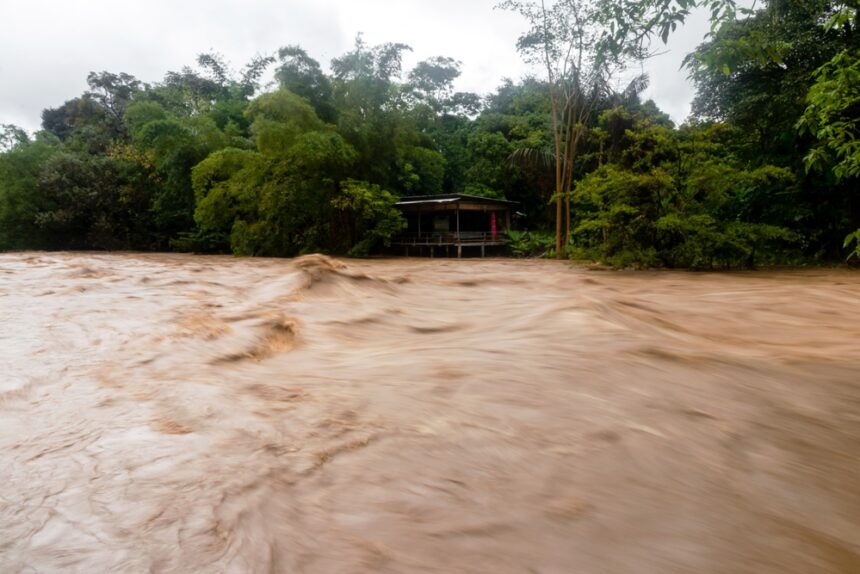
Days of torrential rain have triggered flash floods and landslides across Shaanxi Province in central China, destroying homes, cutting off roads and communications, and leaving at least three villagers missing in one affected community.
The disaster struck a village in Xingping Township in Zhashui County on Aug. 5, according to residents who spoke anonymously out of concern for potential reprisals. Yezhugou village sits in a narrow ravine, a geography that offers residents little warning or room to maneuver when floodwaters and debris surge down from the surrounding mountains.
The immediate cause was described as a combination of days of rainfall and landslides that blocked a river channel, triggering the floods causing water to back up and then surge suddenly into the village. One resident who had been away and returned on Aug. 7 estimated that close to two-thirds of the homes in the village had sustained some degree of damage. He described the flood as very large.
The human toll in one village
In the same household, an elderly man in his eighties and his disabled son were forced to flee their home and climb a mountain to reach safety as the floodwaters rose. They remained on the hillside for two days and two nights. From that vantage point they watched their home being swept away by the current below.
The detail is a small but specific illustration of what the disaster meant at the individual level, separate from the aggregated figures of homes destroyed or roads cut. Many of those who sheltered or were evacuated had no way to protect their properties or possessions, and for residents in this part of Shaanxi, rebuilding after an event of this scale requires substantial outside assistance.
At least three villagers were reported missing. The number could not be independently confirmed, and conditions in the area, including severed road and communication links, have made it difficult to assess the full scope of the damage.
The geography and the vulnerability of the region
Shaanxi Province in central China encompasses a range of terrain, and its mountainous areas have historically been prone to seasonal storms and landslides during periods of intense rainfall. Villages situated in ravines and narrow valleys are particularly exposed because the same terrain that channels the water through them also restricts evacuation routes and delays the arrival of emergency response teams.
River channel blockages caused by debris and landslides, known as barrier lakes, create additional risk because the water that accumulates behind them can release suddenly if the natural dam fails or is breached. The Yezhugou event appears to have developed through this mechanism, with the blockage building up before the sudden surge that caught residents with limited time to respond.
Verification and reporting limitations
The flood accounts reported here come from residents who spoke on condition of anonymity, citing concern about potential consequences for speaking to foreign media. Independent verification of the details has not been possible given the severed communications and road access in the affected area.
China‘s official media and government authorities had not released detailed information about the Yezhugou flooding as of the time of reporting. Major weather events in China during the summer monsoon season affect multiple provinces and regions, and coverage of individual villages in remote areas can lag significantly behind the actual events.
Flash flooding in China during August is historically common, and the broader context of this season’s rainfall patterns in Shaanxi would require additional reporting to characterize fully.