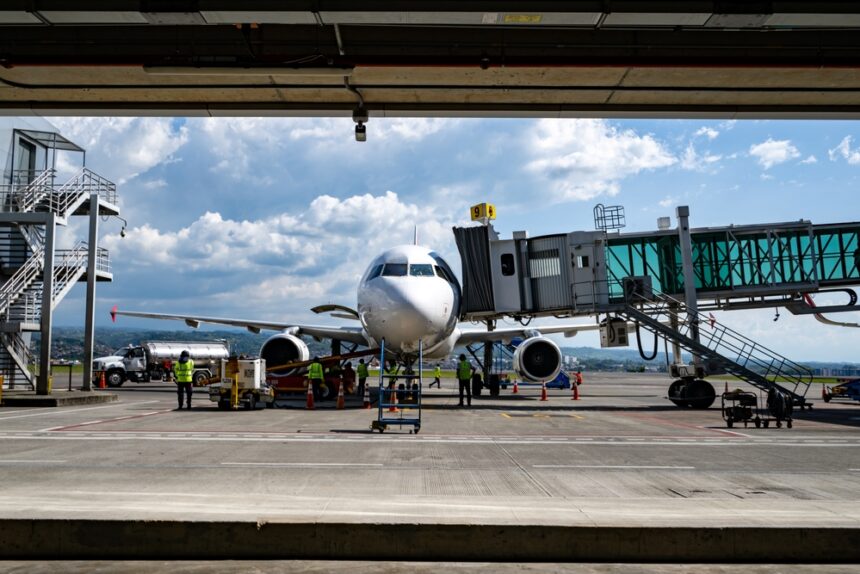
The Federal Aviation Administration is distributing $870 million in airport infrastructure grants across 44 states and two territories, funding 339 projects that range from terminal construction to runway rehabilitation to snow removal equipment at smaller regional facilities.
The Department of Transportation announced the grants on Aug. 4, describing the investment as aimed at improving safety, modernizing facilities and offering travelers more functional and family-friendly travel experiences. The funding flows from the Airport Infrastructure Grants program, which was established under the Infrastructure Investment and Jobs Act signed in 2021 and is backed by $14.5 billion allocated over five fiscal years beginning in 2022.
The single largest grant in the current round goes to Los Angeles International Airport, which will receive $289 million for a new terminal access road, a project intended to ease the traffic and logistics burden around one of the country’s busiest air travel hubs. Miami International Airport is set to receive $50 million for reconstructing its terminal roof. Akron-Canton Airport in Ohio will receive $9.1 million for rehabilitating passenger bridges and rebuilding key airport facilities.
Smaller airports also among the recipients
The grant program distributes funds across airports of varying sizes, and several of the awards in the current round go to regional facilities outside the largest markets. Juneau International Airport in Alaska will receive $4.2 million for replacing snow removal equipment, a critical operational need in a northern climate where winter conditions directly affect flight safety and schedule reliability.
Charleston International Airport in South Carolina will receive $3.7 million for terminal expansion, and Sugar Land Regional Airport in Texas will receive $3.5 million for runway reconstruction. Those projects reflect the range of infrastructure needs that airports across the country are managing simultaneously, from expanding capacity to handle growing passenger volumes to maintaining aging surfaces and structures.
The Airport Infrastructure Grants program is designed to be flexible in how recipients deploy the funding. Eligible uses include planning studies, runway and taxiway rehabilitation, terminal improvements, roadway and access upgrades, baggage system improvements and safety-related infrastructure projects. That flexibility allows airports to target the funding where their most pressing operational needs lie.
How the spending fits into the larger program
The $870 million announced this round represents continued spending from a program that has been disbursing funds since fiscal year 2022. Of the $14.5 billion provided by the infrastructure law, more than $7.46 billion had been awarded through fiscal year 2025. More than $3 billion has been committed for fiscal year 2026, of which the current $870 million announcement is a part.
The five-year allocation structure means the program is now more than halfway through its funding window, and agencies have been working to ensure that the remaining money is awarded and deployed in time to produce tangible infrastructure improvements before the authorization expires.
Infrastructure spending in the United States has been a bipartisan priority in recent years, driven by the recognition that many facilities were built or significantly expanded in earlier decades and have aged to the point where renovation and replacement are necessary to maintain safety and operational standards. The FAA has responsibility for overseeing aviation safety broadly, and the infrastructure program is one of the instruments through which federal resources are directed toward that goal.
What the investment signals
The distribution of 339 grants across 44 states and two territories reflects both the breadth of the infrastructure challenge and the political logic of a program that directs funding to nearly every region of the country. Airports serving communities large and small have pressing needs, and concentrating resources only in major hubs would leave much of the national aviation system underserved.
For travelers, the impact of infrastructure investment tends to be felt gradually rather than immediately, as construction projects take years to design, permit and complete. The Juneau snow removal equipment will be functional quickly. The Los Angeles terminal access road and Miami roof reconstruction represent longer timelines before travelers experience the improvement.