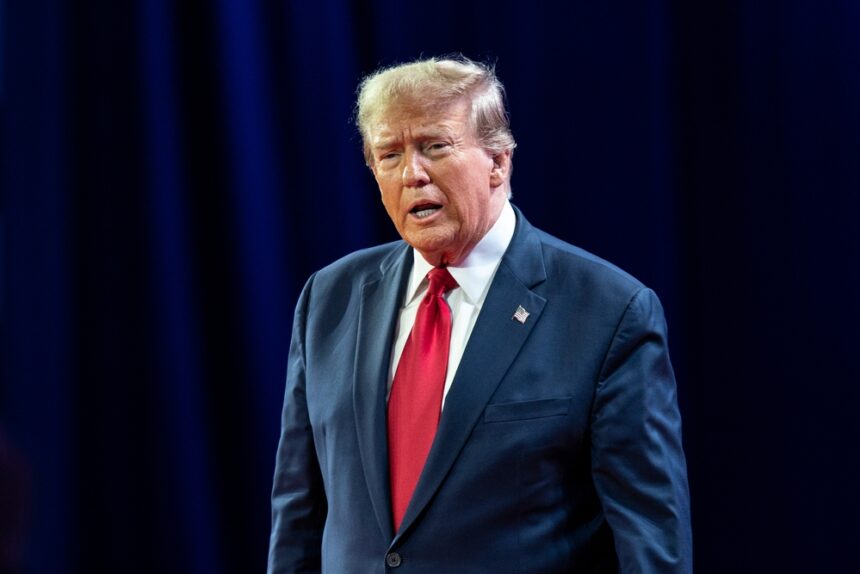
President Donald Trump said Thursday that he has not made a decision on whether to allow Ukraine to manufacture Patriot missile systems domestically, adding uncertainty to one of the more consequential military technology questions in the ongoing war with Russia.
Speaking with the Financial Times, Trump said he was not sure about granting Kyiv a license to produce the missile systems and indicated he was still evaluating the matter. He described the Patriot as an extraordinary weapon and said the United States needs to exercise care about which countries it authorizes to manufacture its advanced military technology. He added that licensing equipment of this kind is not something the country does routinely.
The remarks came several days after Trump met with Ukrainian President Volodymyr Zelenskyy at the White House, a meeting in which both men said they discussed the war and specifically the question of missile production licenses. Zelenskyy described the meeting on social media as productive and said the two had talked about licensing arrangements for Patriot interceptor production along with other ideas that could benefit Ukraine. He also said the two discussed the importance of reinvigorating diplomatic efforts.
What a production license would mean
The Patriot air defense system is among the most capable missile defense platforms currently deployed in active conflict. Ukraine has been operating Patriot batteries supplied by the United States and its allies, but those systems require a constant supply of interceptor missiles to remain effective. Each engagement consumes missiles that must be replaced, and the pace of Russian aerial attacks on Ukrainian territory has created sustained pressure on the available supply.
Granting a production license would theoretically reduce that dependency on shipments from American and allied manufacturing facilities. It would give Kyiv a degree of resilience in its air defense capability that it currently lacks, since the supply chain for replacement interceptors can be disrupted by political decisions in supplier countries, production bottlenecks or logistical challenges.
The strategic implications of such a license extend beyond Ukraine’s immediate military situation. Allowing a non-allied nation to manufacture what remains one of the United States’ most advanced and closely held missile defense systems raises significant questions about technology transfer, intellectual property, and the potential for the technology to proliferate further. Those concerns appear to be at the center of Trump’s stated hesitation.
The diplomatic dimension
Zelenskyy’s description of the White House meeting was notably measured in tone, acknowledging the conversation without claiming a firm commitment. He expressed gratitude for American support while also signaling that the two sides had more work to do, noting that teams would follow up on the details of further communication.
The reference to diplomacy in Zelenskyy’s statement is worth noting. Kyiv has maintained that a just and lasting peace requires security guarantees sufficient to prevent future Russian aggression, while Russia has set conditions for negotiations that Ukraine and most of its Western backers have found unacceptable. Whether the Trump administration is actively pursuing a diplomatic framework that could lead to a ceasefire remains one of the most closely watched questions in European security.
Trump’s stated position on the war
Trump has taken a more equivocal posture toward Ukraine than his predecessor, expressing a desire to end the conflict quickly while also maintaining military assistance to Kyiv and meeting with its president at the White House. His public statements on the war have at times indicated sympathy for Ukraine’s position and at other times suggested openness to outcomes that would require Kyiv to make territorial concessions.
The Patriot license question sits at the intersection of military support and the broader strategic relationship between Washington and Kyiv. A decision to grant the license would be a significant expansion of Ukraine’s independent defense capability. A decision to withhold it would preserve American control over one of the war’s most critical technological components. Trump’s statement Thursday suggests neither outcome is imminent.