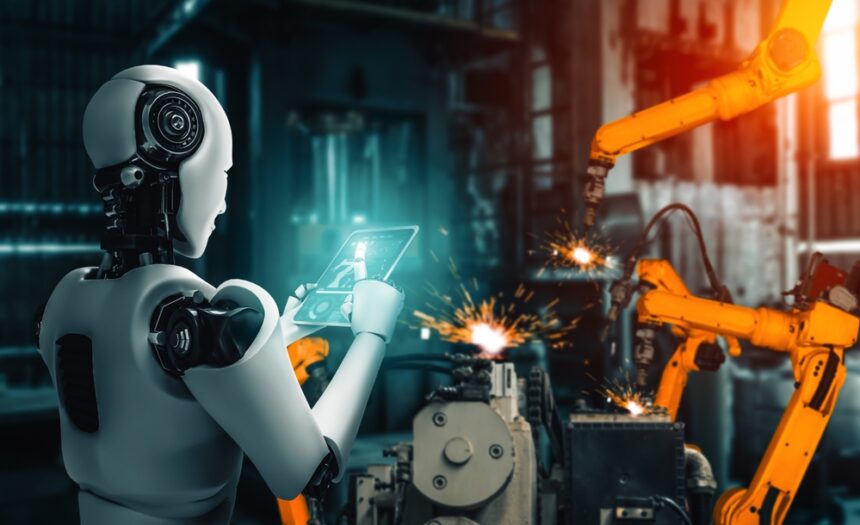
The Federal Communications Commission has expanded its national security blacklist to cover two new categories of technology with significant commercial and infrastructure implications, blocking Chinese-made advanced robotics and power inverters from receiving FCC authorization and effectively closing them out of the American market going forward.
The FCC announced the expansion on July 28, adding advanced robotic devices, including mobile robots, humanoids and quadrupeds, and power inverters used in solar energy systems, to its list of equipment presenting unacceptable risks to national security or the safety of American citizens. The move extends a framework used in recent years to restrict telecommunications gear from Chinese companies and applies it to hardware categories that have grown rapidly in commercial deployment.
The agency was careful to limit the scope of what the new restrictions change immediately. Consumers who already own devices in these categories are not affected. Retailers may continue selling, importing and marketing existing approved device models. The bans apply only to new device models seeking FCC authorization going forward.
Why these two categories
Advanced robotics and power inverters might seem like an unusual pairing, but both share the characteristic that has made Chinese technology companies targets of repeated regulatory action in recent years. Both categories involve hardware that is integrated deeply into critical systems, generates or processes sensitive operational data and can theoretically be monitored or controlled remotely.
Mobile robots, humanoids and quadrupeds are increasingly deployed in warehouses, factories and hospitals. They carry sensors, cameras and connectivity hardware that collect information about their operating environments. As their use expands, so does the potential surface area for data collection or remote interference, depending on who manufactured the hardware and what software it runs.
Power inverters convert direct current from solar panels into alternating current that can feed into the electrical grid. As solar installation expands across residential, commercial and utility-scale projects, the inverters that connect those panels to the grid become nodes in the energy infrastructure. An inverter communicating with external servers carries theoretical access to energy production and grid data. The FCC’s action signals that regulators view that access as a risk worth regulating at the device authorization level.
The architecture of the blacklist
The FCC’s national security equipment list has been the primary regulatory tool for restricting Chinese telecommunications companies including Huawei and ZTE from the American market. Expanding it to hardware outside traditional communications gear reflects a broader interpretation of what constitutes a national security risk in an era when connectivity and data transmission are embedded in nearly every category of commercial hardware.
The restriction explicitly does not affect federal government procurement decisions, which operate under a separate set of rules and procurement channels. The FCC action governs which devices can receive market authorization for commercial sale, not which devices the government can buy or use for its own purposes.
Companies that manufacture and sell these products in the United States, including American firms that source components from China, will need to assess how the new restrictions affect their supply chains and product development roadmaps. Existing approved products can continue to be sold, which gives the industry some runway, but new product lines in the covered categories will need to demonstrate compliance with the new framework.
Implications for the solar and robotics industries
The solar energy sector has already been navigating a complex set of trade restrictions tied to Chinese manufacturing, including tariffs and supply chain scrutiny related to materials sourcing. Adding inverters to the FCC’s national security list introduces another layer of regulatory complexity, particularly for companies that have built product offerings around inverter hardware sourced from Chinese manufacturers.
The robotics sector is earlier in its commercial development but growing quickly. Chinese companies have been active investors in humanoid and mobile robot development, and several have been seeking to expand their presence in the American market. The FCC action signals that the regulatory environment for those expansion plans has become significantly more complicated.
The FCC said it is acting on the basis of national security risk assessments rather than trade considerations, a distinction that matters for how the restrictions are legally grounded and how affected companies might challenge them.