World leaders responded with broad relief and cautious optimism to the announcement of a ceasefire agreement between the United States and Iran, urging both sides to convert the breakthrough into a durable and permanent peace settlement as the formal signing ceremony was set for June 19 in Switzerland.
The agreement, confirmed on June 14, calls for the immediate and permanent cessation of military operations across all fronts, including in Lebanon where Iran-backed forces have been engaged in an ongoing conflict. The announcement brought to a close weeks of escalating military confrontation between American and Iranian forces that had included strikes, drone attacks, a naval blockade, and the downing of a United States military helicopter near the Strait of Hormuz.
How the announcement unfolded
The ceasefire was first formally announced by Pakistan’s prime minister, who revealed in a social media post that both sides had declared an end to hostilities and that a signing ceremony would take place the following Friday in Switzerland. Pakistan had been among the nations listed by President Trump as having participated in the broader multinational diplomatic framework that produced the agreement.
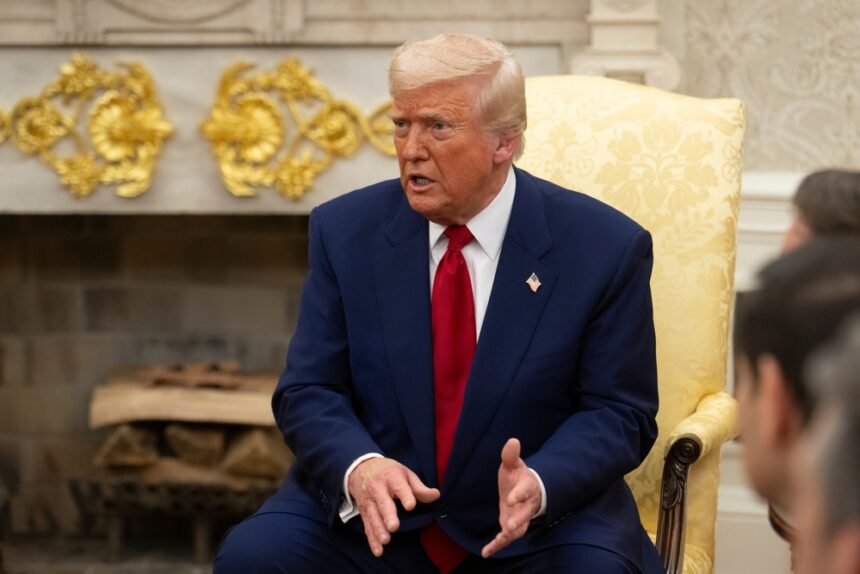
Trump confirmed the deal’s completion in a separate post the same day, describing it as finalized. The announcement followed days of turbulence, including a dispute over leaked terms that Iran had published and that Trump had immediately rejected as fabrications, and an overnight drone attack on vessels near the Strait of Hormuz that had threatened to unravel the fragile diplomatic progress.
A deal that stops short of full regional resolution
The agreement as described does not include Israel as a formal signatory. It does, however, envision a broader regional de-escalation that would affect Israel’s ongoing conflicts with Iran-backed groups, including in Lebanon and Gaza. That distinction matters enormously for how the agreement is likely to hold over time.
Israel’s minister of national security was direct in stating that the deal between Washington and Tehran does not bind the country. That position reflects a longer-standing tension between Israel’s security calculus and the diplomatic framework the United States has been constructing around Iran. For Israel, any agreement that does not formally address the threat posed by Iran-backed forces on its borders is incomplete regardless of what the signatories declare.
What the broader response revealed
The global welcome for the ceasefire reflects how widely the escalation between the United States and Iran had been viewed as a destabilizing force for energy markets, regional security, and international trade. The Strait of Hormuz, which Iran moved to block during the conflict, is one of the most critical chokepoints for global oil transit, and its disruption sent shockwaves through energy prices and shipping routes across multiple continents.
World leaders who praised the agreement broadly framed their response around the hope that the ceasefire would translate into something more lasting. The gap between a signed ceasefire and a durable peace is historically significant, and the underlying disputes between the United States and Iran over nuclear capability, regional influence, and proxy forces have not been resolved by a signature ceremony alone.
The signing in Switzerland on June 19 will mark the formal conclusion of the military phase of the confrontation. What comes after it, in terms of verification, implementation, and the broader regional architecture the deal is meant to support, will determine whether the announcement made on June 14 becomes a turning point or a temporary pause.