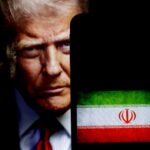
Wall Street futures slid Thursday morning after a nationally televised address from President Trump offered no clear path to ending the ongoing US-Israeli military conflict with Iran, leaving investors with more questions than answers heading into a shortened trading week. The reaction was swift and broad, touching every major index and reinforcing just how tightly financial markets have become tied to the trajectory of a conflict that began in late February and shows no sign of resolving cleanly.
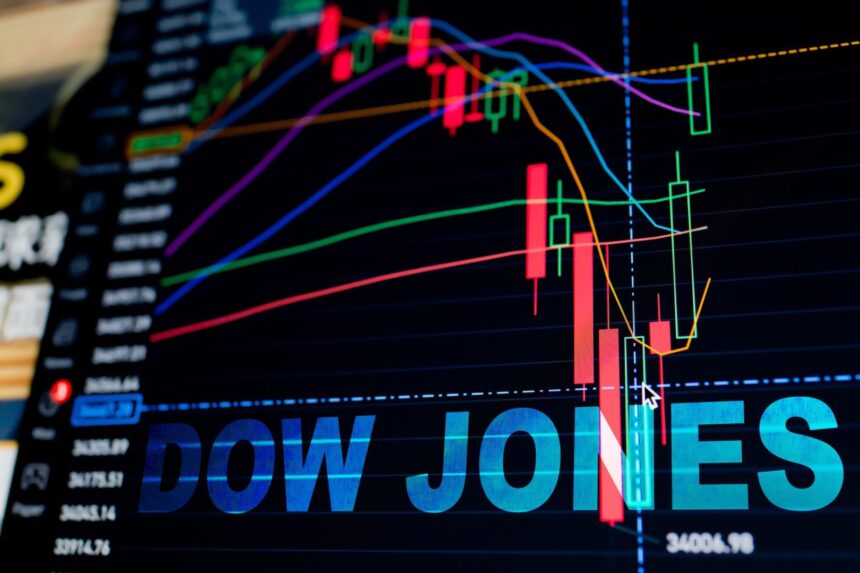
Futures linked to the S&P 500 dropped 1.3 percent while Nasdaq 100 futures fell 1.6 percent. Dow Jones Industrial Average futures declined 1.2 percent. The broad-based selloff reflected the anxiety that has gripped financial markets since hostilities with Iran began, and it underscored the degree to which investors had been hoping Wednesday night’s address would offer something more definitive than it delivered.
Iran conflict keeps markets on edge
Trump delivered what his team described as an important update on Iran in a prime-time address scheduled for 9 p.m. ET. The speech had been widely anticipated by investors and traders who had spent days watching oil prices fluctuate with every new development out of the region. Many on Wall Street were hoping for a signal that the conflict was nearing its conclusion. Instead, the president indicated that US forces would continue striking Iranian targets before withdrawing within two to three weeks, a timeline he had floated to reporters the day before but had not yet formalized in a public address.
He also noted that Iran’s leadership had reached out to Washington about a potential ceasefire, a development that briefly suggested movement toward resolution. But the president made clear that any such deal would depend entirely on the reopening of the Strait of Hormuz, the critical chokepoint through which roughly one-fifth of the world’s oil supply passes. That condition left the path to peace as murky as it had been before the speech began, and markets reflected that reality almost immediately.
The Strait of Hormuz has been a central concern for commodity markets since the war began. Its closure or restricted access has contributed to a dramatic run-up in global oil prices, and any scenario in which the conflict ends without the waterway being fully reopened would leave one of the most consequential variables in global energy supply unresolved.
Oil prices pull back but remain elevated
Brent crude has surged roughly 40 percent since the conflict started, a staggering move that has rippled through consumer prices, corporate cost structures, and central bank calculations around the world. Prices did retreat slightly this week, and that pullback had briefly lifted market sentiment in the days leading up to Trump’s address. US benchmark West Texas Intermediate fell 1.2 percent, settling near $100 a barrel, while Brent crude dropped 2.7 percent to just above $101. But Thursday’s futures decline signaled that the relief may be short-lived if the conflict continues on its current trajectory.
Energy analysts have noted that the oil market is pricing in a range of scenarios simultaneously, from a relatively swift resolution that reopens the strait to a prolonged stalemate that keeps supply constrained for months. That uncertainty is itself a form of pressure, making it difficult for businesses and governments to plan with any confidence and keeping a floor under prices even on days when sentiment turns more optimistic.
A shortened week with key economic data ahead
Thursday marks the final trading session before the Good Friday market closure, capping a holiday-shortened week that has been dominated almost entirely by geopolitical headlines. With the Iran situation consuming most of the available attention, some important domestic economic signals have received less scrutiny than they would under normal conditions.
Weekly jobless claims figures are set for release Thursday morning, offering markets a fresh read on the state of the labor market. The more closely watched March jobs report is scheduled for Friday, though markets will be closed for the holiday. That report will likely set the tone when trading resumes next week and could have meaningful implications for Federal Reserve policy expectations in the months ahead. Fed officials have been watching the interplay between energy-driven inflation and slowing growth with particular care, and a jobs number that surprises in either direction would add another layer of complexity to an already crowded policy debate.
For now, the combination of an unresolved military conflict, elevated oil prices, a data-heavy week ahead, and a holiday closure has left investors navigating one of the more uncertain stretches of the year. Wall Street went into Trump’s address looking for clarity and came away with a continuation of the same uneasy wait. The coming days may offer some answers, but Thursday’s futures decline made clear that patience on the trading floor is wearing thin.