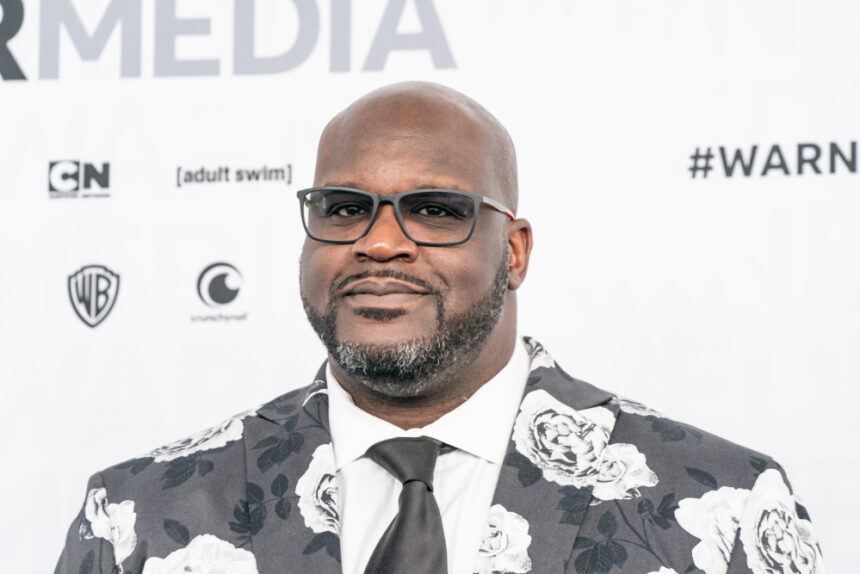
Shaquille O’Neal is no stranger to the spotlight, but the kind of attention he found himself under recently was not the kind anyone asks for. Explicit direct messages purportedly sent to pop star Sabrina Carpenter from an account linked to the NBA legend went viral, sparking immediate backlash and widespread speculation online. The messages were lewd in nature and circulated rapidly across social media platforms before most people had paused to question whether they were real. O’Neal, for his part, did not stay quiet for long.
The former Lakers center addressed the situation publicly, and in classic form, he leaned into humor rather than defensiveness. His response made it clear that he was unbothered by the accusation itself but firm about setting the record straight with anyone who had seen the posts and drawn their own conclusions. For a man who has spent decades under a microscope, managing his public image with a mix of wit and confidence, the approach felt entirely on brand.
Shaquille O’Neal says the messages do not reflect his style
O’Neal brought the topic up on his own podcast, reading the alleged messages aloud to his co-hosts and inviting them to weigh in on whether the language sounded anything like him. Their answer was a firm no, which seemed to be exactly the point he was trying to make. He treated the whole exercise less like damage control and more like a demonstration, letting the content speak for itself as evidence of its own absurdity.
Rather than treating the moment as a crisis, he framed it as almost comically beneath him, suggesting that whoever crafted the messages had severely underestimated his social skills. The lighthearted approach landed with his audience, though underneath the jokes was a genuine denial that he wanted clearly and permanently on the record. He was not simply brushing the story off. He was making sure his position was understood.
His co-hosts offered a few theories about where the messages might have originated. One possibility they raised was that artificial intelligence had been used to generate the content, a scenario that is becoming increasingly common as AI tools grow more accessible to virtually anyone with an internet connection. Another theory pointed to an impersonator account that had replicated his real profile image to appear more convincing to unsuspecting recipients. The profile picture reportedly matched his verified presence on the platform, which added a layer of credibility to the fake account that made it harder to dismiss at first glance. Neither explanation has been confirmed, but both reflect just how easy it has become to manufacture a believable digital footprint in a matter of minutes.
A broader warning about believing what you see online
The episode is a sharp reminder of how quickly fabricated content can take on a life of its own, especially when a recognizable face is attached to it. O’Neal is one of the most famous athletes in American history, and Carpenter is among the biggest names in pop music right now, with a fanbase that is both enormous and deeply protective of her. The pairing alone was enough to send the story racing across social media before anyone had stopped to verify the source or consider whether the account behind the messages was legitimate.
What makes the situation particularly worth paying attention to is not just the false accusation itself but the speed and ease with which it spread. AI-generated content and fake impersonator accounts have made it harder than ever to distinguish between what is real and what has been manufactured for clicks, outrage or simply chaos. The tools required to build a convincing fake account or generate text that mimics a real person’s voice are no longer limited to sophisticated actors. They are widely available and increasingly difficult to detect.
O’Neal has addressed the matter and moved on, seemingly more amused than alarmed. But the moment lands as a broader cautionary note for anyone consuming viral content online. Not everything that looks real is real, and not everything that spreads widely has been vetted. In a media environment where a screenshot can travel faster than the truth, and where the damage done by a false story often outlasts the correction, that is a lesson worth revisiting regularly. For celebrities and private citizens alike, the bar for questioning what appears on a screen has never been more important to maintain.