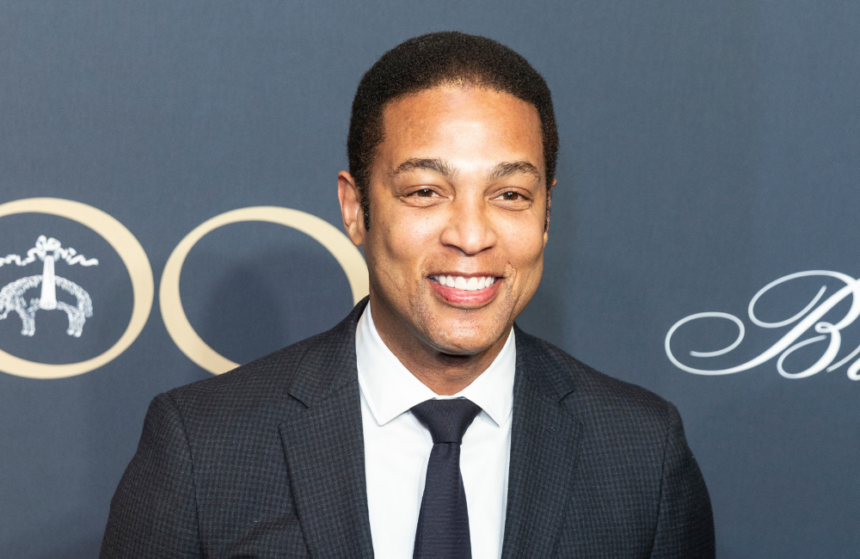
Don Lemon is not buying what CNN’s incoming ownership is selling. The former anchor, who was let go from the network in 2023 after a turbulent run, made his skepticism public during an appearance at the New Orleans Book Festival at Tulane University over the weekend. Speaking at the event’s annual gathering, now in its fifth year, Lemon took direct aim at the idea that CNN can rebuild its audience by shifting toward more centrist or right-leaning coverage.
The comments came as CNN prepares for a change in ownership following the acquisition of parent company Warner Bros. Discovery by Paramount Skydance. Incoming owner David Ellison has signaled he wants the network to broaden its appeal, particularly among Americans who occupy the political middle ground.
A strategy Lemon calls fundamentally flawed
Lemon argued that the premise behind the network’s planned pivot is built on a misreading of the media landscape. His position is straightforward. Viewers who have aligned themselves politically with the MAGA movement have little interest in tuning in to a network that prioritizes factual reporting, regardless of how the coverage is framed or how far the editorial direction shifts.
He framed the incoming ownership’s thinking as a wishful and ultimately futile attempt to attract an audience that has already made up its mind about where it gets its news. In his view, no amount of repositioning will change that calculus.
The conversation was partly sparked by a recent exchange Lemon said he had with Kevin O’Leary, the businessman and longtime fixture on the reality competition series Shark Tank. O’Leary apparently suggested that CNN needs to move toward the center to survive. Lemon made clear he found that advice deeply misguided.
What Ellison has said about CNN’s future
Ellison has been vocal about his vision for the network since the acquisition was announced. He has spoken about wanting CNN to speak to the broad majority of Americans he believes occupy the center of the political spectrum, estimating that roughly 70 percent of the country identifies as either center-left or center-right. His pitch is that a network committed to accuracy and credibility can win that audience back.
Whether that optimism is well-founded is precisely what Lemon is disputing. He sees the strategy as a trap, one that risks alienating CNN’s existing audience without gaining the new one Ellison is counting on.
Lemon speaks out amid his own legal troubles
The television personality’s public commentary arrives at a complicated moment in his personal life. Lemon was hit with federal charges last month stemming from an incident in Minnesota, where he allegedly entered a church alongside protesters demonstrating against immigration enforcement and disrupted a Sunday service. He has denied wrongdoing, maintaining that his actions were a protected expression of his constitutional rights.
The charges have added an unexpected dimension to Lemon’s ongoing presence in the media conversation, keeping him in the news at the same time he has been offering sharp commentary on the industry that once made him a household name.
A broader question about cable news survival
The tension between Lemon’s view and Ellison’s strategy reflects a wider debate that has consumed the cable news industry for years. As audiences fragment and political identity increasingly dictates media consumption habits, the idea that any single network can command broad ideological appeal grows harder to defend.
For CNN, the stakes are high. The network has spent years navigating declining ratings and shifting viewer expectations. Whether a centrist repositioning can reverse that trend or simply deepen the uncertainty is a question the industry will be watching closely.