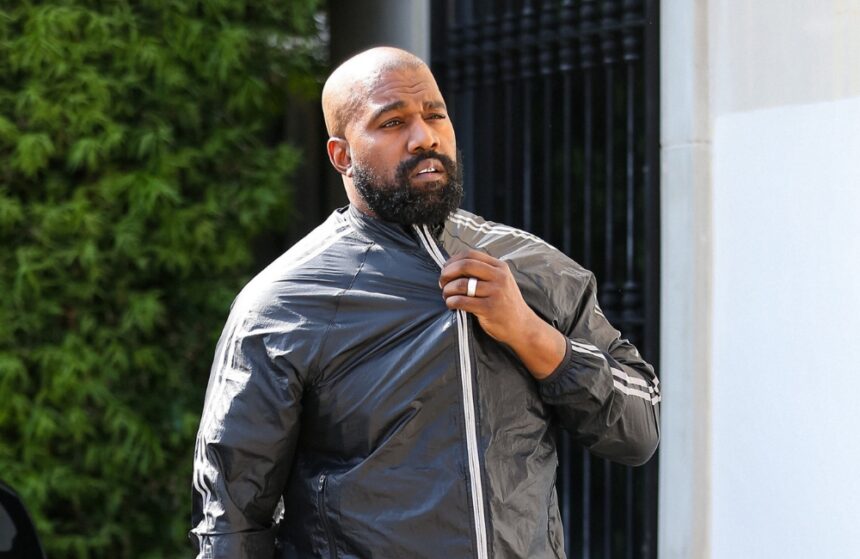
A Los Angeles jury found Kanye West, who performs and operates publicly under the name Ye, liable Wednesday in a civil trial stemming from injuries a worker alleged he sustained during the controversial renovation of the musician’s $57 million Malibu beachfront property. The verdict was mixed, delivering wins to both sides and leaving neither entirely satisfied.
The plaintiff, Tony Saxon, had sought $1.7 million in compensatory damages. The jury awarded $100,000 for past and future medical expenses and an additional $40,000 for past pain and suffering, bringing the total damages to $140,000. Jurors declined to award anything for future pain and suffering and chose not to impose punitive damages. They also found that Saxon had not been wrongfully terminated and determined that West had not acted with malice, oppression or fraud.
West remains responsible for Saxon’s reasonable attorneys’ fees and legal costs, which a judge will determine separately. Depending on that ruling, his total financial exposure from the case could still exceed one million dollars.
What the case was about
Saxon, 35, alleged that West hired him as a project manager and security presence at the striking concrete beach house, which was designed by celebrated Japanese architect Tadao Ando and purchased by West in 2021. West ordered the property stripped of its plumbing, toilets, fixtures, cabinets, electrical systems, a concrete fireplace and two custom 30-foot stainless steel chimney stacks. He later sold the mansion in September 2024 for $21 million, a loss of roughly $36 million from the purchase price.
Saxon testified that he suffered serious neck and back injuries while working on the property and was subsequently let go after requesting workplace accommodations and refusing to operate fuel-powered generators indoors over carbon monoxide concerns. He said those concerns were met with hostility rather than resolution.
Saxon’s legal team argued that under California law he had been hired as a full-time employee rather than an independent contractor, making West liable for his injuries given the absence of workers’ compensation insurance. Supporting that position, attorneys pointed to a video deposition in which West acknowledged he did not dispute hiring Saxon as an employee before later walking that statement back.
What the defense argued
West’s legal team pushed back on Saxon’s characterization throughout the two-week trial, portraying him as an unreliable witness whose claims about injuries and unpaid wages were fabricated after his departure from the project. They argued that the relationship between Saxon and West was a standard one between a homeowner and an independent contractor and that Saxon had represented himself as a licensed contractor at the outset.
West’s wife, Bianca Censori, an architect who was involved in the Ando house project, testified during the trial. She described West’s evolving creative directives as consistent iterations of a unified residential vision, pushing back on characterizations of the project as disorganized or chaotic. She also disputed Saxon’s claim that he never presented himself as a licensed contractor.
The property and its renovation
Among the more remarkable details to emerge during trial was the scope of what West had commissioned for the property. Testimony described plans that included ramps and slides in place of stairs, mesh barriers in lieu of traditional walls, and a space that at various points was discussed as a potential private school, recording studio, monastery, bomb shelter and playground. A text message from Censori shown to jurors referenced avoiding permits in favor of faster solutions with fewer complications, a detail Saxon’s legal team highlighted in closing arguments to suggest the project was being conducted deliberately outside standard oversight.
What jurors said afterward
Jurors who spoke to reporters after the verdict said the deliberations were careful and occasionally contentious, with meaningful disagreement over the appropriate damages figure. They described combing through bank statements and financial records to determine how much of the $240,000 West had transferred to Saxon in late 2021 had gone toward legitimate expenses versus unpaid wages, ultimately concluding that Saxon had largely broken even on the arrangement.
Several jurors said West’s conduct on the witness stand during the previous week had not helped his cause. He was observed appearing to fall asleep during portions of his own examination, a detail that jurors described as leaving a cold impression and suggesting either contempt for the proceedings or a striking degree of disengagement.
A wave of litigation still ahead
Wednesday’s verdict is the first in a series of civil complaints against West to reach a jury. The musician has faced more than a dozen lawsuits since a 2022 social media episode in which he posted a threat targeting Jewish people, comments that sparked widespread public backlash and significant professional consequences. More recently, West posted content on social media that included explicit expressions of support for Adolf Hitler and the Nazi ideology. He later released a single under a title referencing Hitler that was quickly pulled from major streaming platforms, and aired a Super Bowl advertisement for his clothing brand before later selling merchandise bearing swastika imagery.
In January, West published a full-page advertisement in The Wall Street Journal expressing regret for the rhetoric and asking for patience and understanding. Several civil lawsuits remain pending, including a complaint from a former assistant alleging sexual harassment and wrongful termination between 2021 and 2023, with a hearing scheduled for later this month. A separate lawsuit filed by a model who appeared in a music video with West includes allegations of physical assault. West is seeking to have that case dismissed.