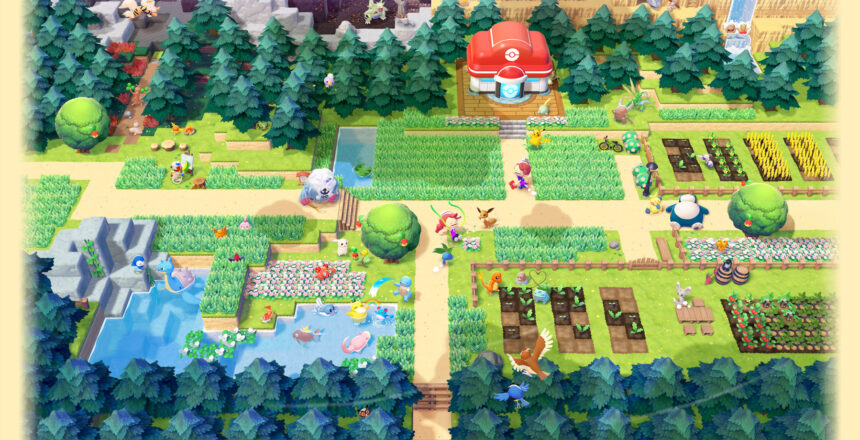

Thirty years into its existence, a franchise that many assumed had settled into comfortable mediocrity has produced what early critical consensus suggests is its greatest game. Pokémon Pokopia, a cozy life-simulation spinoff launched on the Nintendo Switch 2, has landed at the top of all time Pokémon game rankings on Metacritic just days after release a position no entry in the series has previously occupied and one that has caught even dedicated fans off guard.
The game arrives at a moment when the Pokémon franchise’s relationship with quality was, to put it charitably, complicated. Spinoffs in particular have historically struggled to justify their existence alongside the mainline series, producing results that ranged from forgettable to actively damaging to the brand. Pokémon Pokopia has broken that pattern decisively, and the reasons why are worth examining closely.
What Pokémon Pokopia actually is
Rather than placing players in the familiar role of a trainer battling through gyms and chasing a regional championship, Pokémon Pokopia invites them into something considerably more contemplative. Set in a post-human world, the game tasks players with building a new Pokémon society from the ground up designing environments, fostering community and creating the conditions for Pokémon to thrive without human dominance over them.
The shift in premise is more significant than it might initially appear. By removing the competitive framework that has defined Pokémon games for three decades, Pokopia creates space for a different kind of engagement one centered on creativity, environmental stewardship and the satisfaction of building something that functions and flourishes. The game incorporates themes around sustainability and community that feel relevant to contemporary concerns without becoming heavy handed, threading a needle between accessibility for younger players and enough narrative depth to hold adult attention.
Why the developer matters
The critical reception makes considerably more sense when you look at who made the game. Pokémon Pokopia was developed by Omega Force, the studio within Koei Tecmo responsible for Dragon Quest Builders 2 a game widely praised for bringing genuine warmth and mechanical sophistication to the construction genre. That experience translates directly to what Pokopia is attempting, and the result is a game that feels like it was built by people who understood both what made Pokémon beloved and what a life simulation framework needed to actually work.
Previous Pokémon spinoffs have often felt like products developed at the edges of the franchise’s attention, handed to studios without a deep connection to either the IP or the genre they were working in. Omega Force’s background gave them a credible foundation for both, and the reviews reflect that preparation.
The nostalgia factor cuts both ways
Part of what makes Pokémon Pokopia’s success meaningful is the specific emotional territory it occupies. Pokémon carries an unusually powerful nostalgic charge for the generation that grew up with the original games in the late 1990s adults now in their 30s and 40s who hold genuine affection for the franchise but have not always found recent entries worthy of serious engagement.
Pokopia speaks to that audience without excluding the children who are discovering Pokémon for the first time. Its charming visual design and approachable mechanics lower the barrier to entry, while its thematic ambition and depth of systems give experienced players something to genuinely invest in. That balance is difficult to achieve and rarer than it should be in a franchise operating at this scale.
What it means for Pokémon going forward
A single game does not redefine a franchise, but Pokémon Pokopia arrives as evidence that the series is capable of genuine creative reinvention when given the right development team and sufficient creative latitude. The 30th anniversary context adds a layer of significance this is not just a well-reviewed spinoff but a statement about what Pokémon can be when it moves beyond its own formulas.
Whether Game Freak and The Pokémon Company take lessons from Pokopia’s success and apply them to the mainline series remains to be seen. For now, players on Nintendo Switch 2 have access to what the critical record currently identifies as the best Pokémon game ever made and that is a sentence that would have seemed implausible from a spinoff title just weeks ago.