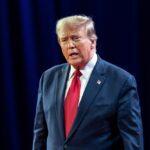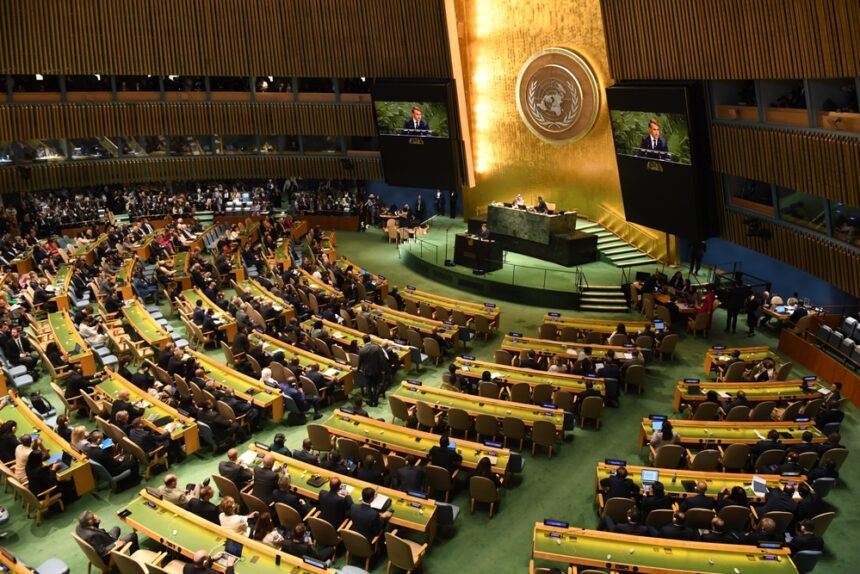
President Donald Trump told the United Nations General Assembly in New York on Tuesday that no global government exists and pledged that no global taxes would be imposed while he holds office.
What did he claim on reform?
That his administration had driven substantial changes at the organisation, citing a 15 percent reduction in the 2026 budget and the elimination of more than 4,000 positions. He argued the body has potential but must stop advancing what he described as the agenda of unelected globalist bureaucrats. Those figures come from his own account of the reforms rather than from the organisation, and should be checked against its published budget documents.
What was the carbon tax reference?
He said his administration intervened last year to stop a United Nations maritime body from establishing what he characterised as a first ever global carbon tax in secret. The proposal in question was a net zero framework for international shipping, which was publicly circulated rather than concealed. Discussions on it have been adjourned.
What would that framework have done?
Required large oceangoing vessels above 5,000 gross tonnage to meet a global fuel standard, as part of an effort to bring shipping emissions to net zero by 2050. Shipping falls outside national emissions accounting because vessels operate between jurisdictions, which is why regulation of the sector has been pursued through an international body rather than through individual governments.
Is the carbon tax description accurate?
Contested. Supporters of the framework describe it as a fuel standard with a compliance charge for vessels exceeding emissions limits, which they argue is a regulatory mechanism rather than a tax, since no government collects general revenue from it. Opponents counter that a mandatory payment tied to activity functions as a tax regardless of what it is called, and that a charge set by an international body without national legislative approval is precisely the sovereignty problem. Both characterisations are defensible and the disagreement is partly definitional.
What is the broader argument being made?
Sovereignty. The position advanced at the UN General Assembly is that binding rules should originate with elected national governments rather than international institutions, and that bodies funded by member states have accumulated authority their electorates never granted. It is an argument about who has standing to make rules, not primarily about emissions.
What is the case for the other side?
That some problems have no national solution. Shipping, aviation, high seas fisheries and atmospheric emissions cross borders by definition, and coordinated rules are the only mechanism available when no single government has jurisdiction. Defenders of the organisation also note that member states vote on these frameworks, so the authority is delegated rather than seized, and that the United States retains a veto in the Security Council and influence proportionate to its funding.
What happens to the shipping framework?
It is adjourned rather than dead. Frameworks of this kind typically return in modified form, and the shipping industry itself has been divided, with some operators preferring a single global standard to a patchwork of regional rules they would have to navigate vessel by vessel.
What comes next?
Nothing concrete was announced. A UN General Assembly address is a statement of position rather than a policy instrument, and the reform claims and the maritime dispute will both be settled elsewhere.