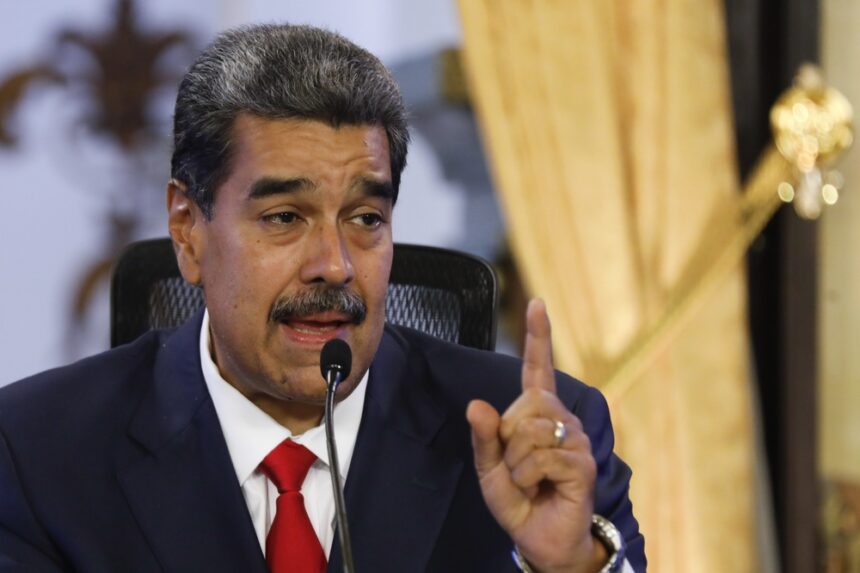
Attorneys for Nicolás Maduro petitioned a federal judge on Sept. 2 to dismiss drug trafficking charges against the former Venezuelan leader, arguing that his status as the head of a sovereign nation at the time of his arrest should shield him from U.S. prosecution.
He was captured in Caracas on Jan. 3 by U.S. special forces acting under orders from President Trump and was immediately brought to New York, where he was arraigned on federal charges of narco-terrorism and conspiring to traffic thousands of tons of cocaine to the United States. He has been held in a federal jail in Brooklyn since his arrest. He has pleaded not guilty and is scheduled for trial in June 2027.
His attorney, Barry Pollack, filed the motion to dismiss before U.S. District Judge Alvin Hellerstein in Manhattan federal court. Pollack argued in court on Sept. 2 that Maduro was president of Venezuela at the time of his arrest and that his position as the head of a sovereign state confers immunity from prosecution in U.S. courts.
The legal argument
Head-of-state immunity is a principle in international law that has historically protected sitting government leaders from prosecution in foreign courts for acts performed in their official capacity. The doctrine derives from the concept of sovereign equality, under which states are considered equal under international law and no state may exercise jurisdiction over another. Immunity claims of this kind have been raised in other high-profile international prosecutions.
The head-of-state immunity argument is complicated by several factors. The United States does not recognize Maduro as the legitimate president of Venezuela and has recognized opposition figures as the rightful authority. If the U.S. government does not recognize his claim to be a sitting head of state, the immunity argument loses its legal foundation. U.S. courts have generally deferred to the executive branch’s recognition determinations in cases involving foreign officials.
The charges themselves also implicate activities that prosecutors describe as conducted outside any legitimate governmental function, a distinction that courts have used in other cases to limit the scope of head-of-state immunity claims.
The context of the arrest
Maduro’s capture in January by U.S. special forces was an unprecedented action against a sitting or former head of government in his own capital city. The operation was carried out pursuant to a longstanding federal indictment from 2020, which charged Maduro and other Venezuelan officials with using the country’s military and intelligence services to facilitate cocaine shipments to the United States in exchange for payments from the FARC, the Colombian guerrilla organization.
The Trump administration had announced a $15 million reward for information leading to Maduro’s arrest or conviction, and Trump cited the drug trafficking charges as the legal basis for the operation that led to his capture.
What comes next
Judge Hellerstein will consider the motion to dismiss. If he denies the immunity motion, the case proceeds toward the June 2027 trial date. If he grants it, the prosecution would end unless the government successfully appeals.
The immunity question represents the central legal threshold Maduro’s defense must clear. If the court accepts the head-of-state argument, the underlying merits of the trafficking charges would not be reached. If it rejects the argument, the defense would need to contest the charges on their substance.